



The Robotic Advantage
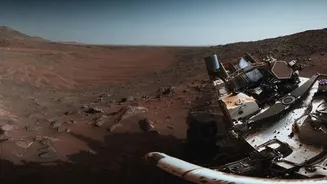
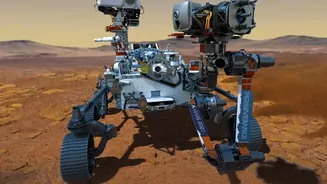
Sending robots to Mars is, by comparison, straightforward and vastly more affordable. Robotic explorers like NASA's Perseverance rover have no need for food, water, or a complex life support system, which drastically reduces the weight and complexity
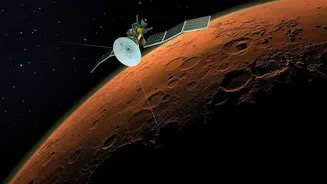
of a mission. A robotic mission might cost under $3 billion, whereas estimates for a crewed mission can soar into the hundreds of billions. Robots are also immune to the dangers of deep space, such as cosmic radiation and the health effects of microgravity, which pose significant risks to human astronauts. They can operate for years, like the Voyager probes, sending back invaluable data long after their primary missions are complete. Put simply, robots are resilient, cost-effective pioneers that have already paved the way for our current understanding of the Red Planet.
The Human Edge: Adaptability and Speed
Despite the high cost and risk, there are things a human astronaut can do that a robot simply cannot. Humans are incredibly adaptable problem-solvers. While a rover like Curiosity moves at a painstaking 0.14 kilometres per hour, a human explorer could traverse that same terrain far more quickly and make intuitive decisions on the spot. If an unexpected scientific discovery is made or a critical piece of equipment fails, astronauts can improvise and react in real-time, a feat impossible for a remote-controlled robot facing a communication delay of up to 20 minutes each way. A human geologist can identify promising rock samples with a glance, a task that would take a rover countless hours of careful commands from Earth. This ability to think on their feet, conduct complex field science, and repair systems is what makes human presence so valuable.
The Supply Chain Nightmare
The single greatest obstacle to sending humans to Mars is logistics. A multi-year mission requires thousands of kilograms of supplies. A crew needs breathable air, clean water, and nutritious food for the entire journey, which could be up to three years long without any chance for resupply. Just the mass of this oxygen and water would require an enormous amount of rocket fuel to launch from Earth, creating a cycle where more supplies mean more fuel, which in turn means a heavier, more expensive spacecraft. While the International Space Station recycles about 90% of its water, a Mars mission would need to push that efficiency to over 98%. Essential nutrients in pre-packaged food also degrade over time, posing health risks. This challenge of self-sufficiency so far from home is what makes long-duration human spaceflight exponentially harder than sending a machine.
A Hybrid Future: Robots First
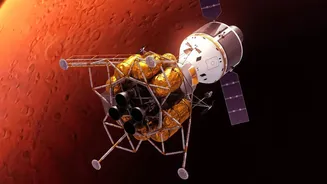
Ultimately, the debate isn't a simple choice between robots or humans. The emerging consensus is that the two are not competitors, but partners in a phased approach to exploration. The most logical and safest strategy involves sending robotic missions first to do the heavy lifting. Swarms of autonomous robots could be deployed to build habitats, perhaps using local materials like Martian ice, and test life support systems before any human ever leaves Earth. These robotic forerunners would also be tasked with In-Situ Resource Utilization (ISRU), which means living off the land. Experiments like MOXIE on the Perseverance rover have already proven it's possible to generate oxygen from the Martian atmosphere. Future robots could mine for water ice and even produce rocket fuel for the return journey, drastically reducing the supplies humans need to carry from Earth.