


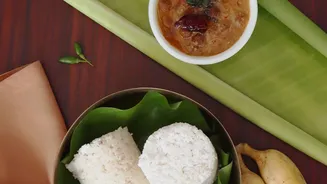
Understanding the Onam Sadya
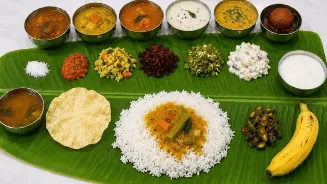
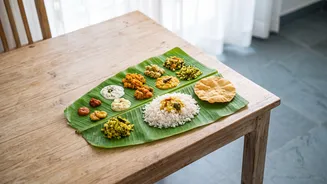
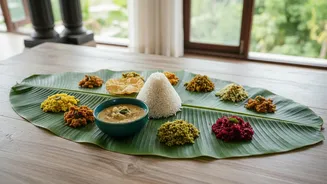
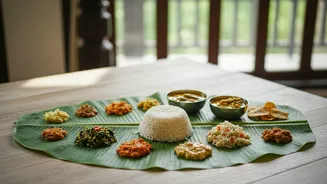
Onam, Kerala's most significant festival, culminates in Thiruvonam on August 26, 2026. The centerpiece of this celebration is the Onam Sadya, a multi-course vegetarian banquet served on a banana leaf. This feast, which can feature over 25 dishes, is a harmonious
blend of flavours—sweet, salty, sour, and spicy—designed to create a complete gastronomic experience. It’s a celebration of abundance and community, traditionally eaten by hand while seated on the floor. Every dish has a specific place on the leaf and a role to play in the meal's symphony of taste.
Planning Your Grand Feast
The key to a successful Sadya is preparation. Don't try to cook everything on the day of the feast. A good plan can make the process manageable and enjoyable. Start by deciding on your menu; a home Sadya can be fulfilling with 10-15 core dishes. A few days ahead, shop for groceries and prepare items with a longer shelf life, like pickles and banana chips. The day before, you can chop most vegetables and even pre-cook certain dishes like sambar. This leaves only the fresh dishes, like thoran and pachadi, and the rice for the day of the feast.
The Core Components: Rice and Lentils
The foundation of any Sadya is rice. Traditionally, this is Kerala's native red rice, also known as Matta rice. The first course served over the hot rice is Parippu, a simple but delicious curry made from moong dal (small yellow lentils), often topped with a spoonful of fragrant ghee. This mild, comforting dish prepares the palate for the explosion of flavours to follow. It's a non-negotiable part of the Sadya experience.
A Symphony of Main Curries
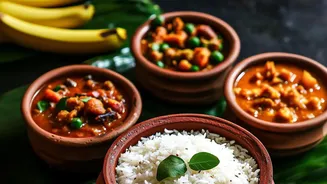
Next come the main liquid curries, or 'Ozhichu curries'. Sambar is perhaps the most famous—a tangy lentil and tamarind-based stew packed with vegetables like drumsticks, pumpkin, and carrots. Aviyal is another classic, a thick mixture of various vegetables cooked in a coconut and yogurt gravy. Then there's Kalan, a thicker, sour curry made with yogurt and vegetables like yam or raw plantain, and Pulissery, a lighter, yogurt-based curry often made with pineapple or cucumber for a sweet and sour taste.
The Essential Side Dishes
The side dishes, known as 'Thodu curries' (touch curries), provide texture and balance. Thoran is a dry stir-fry of finely chopped vegetables like cabbage or beans with grated coconut. Olan is a very mild and subtle stew made with ash gourd and black-eyed peas in a light coconut milk gravy. Pachadi and Kichadi are yogurt-based sides similar to raita; Pachadi is typically sweeter (like pineapple pachadi), while Kichadi is more savoury (like cucumber kichadi).
Pickles and Condiments
A Sadya is incomplete without its powerful, flavour-packed condiments. These are served in tiny quantities on the top left of the banana leaf. Inji Puli (also called Puli Inji) is a sweet, sour, and spicy dark brown paste made from ginger, tamarind, green chillies, and jaggery. Alongside it, you'll find tangy mango pickle (Kadu Manga Achar) and lime pickle (Naranga Achar) that cut through the richness of the other dishes.
The Sweet Finale: Payasam
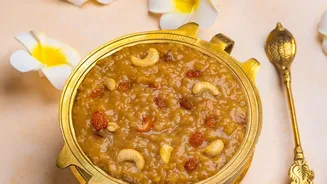
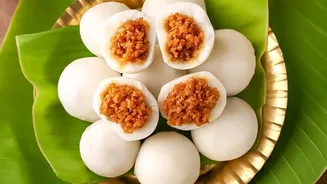
The meal traditionally moves to its sweet course with Payasam. This dessert is served directly on the banana leaf, often mixed with a crushed pappadam and a small banana for a unique combination of textures. There are many varieties. Palada Pradhaman is a rich pudding made with milk, sugar, and rice flakes (ada). Parippu Pradhaman uses lentils, jaggery, and coconut milk for a more earthy, rustic flavour.
The Art of Serving
Serving the Sadya is a tradition in itself. The banana leaf is placed with its narrow tip pointing to the left of the diner. The accompaniments and pickles are placed along the top half of the leaf, starting from the left. Rice is served on the bottom half. The curries are then ladled onto or next to the rice in a specific order, beginning with Parippu and ghee, followed by Sambar. This careful placement ensures that flavours don't mix unintentionally and allows the diner to enjoy each combination as intended.