




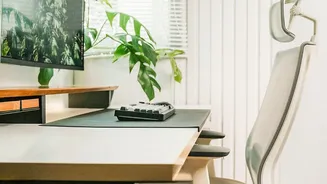
The Daily Toll of the Desk
Spending eight hours in a chair forces your body into an unnatural, static position. This prolonged sitting has several negative effects. Your hip flexors, the muscles at the front of your hips, remain shortened and can become tight, while your glute
muscles can weaken from lack of use. This imbalance often leads to lower back pain. Poor posture, a common side effect of desk work, strains your neck and back muscles. Furthermore, blood circulation slows down, particularly in your legs, which can lead to swelling and fatigue. Over time, this sedentary pattern doesn't just cause discomfort; it can increase the risk of more serious health issues by affecting how your body manages blood sugar and cholesterol.
What is Active Recovery?
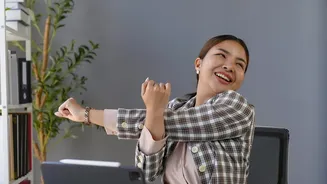
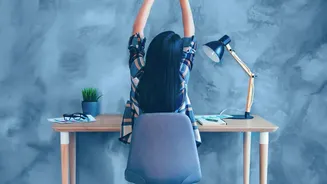
When you hear 'recovery', you might think of resting after a tough workout. But in the context of a sedentary workday, active recovery means incorporating small, low-impact movements to counteract the stress of being still. It’s not about breaking a sweat or high-intensity exercise. Instead, it’s about gentle, intentional motions that wake up sleepy muscles, improve circulation, and lubricate your joints. Think of it as hitting a reset button for your body throughout the day. These movements are designed to be done right at your desk or in a small space, making them a practical solution for a busy schedule.
How Gentle Movement Fights Tightness
The magic of active recovery lies in its simplicity. When you move, even gently, you stimulate blood flow. This increased circulation delivers fresh oxygen and nutrients to your muscles, helping to flush out metabolic waste and reduce stiffness. Movement also encourages the production of synovial fluid, a substance that lubricates your joints, allowing them to move more smoothly. By interrupting long periods of sitting, you prevent your muscles and connective tissues from settling into a shortened, tight state. Even brief periods of light activity—just a few minutes every hour—can make a significant difference in how you feel.
For Your Back: Seated Cat-Cow
Your spine spends hours hunched forward. The cat-cow stretch helps to gently mobilize it. While sitting at the edge of your chair with your feet flat on the floor, place your hands on your knees. On an inhale, arch your back, lift your chest, and look slightly forward (Cow). On an exhale, round your spine, drop your chin to your chest, and gently pull your navel in (Cat). This movement brings flexibility back to the vertebrae and gently stretches the muscles of the back and abdomen, relieving tension built up from slouching.
For Your Hips: Seated Pigeon Stretch
Tight hips are a classic symptom of too much sitting. To combat this, try a seated pigeon stretch. While sitting upright in your chair, cross your right ankle over your left knee. Keep your right foot flexed to protect your knee. You should feel a stretch in your right glute and outer hip. To deepen it, you can gently press down on your right knee or lean your torso forward slightly. Hold for 20-30 seconds and then switch sides. This stretch opens up the hip rotators and gluteal muscles, which become inactive and tight from sitting.
For Your Shoulders: Thoracic Spine Rotations
Hunching over a keyboard can make your upper back and shoulders incredibly stiff. To release this tension, perform thoracic spine rotations. Sit tall in your chair and cross your arms over your chest, placing your hands on your opposite shoulders. Keeping your hips still and facing forward, gently twist your upper body from side to side. Move slowly and with your breath. This exercise specifically targets the thoracic spine (your mid-back), an area that often becomes rigid, and helps to improve posture and relieve shoulder strain.
Building a Habit of Movement
The key to success with active recovery is consistency. It’s more effective to move for one to two minutes every hour than to do one 15-minute session at the end of the day. A simple strategy is to set a timer to remind you to get up and move every 30 to 60 minutes. You don't have to do a full routine every time. When you take a phone call, stand up and walk around. When you finish a task, do a quick hip stretch. Pairing these micro-breaks with existing habits makes them easier to adopt. Start small, perhaps with just one of the exercises above, and gradually build it into your daily rhythm.