






Why Monsoon Wreaks Havoc on Power Supply
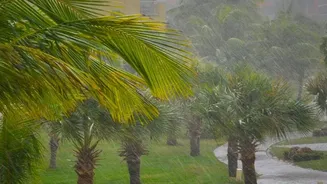
The connection between heavy rains and unstable electricity is a familiar problem across India. Several factors contribute to this. Heavy winds and rain can cause tree branches to fall on overhead power lines, causing short circuits or breaking the lines altogether.
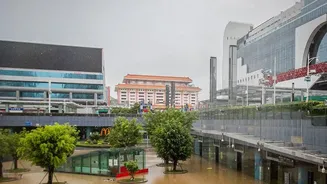
Lightning strikes, a common feature of monsoon storms, can inject a massive, instantaneous surge of electricity into the grid that travels right into your home. Furthermore, water can seep into underground cables and electrical joints, leading to faults and disruptions. The power returning after a cut is often another danger zone, as the sudden restoration can create a voltage spike capable of frying sensitive circuits. All these issues combine to create an unstable electrical environment that puts your gadgets at risk.
The First Line of Defence: Surge Protectors
Think of a surge protector as a gatekeeper for your electronics. Its main job is to block sudden, short-term voltage spikes—or surges—from reaching your devices. These are different from a simple power strip, which just gives you more outlets. A true surge protector uses components called Metal Oxide Varistors (MOVs) to absorb excess voltage and divert it to the ground wire. When buying one, look for its 'joule rating'. This number indicates how much energy it can absorb before it fails; a higher joule rating means better and longer-lasting protection. For expensive equipment like TVs, gaming consoles, and computers, a rating of 2000 joules or more is recommended. However, remember that surge protectors have a limited lifespan and can only absorb a finite amount of excess energy before wearing out. They also do not provide power during a complete outage.
For Critical Devices: Uninterruptible Power Supply (UPS)
For devices you can't afford to have shut down abruptly, a UPS is essential. A UPS does two crucial things: it provides surge protection like a good surge protector, and it contains a battery that supplies seamless power the moment the main supply is cut. This gives you a window of time to save your work on a computer, finish a transaction, or safely shut down sensitive equipment. It's ideal for desktop computers, Wi-Fi routers, and home office setups. The battery backup prevents the jarring effect of a sudden shutdown and protects against data loss. While a UPS offers superior protection against both surges and outages, it's typically more expensive and designed for lower-power electronics, not for heavy appliances like refrigerators or air conditioners.
The Unsung Hero: Voltage Stabilizers
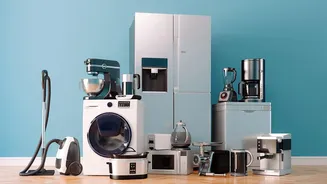
While surges are sudden spikes, Indian households also frequently deal with sustained low voltage (brownouts) or high voltage. This is where a voltage stabilizer becomes crucial, particularly for large, motor-driven appliances. Devices like refrigerators and air conditioners are designed to run at a specific voltage. When the voltage is consistently too low, their motors strain and overheat; when it's too high, their circuits can burn out. A stabilizer continuously monitors the incoming power and uses an internal transformer to boost low voltage or reduce high voltage, delivering a steady, safe supply to the appliance. Many modern stabilizers also include a time-delay feature, which waits a few moments after a power cut before restoring supply, protecting the appliance's compressor from the damaging initial surge.
Simple Habits for Added Safety
Beyond purchasing new hardware, some simple habits can significantly improve the safety of your devices. The most effective, albeit inconvenient, method is to simply unplug sensitive and expensive electronics during a severe thunderstorm. No surge protector offers 100% protection against a direct or very close lightning strike. Also, avoid overloading a single wall socket with multiple high-power devices, even with a power strip. Check that your home's earthing is properly done, as this is critical for surge protectors to function effectively. If you notice frequent flickering or appliances misbehaving, it might be wise to have a licensed electrician inspect your home's wiring for any faults that could worsen the impact of external power fluctuations.