



Northern Delights: Rich and Robust
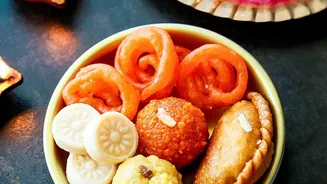
In North India, Diwali sweets are often rich, prepared with generous amounts of ghee, milk solids (khoya), and nuts. One of the quintessential northern sweets is the Gujiya, a crescent-shaped pastry filled with a mixture of khoya, dried fruits, and coconut.
While its origins are tied to the region, it has variations across the country, known as Karanji in Maharashtra and Karjikayi in the south. The northern version is often defined by its rich khoya and nut filling. Another favourite is Soan Papdi, a flaky, melt-in-your-mouth confection made from gram flour, ghee, and sugar, which is a popular gift during the festival. Finally, no northern Diwali is complete without Ladoos, particularly Besan Ladoo, made by roasting gram flour in ghee until it emits a nutty aroma before being sweetened and rolled into spheres.
Western Wonders: A Symphony of Textures
The western states of Gujarat and Maharashtra offer a delightful contrast in textures and flavours. From Gujarat comes Mohanthal, a dense, grainy fudge made from roasted gram flour (besan), ghee, sugar, and flavoured with cardamom and saffron. Its unique grainy texture is achieved by a specific technique of rubbing ghee and milk into the flour. From Maharashtra, Shankarpali (or Shakkarpara) are crispy, diamond-shaped fried biscuits that can be either sweet or savoury. The sweet version is a staple in Diwali snack boxes. Another Maharashtrian classic is Karanji, a crispy, crescent-shaped pastry which, unlike the khoya-heavy northern Gujiya, is often filled with a mixture of fresh or desiccated coconut, poppy seeds, and jaggery.
Eastern Elegance: Subtle and Spongy
East India, particularly West Bengal, is famous for its sweets made from 'chhena' (fresh cottage cheese). Roshogolla, or Rasgulla, consists of soft, spongy chhena balls boiled in a light sugar syrup, a delicate treat that melts in the mouth. Another chhena-based masterpiece is Sandesh, a lighter, less sugary sweet that is often flavoured with cardamom or saffron. These sweets are celebrated for their subtle flavours and melt-in-the-mouth texture. Moving towards Bihar and Jharkhand, Thekua is a popular deep-fried biscuit made from whole wheat flour, sugar or jaggery, and often fennel seeds, giving it a distinctive aroma and a hard, crunchy texture.
Southern Grandeur: Ghee, Rice, and Jaggery
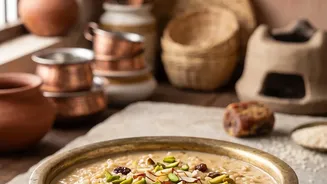
South Indian sweets often feature rice flour, jaggery, coconut, and copious amounts of ghee. The undisputed king is Mysore Pak, a rich, fudge-like sweet from Karnataka made with just gram flour, sugar, and a generous amount of ghee. The traditional version is more porous and crumbly, while modern interpretations are softer. Another beloved sweet is Adhirasam from Tamil Nadu, a doughnut-like pastry made from rice flour and jaggery. The dough is often fermented for a unique chewy texture and deep flavour. Payasam, a creamy pudding known as Kheer in the north, is also a festive staple, but the southern versions frequently use coconut milk and jaggery instead of just milk and sugar.
A Unifying Treat: The Ladoo in Many Forms
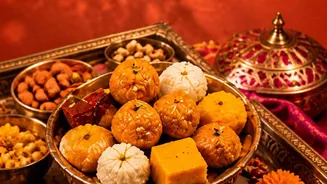
If one sweet could represent the unity in India's culinary diversity, it is the Ladoo. This spherical delight is found everywhere but changes its character with every border. The Motichoor Ladoo, made from tiny fried gram flour pearls ('boondi') soaked in syrup, is a festive icon in the North. In the South and West, you'll find Coconut Ladoos (Nariyal ke Ladoo), made with shredded coconut and condensed milk or jaggery. Besan Ladoo is a staple across many regions, loved for its nutty flavour from roasted gram flour. From Rajasthan's Til Ke Ladoo (sesame) to Maharashtra's Gond Ke Ladoo (edible gum), each variation tells a story of local ingredients and shared celebrations.