







An Unequivocal Clarification
Following media reports and speculation that caused concern among its employees, the Indian Space Research Organisation (ISRO) has stated that assertions of its privatisation are “completely baseless and incorrect”. In a clear statement, the agency confirmed
that it will neither be privatised nor will its importance be diminished. ISRO Chairman V. Narayanan personally addressed the issue, acknowledging the “genuine concerns” of employees and reiterating that ISRO is, and will remain, a government organisation working with government investment. The clarification came after nine employee associations wrote to the chairman seeking clarity on the future, prompted by the government's push for greater private involvement in the sector.
Ecosystem Expansion, Not Privatisation
The core message from both ISRO and government officials is that the ongoing reforms are about “ecosystem expansion and capability multiplication, not privatisation”. The goal is to create a larger, stronger, and more globally competitive Indian space ecosystem. This strategy is formalised in the Indian Space Policy 2023, which aims to augment the nation's space capabilities by encouraging a flourishing commercial presence. The number of Indian space startups has surged from just a handful in 2020 to over 450 by early 2026, working on everything from launch vehicles to satellites. This growth is seen as essential to achieving India's ambition of increasing its share of the global space market, a goal that requires private capital and industrial capacity beyond what the government alone can provide.
ISRO's New Focus: The Final Frontier
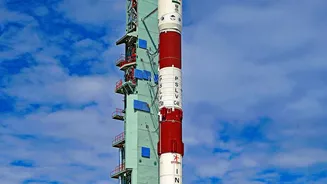
Instead of being diminished, ISRO's role is being strategically refocused. The agency will transition away from routine manufacturing and operational tasks, handing over mature and scalable activities to private industry through competitive processes. This includes the production of established launch vehicles like the PSLV and routine satellites. This shift allows ISRO to concentrate its scientific and technical manpower on what it does best: pioneering advanced research and development. Its future will be dedicated to frontier technologies, human spaceflight (like the Gaganyaan mission), next-generation launch systems, deep-space exploration, and critical national security missions.
A Symbiotic Relationship
The new framework creates a symbiotic relationship rather than a competitive one. The private sector's involvement is not new; ISRO Chairman V. Narayanan highlighted that nearly 80% of the agency's budget is already invested in about 450 private industries that are crucial to its supply chain. The reforms institutionalise and expand this. The Indian National Space Promotion and Authorisation Centre (IN-SPACe) has been established as a single-window agency to promote, guide, and authorise private space activities, ensuring a level playing field. Meanwhile, NewSpace India Ltd (NSIL) acts as the commercial arm, helping to commercialise ISRO's mature technologies. This structure allows private firms to handle large-scale production, while ISRO remains the bedrock of Indian space research and development.