







Fragments of a Deadly Past
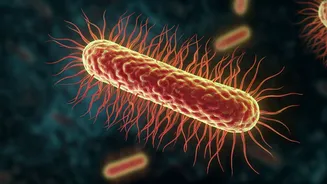
In recent years, scientists have made incredible breakthroughs by extracting the genetic material of Yersinia pestis, the bacterium that causes plague, from the teeth and bones of people who died centuries or even millennia ago. From burial sites connected
to the Black Death to the even older Plague of Justinian, these tiny fragments of DNA are providing a direct window into the world's deadliest pandemics. For a long time, historians had to rely solely on written accounts to understand these devastating events. Now, the field of paleogenomics allows researchers to reconstruct the genomes of ancient pathogens, confirming for the first time that Y. pestis was indeed the culprit behind these historic plagues and has been infecting humans for at least 5,500 years. These discoveries are helping to build a genetic family tree for the pathogen, showing how it evolved over time.
Why a 'Zombie' Plague Isn't Coming
The idea of an ancient superbug being accidentally resurrected is a terrifying thought. However, the reality of working with ancient DNA makes this scenario virtually impossible. Over time, DNA breaks down. The genetic material recovered from ancient remains is severely fragmented and damaged. Scientists aren't finding living, viable bacteria; they are finding tiny, degraded pieces of a genetic code that has been dead for thousands of years. Think of it like finding a few torn pages from a very old, crumbling book—you might be able to read some words and understand the story, but you can't possibly reconstruct the entire, functional book. The DNA is so broken down that it can't be revived. While some microbes have been revived from permafrost, the process for reawakening complex bacteria like Y. pestis is not something that happens by accident in a lab handling ancient skeletal remains. The risk comes from thawing permafrost releasing more recent pathogens, like a 75-year-old strain of anthrax in Siberia, not from ancient DNA studied in secure laboratories.
Rewriting the History of Disease
So, if it’s not about finding a new threat, what is the point? The primary value of this research is historical. By sequencing these ancient genomes, scientists can trace how Y. pestis evolved to become so deadly. For example, some of the earliest strains from over 4,000 years ago lacked the genetic mutations that allowed the plague to be transmitted by fleas—a key factor in the devastating spread of the bubonic plague. This tells us that early forms of the plague may have spread differently, perhaps through respiratory droplets. Comparing different strains from various time periods and locations helps researchers map the spread of pandemics, often linking them to major human migrations and trade routes. It also helps answer long-standing questions, such as confirming that the same bacterium was responsible for multiple, distinct pandemics centuries apart.
From Ancient Clues to Modern Insights
Understanding the past evolution of a pathogen like Y. pestis is not just a history lesson; it has implications for the present and future. Studying how the plague adapted and changed over time can provide clues about how other infectious diseases might evolve. For instance, research on skeletons from the Black Death has even shown that humans evolved in response to the pandemic. People with certain immune genes were more likely to survive, and those genes are still present in the population today, sometimes linked to a higher risk of autoimmune diseases like Crohn's disease. By analysing the genetic interplay between humans and pathogens over millennia, scientists gain a deeper understanding of immunity and disease dynamics. This long-term view helps inform public health strategies by showing how pathogens can emerge, spread, and decline over time, offering a valuable perspective for tackling both old and new infectious diseases.