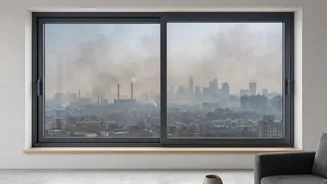


When a thick blanket of smog settles over the city, the first instinct is to shut every window and door. But is a sealed home truly a safe haven? The answer is complex, as keeping your household air cleaner depends on a delicate balance.
Understanding the Enemy: Smog and Your Home
Smog isn't just
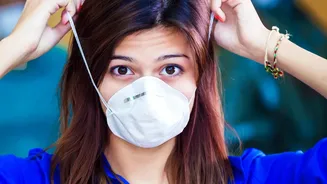
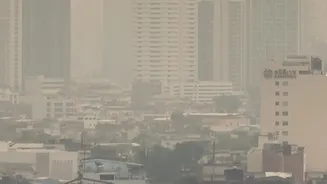
a hazy view; it's a toxic cocktail of pollutants, with the most dangerous being fine particulate matter known as PM2.5. These particles are incredibly small—about 30 times thinner than a human hair—allowing them to bypass your body's natural defences and penetrate deep into your lungs and even your bloodstream. Homes are not airtight fortresses. Studies have shown that indoor air quality can often mirror outdoor conditions, especially in buildings without air filtration. PM2.5 from traffic, industry, and smoke easily infiltrates through gaps in windows, doors, and walls, meaning the smog outside quickly becomes the air you breathe inside.
The Ventilation Dilemma: Fresh Air vs. Filtered Air
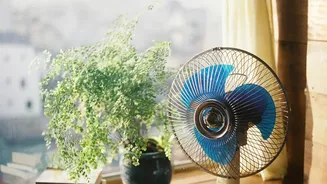
Ventilation is crucial for a healthy home, as it flushes out indoor pollutants like carbon dioxide (CO2) from our breath and volatile organic compounds (VOCs) from cleaning products and furniture. But during a smog event, the choice of how to ventilate becomes a trade-off. Natural ventilation—opening windows and doors—is the simplest method, but it directly invites outdoor pollutants in. Mechanical ventilation, which uses fans and ducts (like your HVAC system), offers more control. When outdoor air is heavily polluted, relying on mechanical systems with good filtration is the safer and more predictable choice to manage indoor air quality.
When to Open Windows (And When to Seal Up)
Checking the local Air Quality Index (AQI) is non-negotiable before opening any windows. As a general rule, if the AQI is above 100-150 ('Moderate' to 'Unhealthy for Sensitive Groups'), it's best to keep windows firmly shut. When the AQI is very poor or severe (above 300), you should avoid opening windows at all, especially during the early morning and late evening when pollution levels are often at their highest. If you must ventilate to reduce high indoor CO2 levels, aim for a brief 10-15 minute cross-breeze during the afternoon, when outdoor pollution is often comparatively lower. However, on severely polluted days, it's better to keep the house sealed.
Your HVAC System: The First Line of Defence
Your home's heating, ventilation, and air conditioning (HVAC) system can be a powerful tool against smog, but only if used correctly. The key is the filter. For capturing tiny PM2.5 particles, you need a high_efficiency filter with a MERV (Minimum Efficiency Reporting Value) rating of 13 or higher. During a smog event, set your HVAC system's fan to the 'On' position, not 'Auto'. This will continuously circulate the air in your home through the filter, capturing pollutants even when the heating or cooling isn't running. Setting the system to 'recirculation' mode can also help by cleaning the indoor air without pulling in more polluted air from outside.
The Power of Portable Air Purifiers
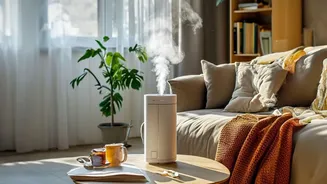
While an HVAC system treats the whole house, portable air purifiers offer a targeted defence. A purifier equipped with a High_Efficiency Particulate Air (HEPA) filter is the gold standard, as it's designed to capture at least 99.97% of particles like PM2.5. Placing a correctly_sized purifier in the rooms where you spend the most time, like the bedroom and living room, can significantly lower your exposure to harmful pollutants. For best results, keep the doors to the room closed and let the purifier run continuously during smoggy periods. Many units also contain activated carbon filters, which are essential for removing gases and odours that HEPA filters can't trap.
Final Tips for a Cleaner Indoor Environment
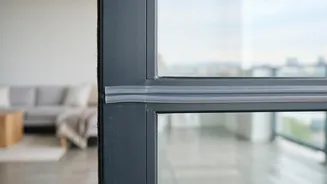
Beyond ventilation, a few simple habits can make a difference. Avoid activities that create more indoor pollution, such as burning incense or candles, frying food, and using aerosol sprays. When cleaning, opt for wet mopping instead of dry sweeping to avoid kicking dust and particles back into the air. Sealing gaps around windows and doors with weather stripping is a low_cost, high_impact way to reduce the amount of polluted air leaking into your home. This creates a tighter building envelope, allowing your filtration systems to work more effectively.