



No Wind, No Rain, No Problem
On Earth, nothing lasts forever. Wind scours rock, rain washes away soil, and shifting sands can bury ancient ruins in a matter of decades. Our planet is a dynamic, living system driven by its atmosphere and water cycle. These forces are constantly at work,
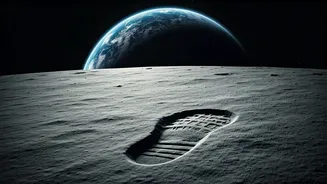
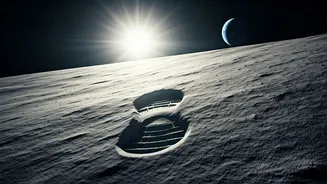
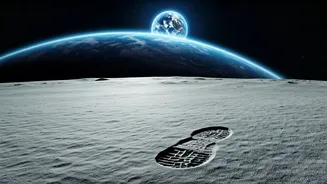
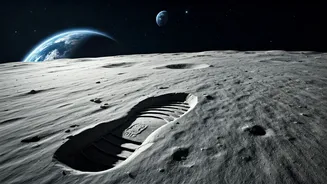
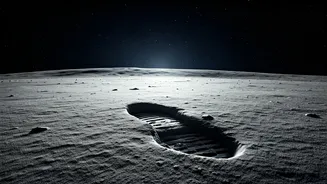
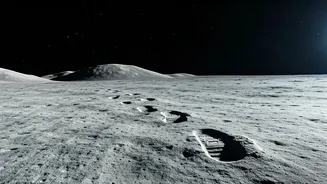
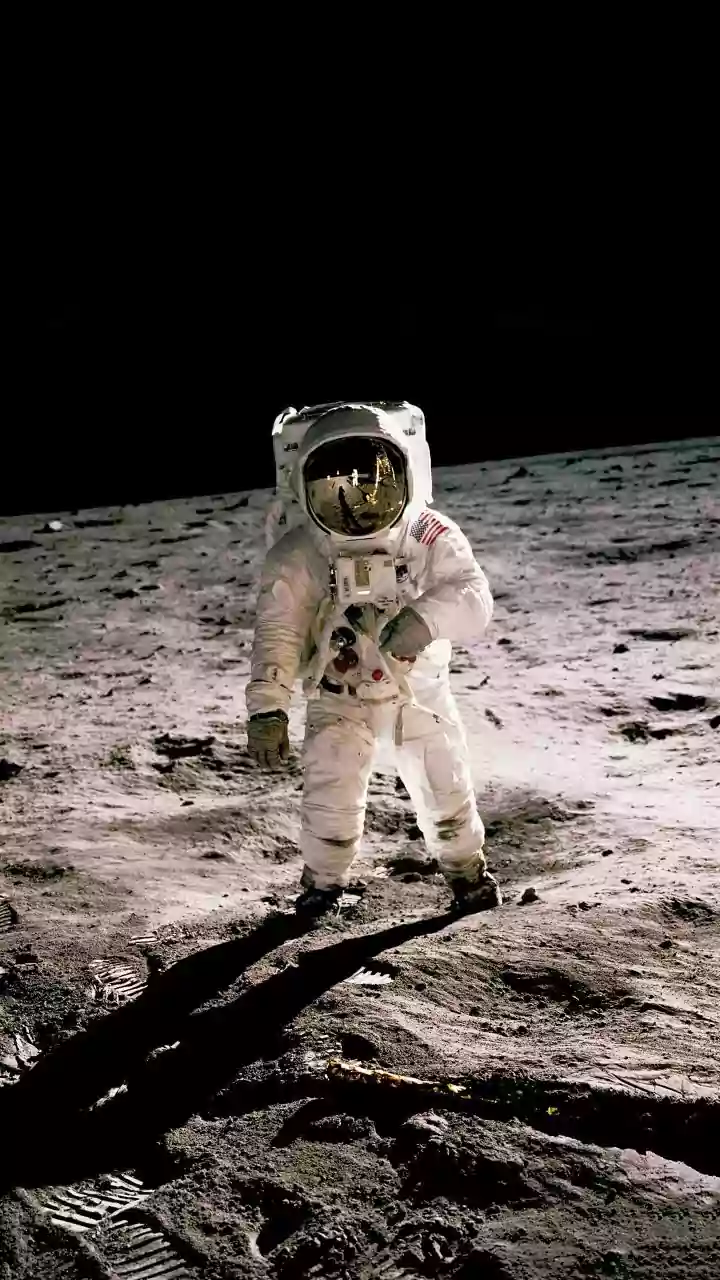
weathering, eroding, and reshaping the surface. A footprint left on a sandy beach is gone with the next tide. A trail carved in the dirt is washed away by the next downpour. The Moon, however, is a world frozen in time. It has no significant atmosphere to speak of—what little exists is an exosphere so thin it’s practically a vacuum. This means there is no wind to blow dust around, no rain to wash away impressions, and no weather to disturb the surface. The lunar landscape is a silent, still museum. When the Apollo astronauts stepped onto its surface, they were pressing their boots into a medium that had no natural means of erasing their marks. The lack of atmospheric activity is the primary reason why these footprints have remained undisturbed for over half a century.
A Footprint in Fine Dust
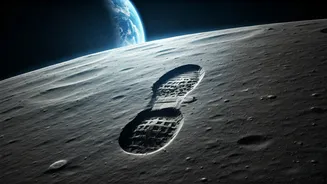
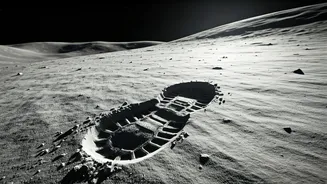
The preservation isn’t just about the absence of weather; it's also about the unique properties of the lunar soil itself. The 'soil' on the Moon isn't like the soil on Earth, which is composed of organic matter and particles rounded by erosion. Instead, the lunar surface is covered by a layer of fine, grey dust and rock fragments called regolith. This material was formed over billions of years by the constant bombardment of micrometeorites. These tiny cosmic projectiles, striking the surface at incredible speeds, pulverised the lunar rock into fine, sharp, and jagged particles. Unlike the rounded grains of sand on an Earthly beach, the particles of lunar regolith are angular and interlock easily. When an astronaut’s boot pressed down, the fine dust compacted tightly, holding the detailed impression of the boot tread perfectly. Because the particles are so sharp and there’s no moisture to soften them, the impression doesn't slump or degrade. It’s more like pressing a mould into wet concrete than stepping in dry sand.
The Slow March of Cosmic Dust
While the headline claims “permanent preservation,” the reality is slightly more complex, albeit on a timescale almost too vast to comprehend. The footprints are not truly permanent, but they will likely be there for millions of years. The same force that created the regolith—micrometeorite bombardment—is also the only thing that can erase the astronauts' paths. The Moon is constantly being pelted by a very fine shower of cosmic dust and tiny meteorites. This process, known as 'gardening,' is an extremely slow form of erosion. Over immense periods, these tiny impacts will gradually stir up the top layer of the regolith, ever so slowly smoothing over the footprints. Scientists estimate it could take anywhere from 10 to 100 million years for the prints to be completely erased. For all human purposes, they are a permanent fixture, a monument that will far outlast any structure ever built on Earth.
Protecting Our Lunar Heritage
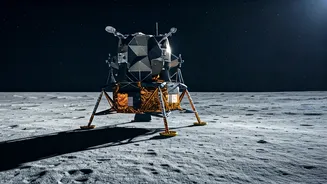
As humanity prepares to return to the Moon through programmes like Artemis, the question of preserving these historic sites has become a serious topic of discussion. The Apollo landing sites are more than just dusty patches; they are irreplaceable records of one of humanity's greatest achievements. They contain not just footprints but also discarded equipment, rovers, and scientific instruments. Recognising their historical significance, NASA has established a set of recommendations for future missions, both governmental and commercial. These guidelines urge future lunar explorers to treat the Apollo sites as archaeological treasures. They suggest creating exclusion zones around the landing areas, ensuring that descending spacecraft do not blast the sites with rocket exhaust, and planning rover paths to avoid disturbing the historic boot prints and rover tracks. The goal is to ensure that these first, fragile steps into another world are preserved for the benefit of future generations who may one day visit them as tourists.