






Monitor Official Weather Alerts
Before you even think of starting your journey, your first step should be to check the latest official updates. The India Meteorological Department (IMD) has issued alerts for several southern states, including an orange alert for districts in Kerala
like Pathanamthitta, Kottayam, and Idukki, which signifies the possibility of very heavy rain. Heavy rainfall is also expected in Tamil Nadu and parts of Karnataka. These forecasts can change rapidly. Follow IMD updates and local news channels to get the most accurate information. Postponing your trip, especially to hilly or landslide-prone areas, is wiser than getting stranded.
Prepare Your Vehicle Thoroughly
If you are travelling by road, your vehicle is your first line of defence. Ensure your tyres have adequate tread depth—at least 3 mm is recommended for wet roads. Check that your windshield wipers, headlights, and brakes are in perfect working condition. A faulty wiper in a downpour can be extremely dangerous. Also, consider assembling a basic car emergency kit: a torch, a first-aid box, and a rope. For two-wheelers, ensure your engine revs are high when navigating waterlogged patches to prevent water from entering the exhaust.
Pack a Monsoon-Ready Kit
Your packing list needs to be adapted for wet conditions. Prioritise quick-dry synthetic clothing over cotton, which takes a long time to dry in high humidity. A lightweight waterproof jacket or poncho is essential. Pack electronics like your phone, charger, and power bank in waterproof zip-lock bags or dry bags. It's also wise to carry a powerful torch, essential medicines, antifungal powder, and some ready-to-eat snacks and drinking water. A microfiber towel is another great addition as it dries much faster than regular towels.
On-the-Road Safety Practices
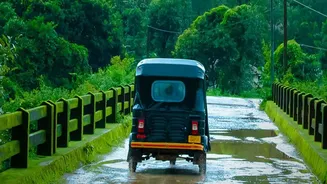
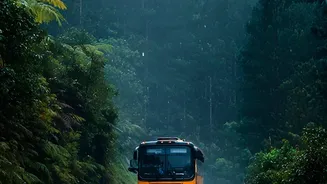
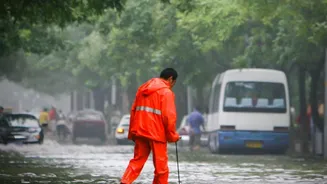
Driving in heavy rain demands your full attention and a change in driving style. Reduce your speed by at least 30-40% compared to dry conditions and double the distance from the vehicle in front of you. Use low-beam headlights even during the day for better visibility. Be extremely wary of puddles and waterlogged streets; you never know how deep they are or what lies beneath. Never attempt to cross a flooded road where the water level is above your car's door sills, as even a small amount of fast-moving water can sweep a car away. If visibility becomes dangerously low, it is safer to pull over to a safe, elevated spot and wait for the rain to subside.
Stay Connected and Informed
Connectivity is crucial during a weather event. Ensure your mobile phone is fully charged and carry a fully charged power bank. Save emergency contact numbers, including the National Highway Authority of India (NHAI) helpline (1033) and local disaster management authorities. Download offline maps of your route, as mobile networks can be unreliable in remote areas or during severe weather. Share your travel itinerary and accommodation details with family or friends so someone knows your whereabouts.
Health and Hygiene on the Go
The monsoon season brings a higher risk of water-borne diseases and other health issues. Carry a hand sanitiser and disinfectant wipes. Be cautious about street food and drink only bottled or boiled water. Fungal infections are common in damp conditions, so keeping an anti-fungal powder or cream can be very helpful. Also, pack mosquito repellent, as the stagnant water that collects after rains becomes a breeding ground for mosquitoes.