




The modern workday often means long hours tied to a desk. This sedentary reality can lead to tight muscles, poor posture, and even long-term health risks. Fortunately, simple bodyweight stretches can make a world of difference.
Why Sitting is a Silent Problem
Our bodies are designed
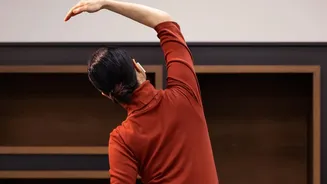
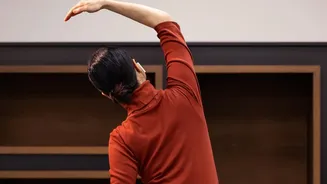
for movement. When we spend most of the day sitting, several negative effects can occur. Blood flow slows, muscles in the lower body become inactive, and our posture often suffers, leading to a 'hunched' position. This can cause tight hip flexors, weakened glute and core muscles, and persistent aches in the neck, shoulders, and back. Over time, a sedentary lifestyle is linked to more serious health concerns, including an increased risk of heart disease, type 2 diabetes, and obesity. The good news is that regularly breaking up your sitting time with simple movements can effectively combat these risks, improve flexibility, and boost your energy and focus.
The Seated Spinal Twist
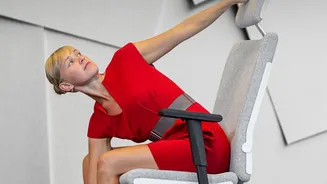
This stretch is a fantastic way to relieve tension that builds up in the lower back and torso. To perform it, sit tall in your chair with your feet flat on the floor. While keeping your hips facing forward, gently twist your upper body to one side, using the armrest or back of the chair for a light hold. You should feel a gentle stretch through your spine. Hold for 20-30 seconds, breathing deeply, before slowly returning to the center and repeating on the other side. Avoid any sharp or painful movements; the goal is a gentle release.
The Chest Opener
To counteract the forward hunch that develops from typing and looking at a screen, the chest opener is essential. You can do this sitting or standing. Clasp your hands together behind your back. Gently pull your shoulder blades together and lift your chest, raising your hands slightly until you feel a good stretch across the front of your shoulders and chest. This movement helps to open up the pectoral muscles, which get tight from prolonged sitting, and encourages better posture. Hold the stretch for 20-30 seconds.
The Neck Glide (Chin Tuck)
Staring at a monitor often leads to 'forward head posture,' straining the muscles in your neck. The chin tuck, or neck glide, helps correct this by strengthening the neck muscles. Sit or stand tall, looking straight ahead. Without tilting your head up or down, gently glide your head backward, creating a 'double chin'. You'll feel a stretch at the back of your neck. Hold for 5 seconds and then release. Repeat this 5 to 10 times to relieve tension and retrain your posture.
The Standing Hip Flexor Stretch
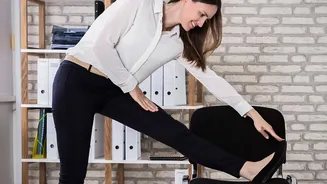
Your hip flexors, the muscles at the front of your hips, become short and tight from constant sitting, which can contribute to lower back pain. To stretch them, stand up and take a step forward with one foot, similar to a lunge position. Keeping your back straight, gently bend your front knee and shift your weight forward until you feel a stretch in the front of the hip of your back leg. Be sure to keep your core engaged to protect your lower back. Hold for 20_30 seconds on each side.
Shoulder Shrugs and Rolls
Tension often accumulates in the neck and shoulders. Shoulder shrugs and rolls are simple yet highly effective for releasing this stress. While sitting or standing, slowly raise your shoulders up toward your ears, hold for a moment, and then let them drop and relax completely. Follow this by slowly rolling your shoulders backward in a circular motion five times, then forward five times. This increases blood flow and helps to loosen tight trapezius muscles.
The Seated Cat–Cow
Borrowed from yoga, this dynamic movement helps increase spinal flexibility and relieve tension. Sit at the edge of your chair with your feet flat on the floor and hands on your knees. As you inhale, arch your back, push your chest forward, and look up slightly (Cow). As you exhale, round your spine, tuck your chin to your chest, and let your shoulders curve forward (Cat). Flow between these two positions for 5–10 repetitions, moving with your breath.