




1. Human Spaceflight and the Artemis Accords
One of the most significant developments is India's entry into the Artemis Accords, a US-led framework for peaceful and sustainable lunar exploration. By signing on, India joins a global coalition shaping the future of space governance and ensures its
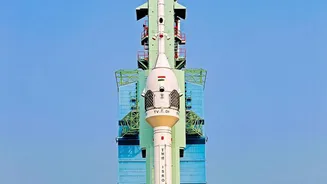
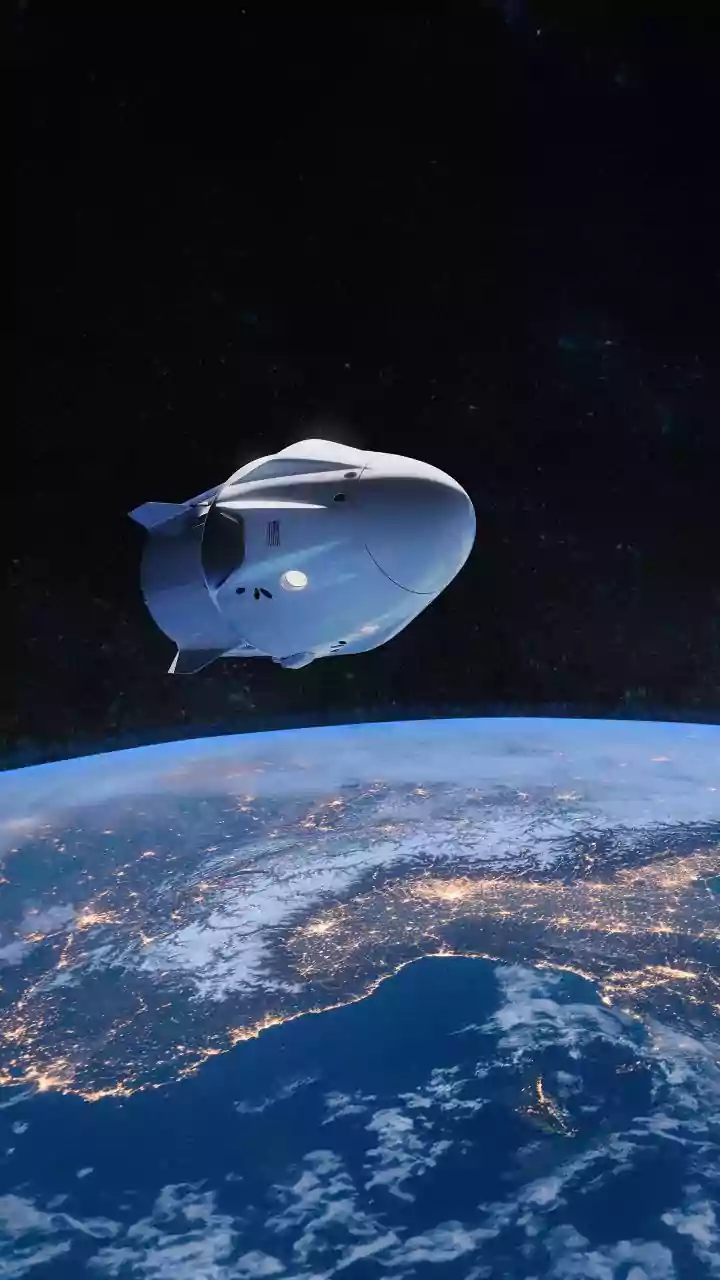
own lunar ambitions are aligned with international standards. This partnership goes beyond principles; it has a tangible human element. In a landmark collaboration, NASA and ISRO are working on a joint mission to the International Space Station (ISS). As part of this, an Indian astronaut is training at NASA's Johnson Space Center for a flight to the ISS. This hands-on experience in long-duration spaceflight is invaluable for India's own ambitious Gaganyaan programme, which aims to send Indian astronauts into orbit on an Indian spacecraft.
2. An All-Seeing Eye for Planet Earth
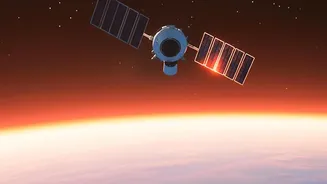
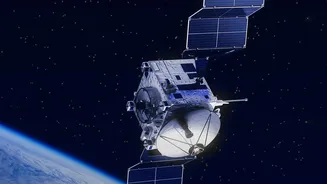
The NASA-ISRO Synthetic Aperture Radar (NISAR) mission represents a monumental joint effort in Earth science. Launched in 2025, this advanced satellite is the first of its kind, using dual-frequency radar (an L-band from NASA and an S-band from ISRO) to scan nearly the entire planet every 12 days. Its mission is to track subtle changes in the Earth's surface with unprecedented detail. For India, the applications are immense. NISAR's data will provide critical insights for managing natural disasters like earthquakes, tsunamis, and landslides. It will also monitor agricultural lands, track groundwater resources, and measure the impact of climate change on glaciers and ice sheets, providing actionable intelligence for policymakers and scientists.
3. Securing Assets in a Crowded Sky
As more satellites are launched, the space around Earth is becoming increasingly congested and contested. Protecting valuable space assets from collisions with debris or other satellites is a top priority. To address this, India and the US have signed a Space Situational Awareness (SSA) arrangement. This agreement facilitates the sharing of data to monitor objects in orbit, enhancing the safety and security of both nations' satellite constellations. The collaboration allows ISRO to tap into the extensive US network for tracking space traffic, providing a clearer picture of the orbital environment. This is a crucial, if less glamorous, aspect of the partnership that underpins the sustainability of all other space activities.
4. Fuelling a Commercial Space Revolution
The India-US partnership is not just about government agencies; it is also designed to catalyse a vibrant private space economy in India. The Initiative on Critical and Emerging Technology (iCET) is a cornerstone of this effort, creating an 'innovation bridge' to connect startups, businesses, and academic institutions from both countries. This framework aims to foster commercial collaboration in everything from satellite manufacturing and launch systems to space tourism and advanced connectivity. By aligning India's burgeoning private space sector with the world's most mature space industry, the partnership seeks to accelerate innovation, create high-tech jobs, and position Indian companies as key players in the multi-billion dollar global space market.
5. Exploring New Worlds Together
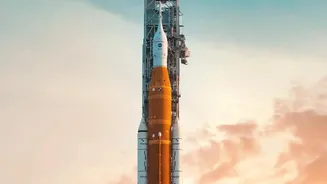
The collaboration extends far beyond Earth's orbit. By joining the Artemis Accords, India has signalled its intent to participate in the next era of deep space exploration, including missions to the Moon and eventually Mars. This builds on a history of successful scientific cooperation, such as when NASA instruments were included on India's first lunar probe, Chandrayaan-1, which played a key role in discovering water molecules on the Moon. Future joint missions will focus on planetary science, spaceflight safety, and answering fundamental questions about our solar system. This shared journey into the cosmos not only advances human knowledge but also strengthens the strategic and diplomatic bonds between the two democracies.