





The Silent Emergency of Coral Bleaching
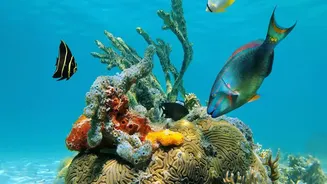
Coral reefs are the bustling cities of the sea, supporting over a quarter of all marine life. They are also incredibly sensitive. Corals get their vibrant colours and most of their food from microscopic algae called zooxanthellae living in their tissues.
When ocean temperatures rise, even by just one or two degrees for several weeks, the corals become stressed and expel these vital algae. This process, known as thermal stress, turns them bone-white. This is coral bleaching. A bleached coral is not dead, but it is starving and vulnerable to disease. In recent years, frequent and severe marine heatwaves have triggered mass bleaching events globally, devastating iconic ecosystems like the Great Barrier Reef and threatening the livelihoods of millions who depend on them.
Enter the 'Super Corals'
Amidst the fields of bleached skeletons, scientists have observed a remarkable phenomenon: some corals endure. These resilient survivors, often dubbed 'super corals', are able to withstand or recover from the extreme heat that kills their neighbours. These aren't a single new species, but rather individual corals or entire reefs that have a natural advantage. This resilience can come from several factors. Some may have genetic adaptations that make them inherently tougher. Others might host species of heat-tolerant algae. And some simply exist in locations, like areas with strong currents or upwelling of cooler water, that provide natural protection from the worst effects of a heatwave. Understanding these survivors is now a top priority for marine biologists.
The High-Tech Hunt for Resilient Reefs
Identifying these heat-resistant corals is a complex detective story combining fieldwork and advanced technology. The most direct method is observation: after a major bleaching event, scientists survey reefs to see which corals survived. But the search is becoming more proactive. Researchers use sophisticated hydrodynamic models and satellite data to pinpoint potential havens—areas that might be naturally cooler and could host resilient reefs. In the lab, scientists conduct stress tests, placing coral fragments in heated aquariums to see which ones can tolerate higher temperatures. Genomic analysis is another powerful tool, allowing researchers to sequence a coral's DNA to find the specific genes linked to heat tolerance. By combining these methods, scientists are building a global map of these critical, resilient coral populations.
From Discovery to Active Protection
Finding super corals is only the first step; the real goal is to use them to protect the future of our reefs. One key strategy is to prioritise the protection of naturally resilient reefs by establishing or expanding Marine Protected Areas (MPAs) around them. These 'super reefs' can then act as natural seed banks, their larvae drifting on currents to repopulate damaged, neighbouring reefs. Another approach is more hands-on. In a process known as 'coral gardening' or assisted evolution, fragments from heat-tolerant corals are grown in underwater nurseries. These resilient offspring can then be transplanted to restore degraded areas, giving them a genetic head start against future heatwaves. This selective breeding aims to accelerate the natural process of evolution, helping corals adapt faster than they could on their own.
Hope for India's Underwater Treasures
These global efforts have direct relevance for India, home to significant reef ecosystems in the Andaman and Nicobar Islands, Lakshadweep, the Gulf of Mannar, and the Gulf of Kutch. These reefs face the same threats of thermal stress. For decades, Indian marine biologists and conservation organisations have been working on coral restoration, with promising results in the Gulf of Mannar through transplantation projects. Techniques like micro-fragmentation and the use of 'biorock' structures to accelerate growth are already being employed. Integrating the search for and cultivation of heat-resistant local corals into these existing programmes could be a game-changer, helping to build more resilient reefs that can better withstand the inevitable marine heatwaves of the future.