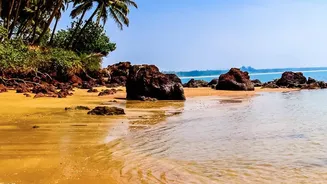







Agonda: Your Sanctuary of Calm
Agonda is the kind of beach you dream of when you imagine a tranquil escape. It's a three-kilometer stretch of wide, golden sand where the loudest sounds are often just the gentle waves. Unlike its more famous neighbours, Agonda has resisted loud parties
and commercial water sports, making it a haven for those who want to read, swim, and simply be. For a solo traveller, it strikes the perfect balance: quiet enough for solitude but with a welcoming community vibe fostered by its many yoga retreats and relaxed cafes. It’s a place where doing nothing is the main activity. Renting a scooter is highly recommended, giving you the freedom to explore at your own pace.
Embracing Solo Life in Agonda
Life in Agonda moves at a slower pace, which is ideal for a solo trip. Start your mornings with a walk along the near-deserted shoreline, then perhaps join a drop-in yoga class. The afternoons are for swimming in the calm sea or kayaking along the coast. A boat trip to spot dolphins or visit the secluded Butterfly Beach is a popular and rewarding activity. While nightlife is low-key, consisting mostly of live music at beachside restaurants, the social atmosphere is warm and inviting. Places like Zest Cafe are well-known hubs for international travellers and a great spot to meet like-minded people in a relaxed garden setting.
Galgibaga: Goa’s Wild and Untouched Turtle Beach
A short drive south of Agonda lies Galgibaga Beach, one of Goa's best-kept secrets. Known as Turtle Beach, it is one of the few protected nesting sites for the endangered Olive Ridley sea turtle. This distinction has kept it wonderfully undeveloped. You won’t find rows of beach shacks or hotels here; instead, the shore is backed by a forest of pine-like casuarina trees. The beach offers vast, open sands and a profound sense of solitude, making it a must-visit for anyone truly looking to get away from it all. Its raw, pristine nature is what makes it so special.
Responsible Tourism at Galgibaga
Galgibaga’s primary identity as a turtle sanctuary requires visitors to be mindful and respectful. The nesting season runs from November to March, and during this period, parts of the beach are cordoned off by the Forest Department to protect the eggs. While seeing a turtle isn't guaranteed, learning about the conservation efforts is a meaningful experience in itself. Visitors should avoid using flash photography or bright lights, especially at night, and never enter restricted zones. The few shacks that exist are set back from the sand, offering delicious, fresh seafood with an unspoiled view. Visiting Galgibaga isn't just a beach trip; it's a chance to witness and support vital conservation work.
Practical Tips for Your Solo Trip
The best time to visit both Agonda and Galgibaga is between November and February, when the weather is perfect and the sea is calm. Renting a scooter is the most flexible way to travel between the beaches and explore nearby spots like Patnem and Cola Beach. Accommodation in Agonda ranges from simple beach huts to more comfortable resorts, while options near Galgibaga are fewer and quieter. For solo female travellers, South Goa is generally considered safe, but standard precautions like avoiding isolated areas after dark are advised. Finally, carry enough cash, as ATMs in these smaller villages can be unreliable, especially during peak season.