





The Winter Advantage
Cauliflower thrives in the cool, mild temperatures of India's winter, or 'rabi', season, which typically spans from September to February. This cooler growing period allows the vegetable to develop slowly, resulting in a compact, dense head that is less
watery and boasts a sweeter, nuttier flavour. While modern farming makes cauliflower available year-round, the winter harvest is when it truly shines in both texture and taste, making it a favourite in kitchens across the country. This seasonal peak means you're getting the vegetable at its freshest and most nutritious, often at a better price due to its abundance.
How to Choose the Perfect Head
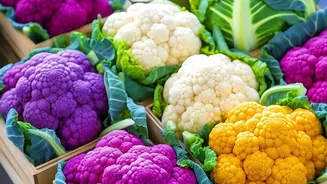
Selecting a quality cauliflower is the first step to a delicious dish. Look for a head that feels heavy for its size, with florets that are firm and tightly packed together. The colour should be a clean, creamy white, free from brown spots or blemishes, which can indicate spoilage. The leaves surrounding the head are also a good indicator of freshness; they should be green, crisp, and vibrant, not wilted or breaking. Avoid any heads that have soft spots, as this is a clear sign that the vegetable is past its prime. A fresh cauliflower should have a clean, neutral smell; a strong, unpleasant odour suggests it is beginning to decay.
Simple Storage for Lasting Freshness
To maximise the life of your winter cauliflower, proper storage is key. For best results, keep the head whole and unwashed until you are ready to use it. Moisture is the enemy of freshness, so wrap the cauliflower loosely in a plastic bag—ideally one with perforations to allow for air circulation—and place it in your refrigerator's crisper drawer. Some experts recommend placing a paper towel in the bag to absorb any excess moisture. Stored this way, a fresh head of cauliflower can last for up to a week, and sometimes longer. For even longer-term storage, you can blanch the florets and freeze them, where they will keep for up to a year.
Beyond Aloo Gobi: Culinary Inspiration
The firm texture of winter cauliflower makes it incredibly versatile in the kitchen. It holds up beautifully to various cooking methods without turning to mush. Beyond the classic and beloved Aloo Gobi, consider exploring other preparations. Roasting cauliflower florets at a high temperature brings out a deep, nutty sweetness that is irresistible. For a popular Indo-Chinese treat, transform it into crispy Gobi Manchurian or the fiery Gobi 65. You can also grate it to make flavourful Gobi Parathas, a nutritious and filling breakfast flatbread. And for a modern, healthy twist, it can be pulsed into 'cauliflower rice' as a low-carb alternative to grains or blended into a creamy, velvety soup.
A Nutrient-Rich Powerhouse
Beyond its culinary flexibility, cauliflower is packed with nutritional benefits. It is an excellent source of Vitamin C and Vitamin K, and also provides a good amount of folate and fibre. The fibre is essential for maintaining a healthy digestive system, while antioxidants found in cauliflower, such as sulforaphane, help protect the body's cells from damage. Its high nutrient density and low calorie count make it a fantastic addition to any diet, supporting everything from immune function to heart health. So, when you bring home that firm head of winter gobhi, you're not just getting a versatile ingredient, but a boost of wellness too.