

Visby: The Walled Hanseatic Jewel
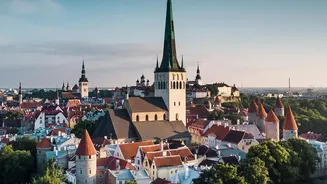
Located on the island of Gotland, Visby is arguably Scandinavia's best-preserved medieval city and a UNESCO World Heritage site. Known as the 'city of roses and ruins', its most striking feature is the magnificent 3.6-kilometre-long stone wall, complete
with defensive towers, that encircles the old town. This fortification was built during the 13th century when Visby was a dominant hub in the Hanseatic League, a powerful medieval commercial alliance. Inside the walls, you can wander through a labyrinth of cobbled lanes, discover the ruins of numerous medieval churches, and admire St. Mary's Cathedral, which was originally built for German merchants in the 13th century. Each August, the city hosts a vibrant Medieval Week, bringing its rich history to life with markets, music, and tournaments.
Sigtuna: Sweden’s First Town
Founded around 980 AD by a Viking king, Sigtuna holds the title of Sweden's oldest town. Situated on the shores of Lake Mälaren, its charming main street, Stora Gatan, is believed to follow the same path it did over a thousand years ago. Sigtuna is a treasure trove for anyone interested in the transition from the Viking Age to medieval Christianity. The town is famously rich in rune stones, with ancient inscriptions found dotted throughout its centre, telling tales of its earliest residents. Visitors can explore the ruins of several early stone churches, such as St. Olof's and St. Lars', which stand as silent witnesses to the town's past as an early religious centre. Sweden's first coins were minted here, cementing its status as an early royal and commercial hub before Stockholm rose to prominence.
Lund: A City of Scholars and Saints
Lund, founded around 990, is one of Sweden's oldest and most distinguished cities, blending ancient history with the vibrant energy of its university, which was founded in 1666. The city's medieval street plan is still largely intact, inviting exploration of its narrow, winding lanes. The undisputed heart of the city is Lund Cathedral, a monumental example of Romanesque architecture whose oldest parts date to the late 11th century. Inside, you can visit the ancient crypt, consecrated in 1123, and marvel at a magnificent astronomical clock from the 1440s. Once the religious centre of all Scandinavia, Lund was a city of great importance, and today its historical buildings and museums offer a deep dive into the region's medieval past.
Gamla Uppsala: A Royal and Pagan Center
Before Sweden was a unified Christian kingdom, Gamla Uppsala (Old Uppsala) was a place of immense power and pagan significance. This archaeological site, located just outside modern Uppsala, was a political, economic, and religious centre during the Iron Age and Viking Age. It is most famous for its three massive Royal Mounds, 6th-century barrows traditionally believed to be the resting places of legendary pre-Viking kings. Historical texts, like those by Adam of Bremen, describe a great pagan temple at Uppsala where sacrifices were made to Norse gods like Odin, Thor, and Freyr. Though the temple is gone, replaced by an early church, the sheer scale of the burial mounds against the flat landscape offers a powerful connection to Sweden's mythic origins and the pre-Christian world.
Gammelstad Church Town: A Unique Northern Tradition
Further north, near the city of Luleå, lies Gammelstad Church Town, another UNESCO World Heritage site with a unique medieval story. It is the best-preserved example of a 'church town', a type of settlement once common in northern Scandinavia. Gammelstad consists of a stunning 15th-century stone church surrounded by over 400 charming red wooden cottages. These houses weren't permanent residences; they were built to shelter worshippers from surrounding villages who had to travel long distances to attend church services, as mandated by law. The cottages were only used on Sundays and during religious festivals, creating a temporary, bustling community. This remarkable site illustrates how medieval life was adapted to the harsh conditions of northern Sweden, blending faith, community, and survival.