




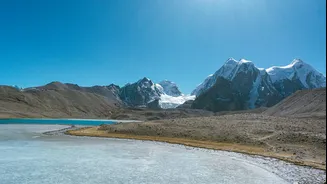
The majestic Himalayas, the 'Third Pole' of the world, are sending a grave warning. Recent United Nations reports highlight a silent, growing threat nestled among the peaks: the increasing fragility of glacial lakes and the rising danger of floods.
Mountain 'Water Bombs': What is a GLOF?
Imagine
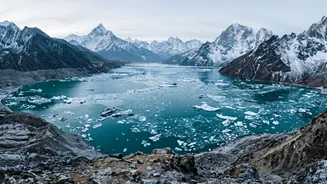
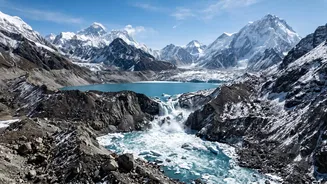
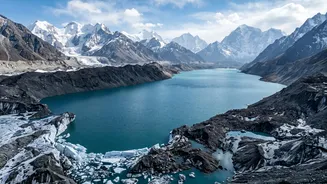
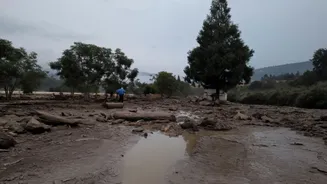
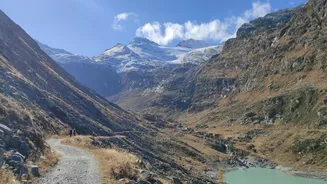
a massive bathtub perched high on a mountain, filled with icy meltwater and held back only by a flimsy wall of loose rocks and soil. This is a glacial lake. A Glacial Lake Outburst Flood, or GLOF, is what happens when that natural dam, known as a moraine, suddenly breaks. The result is a terrifying, fast-moving torrent of water, ice, and debris that can surge down valleys, wiping out everything in its path. These are not slow-rising floods; they are sudden, violent events with the power to obliterate villages, roads, and critical infrastructure like hydropower dams in mere hours. The sheer force of a GLOF can trigger secondary landslides, compounding the destruction for hundreds of kilometres downstream.
The Alarming Findings of New UN Reports
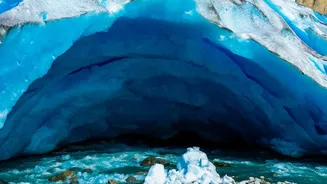
Several recent reports, released ahead of the global climate summit, paint a grim picture. Studies titled 'Overshoot and the Cryosphere' and 'State of the Cryosphere 2026' confirm that the Himalayan region is warming much faster than the global average. For instance, a global temperature rise of 1.5°C could mean warming of 1.8°C to 2.2°C in the Hindu Kush Himalaya. This accelerated melting is causing glacial lakes to grow in number and size at an unprecedented rate. Another UN-led study, analysing data up to 2025, found that the frequency of GLOF events has surged in recent decades, with ice avalanches being a primary trigger. Worryingly, the report also revealed that India has suffered the highest number of deaths from GLOFs among eight countries in the region, with over 6,000 fatalities recorded.
A Clear Link to a Warming Planet
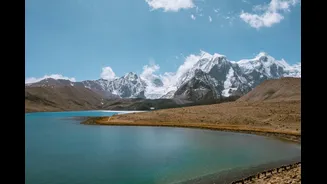
The science is clear: climate change is the primary driver behind this escalating threat. As global temperatures rise, glaciers are retreating at an alarming pace. Some studies suggest Himalayan glaciers have lost nearly 10% of their mass in the last four decades. This rapid melting does two dangerous things. First, it pours enormous volumes of water into existing lakes, increasing their size and the pressure on their natural dams. Second, the warming thaws the permafrost—the frozen ground that acts as a cement for the moraine walls—making them unstable and prone to collapse. This lethal combination of more water and weaker dams is turning hundreds of serene mountain lakes into ticking time bombs.
India's Vulnerable Frontline
For India, this is not a distant threat. Himalayan states, including Sikkim, Arunachal Pradesh, Himachal Pradesh, and Uttarakhand, are on the frontline. The catastrophic Sikkim flood of October 2023 is a stark reminder of a GLOF's power. The breach of the South Lhonak Lake, long identified as high_risk, unleashed a flood that destroyed the 1,200 MW Teesta III dam and caused dozens of fatalities. The 2013 Kedarnath tragedy was also worsened by a GLOF from the Chorabari glacial lake. The National Disaster Management Authority (NDMA) has identified approximately 7,500 glacial lakes in the Indian Himalayas, flagging 189 of them as being at high risk. These events show that the vulnerability of India's hill towns and massive infrastructure projects is no longer a theoretical concern, but an active crisis.
The Race Against an Icy Tide
In response, Indian authorities are accelerating mitigation efforts. The NDMA has launched a National GLOF Risk Mitigation Programme, which involves expeditions to high_altitude glaciers to assess hazards, map vulnerabilities, and install early warning systems. Teams are conducting 'ground_truthing' surveys at high_risk lakes in Sikkim, Ladakh, Himachal Pradesh, and Jammu and Kashmir to verify remote sensing data. These efforts are critical, as experts warn that technology is struggling to keep pace with the scale of the threat. Solutions being explored include controlled draining to lower lake water levels, alongside installing automated monitoring stations that can provide real_time data to downstream communities. International collaboration, such as with the Swiss Agency for Development and Cooperation, is also playing a key role in bringing expertise and technology to the region.