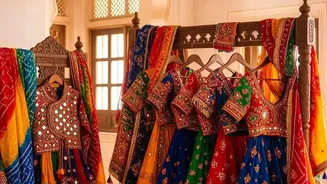

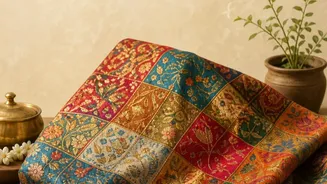
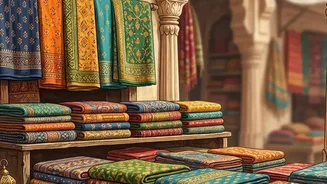
Before 'upcycling' was a buzzword, it was a way of life in India. In countless homes, old clothes weren't discarded but given a vibrant new purpose through stunning textile crafts that you can easily bring into your own home décor.
Kantha: Bengal’s Stitched Stories
Hailing from West Bengal,
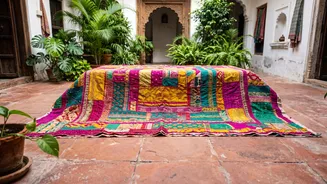
Odisha, and Bangladesh, Kantha is one of India's most ancient forms of embroidery. The name itself is said to derive from the Sanskrit word for 'rags'. Traditionally, women would layer old, soft cotton sarees or dhotis, stitching them together with a simple running stitch. This wasn't just about mending; it was about creating something new. The threads for the stitching were often pulled from the borders of the old sarees, embodying a philosophy of complete reuse. Today, this technique is perfect for turning tired fabrics into incredible home furnishings. Your old cotton sarees, dupattas, or even bedsheets can be layered and stitched to create stunning quilts, vibrant cushion covers, or unique wall hangings that carry a story in every thread.
Godhadi: Maharashtra's Layered Heirlooms
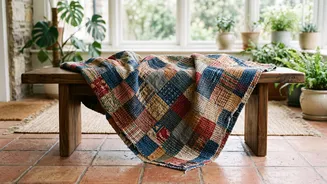
In Maharashtra and parts of Karnataka, the Godhadi is a testament to the art of creating warmth and comfort from discarded fabrics. These traditional hand-stitched quilts are made by joining together refurbished old clothes, especially sarees. The process is a social and creative one, often involving women of the community gathering in the afternoons to work together. They layer pieces of cloth—larger sections for the outside and smaller scraps for the inner filling—and meticulously hand-stitch them. The result is a thick, durable, and incredibly cozy blanket, each one unique. You can use this technique to transform a pile of old family clothes—shirts, pants, sarees—into a meaningful heirloom quilt or a thick, comfortable floor mat that is both functional and full of memories.
Sujini: The Narrative Threads of Bihar
Similar to Kantha, Sujini (or Sujani) from Bihar was born from the practical need to create soft quilts for newborn babies by layering old sarees and dhotis. The name itself combines 'su' (easy) and 'jani' (birth). What began as a simple running stitch to hold the layers together evolved into an expressive art form. The embroidery on Sujini quilts often depicts mythological tales, village life, and personal stories, turning a simple blanket into a narrative textile. While traditionally for quilts, the Sujini technique is wonderfully adaptable. You can use it to turn old cotton garments into decorative art panels for your wall, unique covers for your throw pillows, or even a soft mat for a child's room, embedding your own family's story into the fabric.
Chindi: Weaving Magic from Scraps
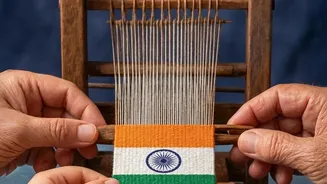
The word 'chindi' literally means 'torn cloth' or 'scrap'. This craft, prevalent across several Indian states, is the ultimate example of turning waste into wealth. It involves collecting small, leftover pieces of fabric—often from tailor shops or garment factories—and weaving them into colourful and durable items. Traditionally, these fabric strips are hand-woven on looms to create vibrant 'chindi' rugs and floor mats. The beauty of chindi lies in its cheerful, chaotic mix of colours and textures. You can create your own version by braiding strips cut from old t-shirts, jeans, and other sturdy clothes to make small doormats, colourful coasters, or even a statement rug for your living room, proving that even the smallest scraps have creative potential.