


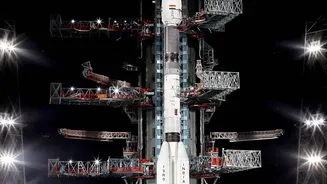
1. Gaganyaan: India’s Human Spaceflight Leap
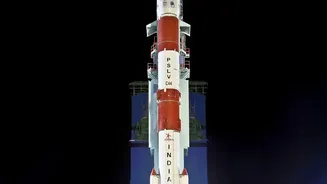
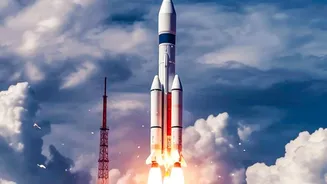
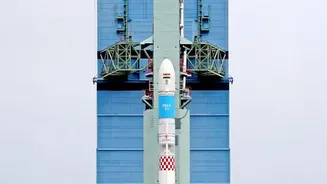
The Gaganyaan mission is arguably ISRO's most awaited endeavour—India's first crewed spaceflight program. The goal is to send a crew of three astronauts into a Low Earth Orbit of 400 km and bring them back safely. While the first crewed flight, designated
H1, is now planned for 2027, it will be preceded by a series of critical uncrewed test flights. The first of these, G1, is expected in the latter half of 2026 and will test the crew module, life support, and recovery operations. A subsequent flight, G2, will feature the humanoid robot Vyommitra to simulate human functions before astronauts finally take flight, marking India's entry into a select club of nations with independent human spaceflight capabilities.
2. Mangalyaan-2: A Bold Return to Mars
Building on the historic success of the first Mars Orbiter Mission (MOM), Mangalyaan-2 represents a giant leap in India's interplanetary exploration. Unlike its predecessor, which was an orbiter, this mission aims to land on the Martian surface. The mission profile includes a lander, a rover, and even a helicopter, drawing parallels to NASA's Perseverance and Ingenuity missions. The goal is to conduct in-depth studies of the Martian surface, atmosphere, and geology. A successful landing would make India only the third country, after the United States and China, to operate a rover on Mars, solidifying its status as a formidable player in planetary science. While launch timelines are still being finalised, they could be as early as 2028 or 2030.
3. Shukrayaan-1: Unveiling Venus's Secrets
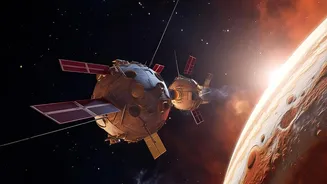
After the Moon and Mars, ISRO's next planetary target is Venus. The Shukrayaan-1 mission, India's first to the second planet from the sun, aims to study its famously dense and hostile atmosphere, surface composition, and volcanic activity. The mission, formally approved in September 2024, is slated for a 2028 launch. It will carry a suite of instruments to investigate why Venus, often called Earth's twin, evolved so differently into a planet with a runaway greenhouse effect. With international collaboration for some payloads, Shukrayaan-1 is poised to contribute significantly to our global understanding of planetary atmospheres.
4. LUPEX: A Lunar Partnership with Japan
The Lunar Polar Exploration Mission (LUPEX) is a joint venture between ISRO and the Japan Aerospace Exploration Agency (JAXA). Also known as Chandrayaan-5, the mission will explore the Moon's south pole region, a site of immense global interest for its potential water-ice deposits. In this collaboration, ISRO is responsible for developing the lander that will safely touch down on the challenging lunar terrain, while JAXA will provide the rover. Scheduled for launch no earlier than 2027-2028, the rover will drill up to 1.5 meters below the surface to directly analyze the presence and state of water, a critical step for future sustainable human activities on the Moon.
5. SPADEX: Mastering In-Orbit Docking
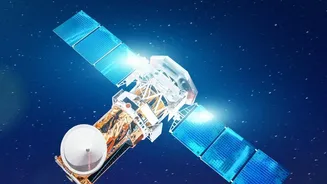
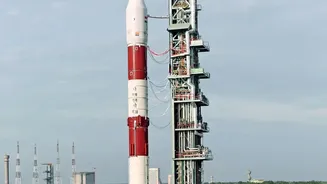
The Space Docking Experiment (SPADEX) is a crucial technology-demonstrator mission for ISRO's future ambitions, particularly for building a space station. The mission involves launching two small satellites, a 'Chaser' and a 'Target,' to practice autonomous rendezvous and docking in orbit. This technology allows multiple spacecraft to connect, transfer fuel or cargo, and be assembled into larger structures in space. The successful launch in late 2024 has paved the way for mastering this complex capability, which is essential for long-duration human missions and in-space satellite servicing. It places India among a handful of nations with proven space docking technology.
6. Chandrayaan-4: Bringing Back a Piece of the Moon
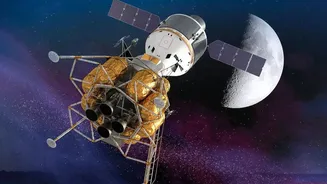
Following the landing success of Chandrayaan-3, ISRO is planning Chandrayaan-4, an ambitious lunar sample-return mission. The objective is to land on the Moon, collect samples of lunar soil and rocks, and return them to Earth for detailed analysis. This complex mission involves four modules: a transfer module, a lander, an ascender, and a re-entry module. If successful, India will become the fourth country to achieve this feat. The mission, tentatively planned for 2027, will provide Indian scientists with pristine lunar material, offering invaluable insights into the Moon's origin and evolution.
7. Bharatiya Antariksha Station: An Indian Address in Space
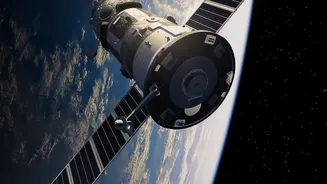
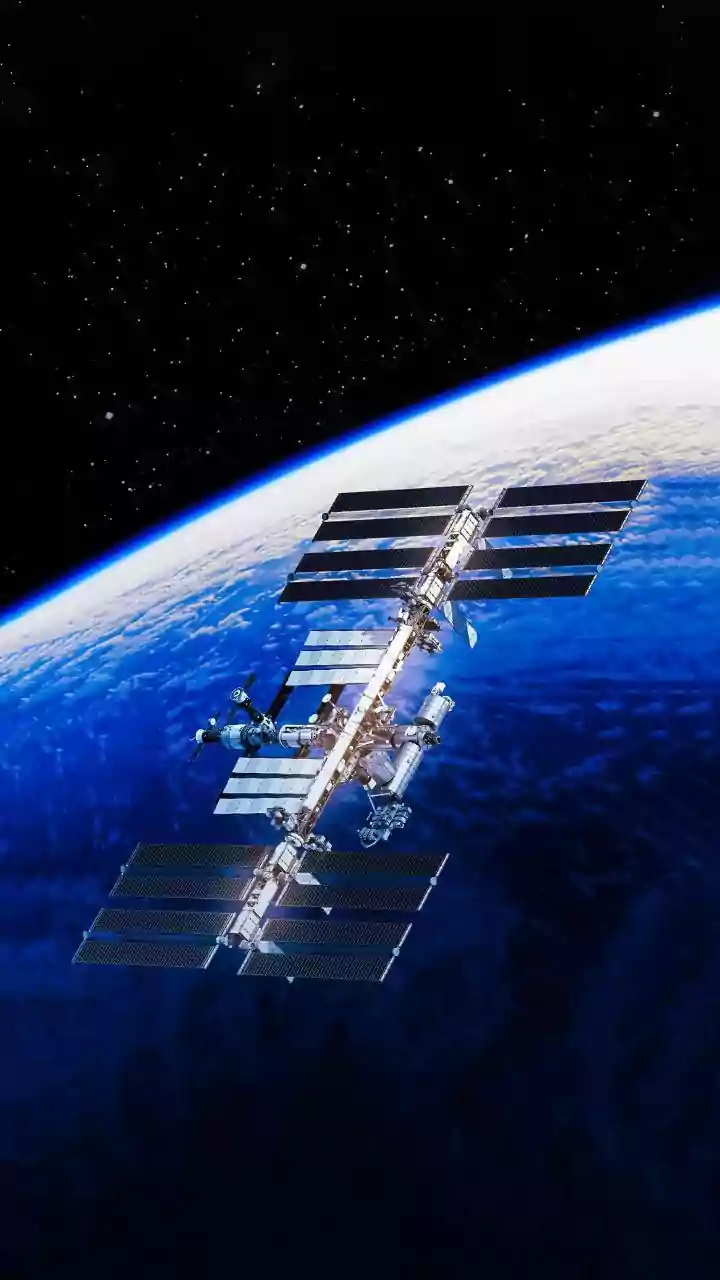
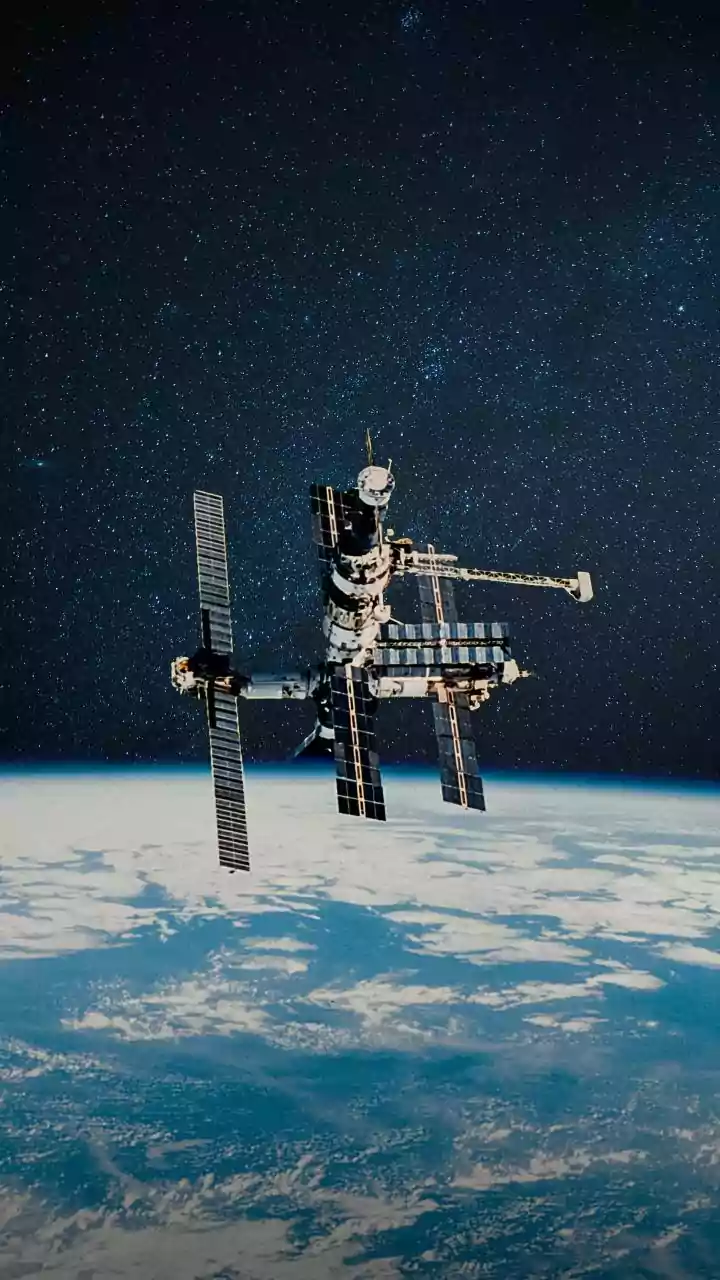
Perhaps the most visionary of all is the plan for an indigenous space station, the Bharatiya Antariksha Station. This modular station is envisioned to be operational by 2035, serving as a platform for scientific experiments in microgravity and long-duration human space missions. The first module is targeted for a 2028 launch. Weighing around 52 tonnes, it will orbit at an altitude of about 400 kilometres, hosting astronauts for extended periods. The station is a cornerstone of India's long-term space roadmap, which includes sending an Indian to the Moon by 2040 and establishing a sustained presence in low Earth orbit.