





The High Cost of Moving House
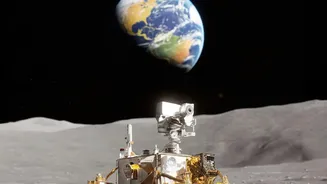
Establishing a long-term human presence on the Moon, as planned under programs like NASA's Artemis, presents a colossal logistical problem. Transporting building materials across the 385,000 kilometres from Earth is incredibly expensive, with some experts
estimating the cost at over $1 million per kilogram. To build habitats, landing pads, and roads, we would need thousands of tonnes of material. This is where the concept of 'in-situ resource utilization', or ISRU, becomes a game-changer. The idea is simple: live off the land. By using resources already on the Moon, we can dramatically reduce the cost and complexity of building a sustainable lunar outpost.
Building with Moon Dust
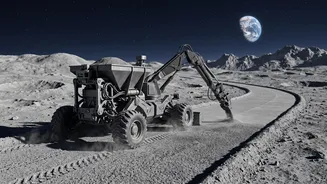
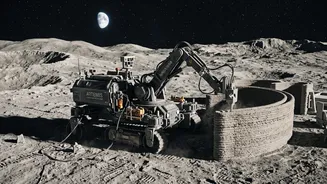
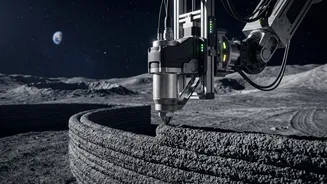
The most abundant building material on the Moon is regolith—the layer of dust, broken rock, and fine soil that covers the entire surface. For decades, space agencies and now private companies have been researching how to turn this loose material into a solid construction medium. The leading method involves a form of 3D printing where robots use focused energy, such as a high-powered laser or concentrated sunlight, to melt the regolith. As the molten material cools, it solidifies into a hard, ceramic-like substance, creating durable structures layer by layer. This process, sometimes called contour crafting or sintering, could build everything from landing pads that prevent dangerous dust clouds during take-off and landing to habitats that shield astronauts from radiation and extreme temperatures.
The Robotic Construction Crew
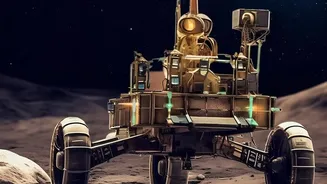
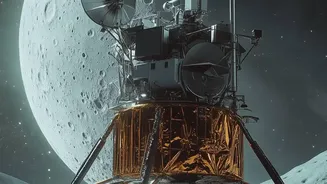
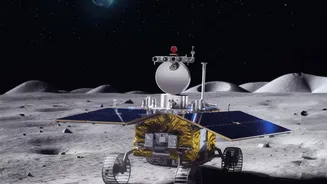
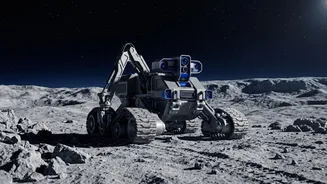
This ambitious construction work will not be done by human hands, but by autonomous robots. Several key players are developing the technology to make this happen. NASA has partnered with the Texas-based company ICON on 'Project Olympus', a project to develop a large-scale construction system for the Moon. Their approach uses lasers to transform regolith into a building material. The European Space Agency (ESA) is also heavily invested, running projects like PAVER, which tested using a powerful laser to create paved surfaces, and collaborating with architectural firms on habitat designs. Meanwhile, China is also making significant strides, with plans for its Chang'e 8 mission around 2028 to test 3D printing bricks from lunar soil.
Landing Pads, Habitats, and Roads
The first structures to be printed will likely be landing pads. These are critical because the unfiltered blast from a rocket engine can send abrasive lunar dust flying at dangerously high speeds, damaging nearby equipment and habitats. Next would come habitats, which need to provide protection from the Moon’s harsh environment, including micrometeorites, extreme temperature swings from over 120°C to -130°C, and dangerous cosmic radiation. Printed regolith structures would offer superior protection compared to inflatable or metallic habitats. Eventually, this technology could be used to build roads, workshops, and other essential infrastructure, creating a true lunar village.
Challenges in a Hostile Environment
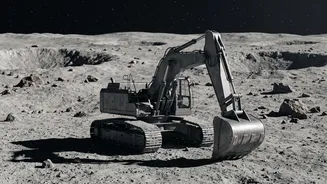
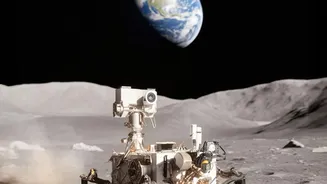
Building on the Moon is not without immense challenges. The lack of atmosphere means there is no protection from radiation or micrometeorites. The extreme temperature cycles can cause materials to expand and contract, potentially causing stress fractures. And the lunar dust itself, while a valuable resource, is also a hazard. It is extremely fine and abrasive, posing a risk to both robotic equipment and human health. Furthermore, all robotic systems must be incredibly robust and capable of operating autonomously for long periods with limited human oversight. Engineers must also perfect the process of excavating and processing the regolith before it can even be fed into the 3D printers, all in a low-gravity environment.