




The Big Picture: A Highway Revolution
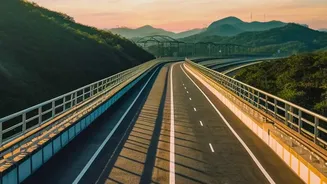
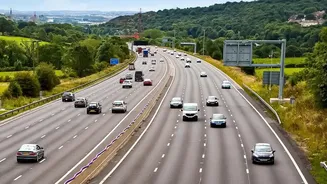
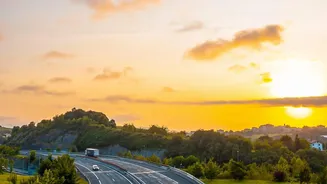
India is in the midst of an unprecedented infrastructure boom, with the national highway network expanding by over 60% since 2014 to more than 1,46,000 kilometres. This expansion, driven by ambitious programmes like the Bharatmala Pariyojana, isn't just
about adding more roads; it's about building better, faster, and safer ones. The focus is on creating access-controlled, high-speed economic corridors that connect the country's major production and consumption hubs. For travellers, this translates to dramatically reduced journey times, less congestion, and the ability to link multiple destinations in a single trip without the exhaustion of older, slower routes. This shift is making road travel a strong competitor to trains and flights for many regional routes.
Delhi to Mumbai: The 12-Hour Dash
Perhaps the most game-changing project is the Delhi-Mumbai Expressway. This marvel of engineering is set to cut the gruelling 24-hour drive between India's political and financial capitals to just 12 hours. Spanning 1,380 kilometres across six states, the expressway allows for speeds up to 120 km/h. This opens up incredible multi-city possibilities. A traveller from Delhi can now realistically plan a trip that includes stops in Jaipur, Udaipur, and then continues to Vadodara and Surat before reaching Mumbai, all on a seamless, high-speed corridor. The expressway not only connects major metros but also brings key cities in Rajasthan, Madhya Pradesh, and Gujarat into the fold for easier exploration.
Bengaluru to Chennai: South India's Tech Corridor
In the south, the Bengaluru-Chennai Expressway is transforming connectivity between two of India's biggest tech and auto hubs. The new route is designed to slash the current travel time of six to seven hours to a mere two-and-a-half to three hours. This makes it possible to have breakfast in Bengaluru and lunch in Chennai. For a multi-city tour, one could start in Bengaluru, explore the temple town of Kanchipuram (near the expressway's end point at Sriperumbudur), and finish in Chennai, turning a once-tiring drive into a comfortable and efficient journey. The expressway passes through Karnataka, Andhra Pradesh, and Tamil Nadu, opening up new potential for weekend trips and regional exploration.
Delhi to Dehradun: Hills Are Now Closer
For those in the north seeking a quick mountain escape, the Delhi-Dehradun Expressway is a dream come true. It reduces the travel time from a traffic-snarled six hours to a swift two-and-a-half hours. This brings destinations like Rishikesh and Haridwar within easy reach for a weekend trip from the capital. You could leave Delhi in the morning, have lunch in Dehradun, and spend the evening in Mussoorie. The improved accessibility is encouraging more spontaneous trips and boosting tourism across Uttarakhand. Recent travel data shows that the Delhi-Dehradun route is one of the fastest-growing corridors for intercity travel, a direct result of the upgraded infrastructure.
The Northeast Frontier: Trans-Arunachal Highway
One of the most stunning new road trip frontiers is the Trans-Arunachal Highway (NH-13). This route is opening up the breathtaking, and previously hard-to-access, landscapes of Arunachal Pradesh. The highway, which will eventually stretch over 2,400 km, guides travellers through 16 districts, from Tawang in the west to Kanubari in the east. While sections are still under construction, the operational parts offer some of the most scenic and smoothest drives in the country, winding through mountain passes and lush valleys. This has made multi-day expeditions across destinations like Ziro, Mechukha, and Pasighat a tangible reality for adventurous travellers, transforming a once-arduous journey into an epic adventure.