





What Is a Meteor Shower?
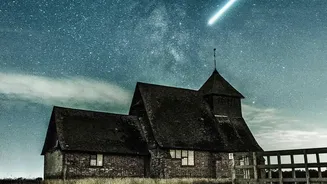
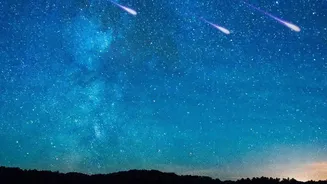
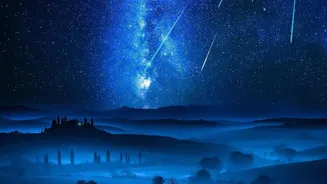
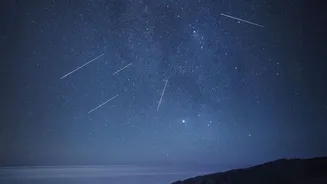
Often called 'shooting stars', meteors are tiny particles of space debris, usually no bigger than a grain of sand, burning up as they enter Earth's atmosphere at high speed. When Earth passes through the trail of dust left by a comet or asteroid, we experience
a meteor shower. These events are named after the constellation from which the meteors appear to radiate. While you can spot a stray meteor on any given night, showers offer dozens of chances per hour to see these fleeting streaks of light, making for a truly memorable night.
Coming Soon: The 2026 Orionids
The Orionid meteor shower, active from October to November, is a gift from the famous Halley's Comet. For 2026, the peak activity is expected on the night of October 21-22. Observers can anticipate seeing 15 to 25 fast-moving meteors per hour under ideal conditions. The main challenge this year will be a bright, waxing gibbous moon, which will be about 80% full. However, there is a simple strategy: the moon sets a few hours before dawn. This creates a perfect, dark window for viewing. For the best experience, plan to watch in the pre-dawn hours of October 22, after 3 AM, once the moon is below the horizon.
Look Ahead: The 2026 and 2027 Perseids
The Perseid meteor shower is one of the most beloved of the year, known for its high rate of bright meteors. It peaks annually around August 12-13. For 2026, viewing conditions for the Perseids were exceptional due to the peak coinciding with a new moon, promising dark skies. Looking forward to 2027, the shower will be active from mid-July to late August, peaking around August 13. However, a waxing gibbous moon will interfere with the 2027 peak, making the pre-dawn hours, after the moon sets, the best time to watch. The biggest hurdle for viewing the Perseids in India is often the monsoon season, so it is wise to check local weather forecasts.
India's Best Non-Metro Stargazing Spots
To truly enjoy a meteor shower, you must escape the light pollution of the cities. India is blessed with many remote locations that offer pristine night skies. High-altitude deserts like Ladakh and Spiti Valley are considered world-class stargazing destinations, with Hanle in Ladakh being home to India's first official Dark Sky Reserve. Other excellent locations include the Rann of Kutch in Gujarat, where the white salt desert can reflect starlight, creating a surreal experience. In the south, the hills of Coorg in Karnataka and remote parts of the Andaman and Nicobar Islands also provide fantastic, dark skies away from the urban haze.
How to Prepare for Your Stargazing Night
You don't need a telescope or binoculars; the best tool for watching a meteor shower is your own eyes. The goal is to take in as much of the sky as possible. First, find a comfortable spot and lie back on a reclining chair or a blanket. Dress in warm layers, as even summer nights can get cold, especially at high altitudes. Allow your eyes at least 20-30 minutes to adapt to the darkness for optimal viewing. This means absolutely no looking at your phone screen, as the white light will instantly ruin your night vision. If you need a light, use a torch covered with red cellophane. Finally, be patient—meteors often come in spurts.