


The Lean Needs of a Robotic Explorer
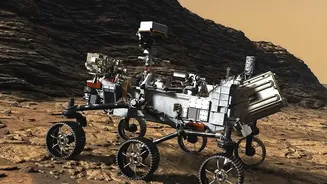
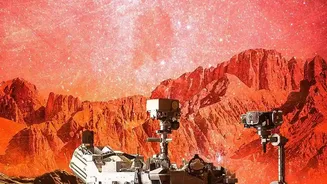
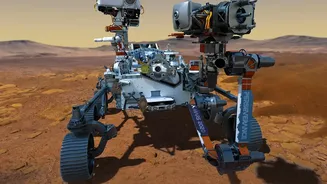
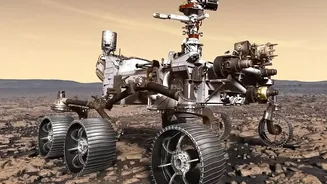
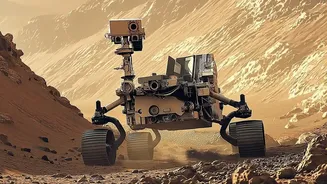
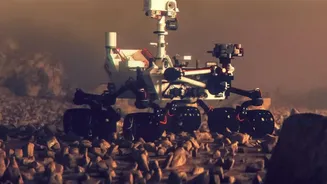
When we send a rover like Perseverance to Mars, its needs are elegantly simple. It requires a power source—either solar panels or a radioisotope thermoelectric generator—and a communication link to Earth. It doesn't breathe, drink, or eat. Its 'life support'
is its electrical system and thermal blanketing. This lean operating model is why robotic missions have been so successful. We can send a one-ton, car-sized laboratory across the solar system because it doesn't need a pantry. The entire mission mass is dedicated to science instruments, mobility, and the systems to land it safely. This makes robots incredibly efficient explorers, even if they are slow and methodical.
The Heavy Burden of Human Life
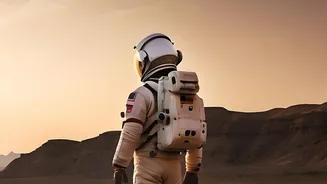
Now, let's replace that rover with a human. The logistical equation changes completely. An astronaut requires about 0.84 kg of oxygen, roughly 3.5 litres of water for drinking and hygiene, and around 1.3 to 1.75 kg of food per day. For a mission that could last 500 days or more, that's roughly 420 kg of oxygen, 1,750 kg of water, and 875 kg of food per person. For a crew of four, you're looking at nearly 12,200 kg of basic consumables alone. This doesn't even account for packaging, hygiene supplies, spare parts for life support, or the much larger habitat needed to house the crew. Suddenly, the payload isn't a one-ton rover; it's a multi-ton mobile ecosystem that has to be launched from Earth.
The Tyranny of the Rocket Equation
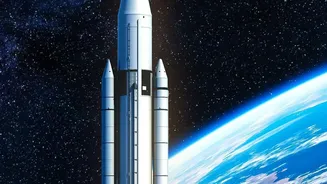
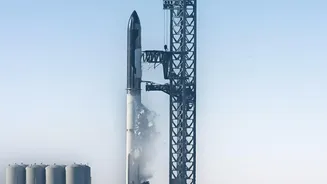
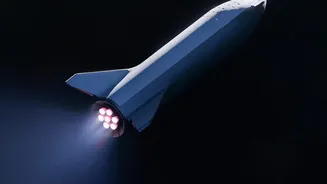
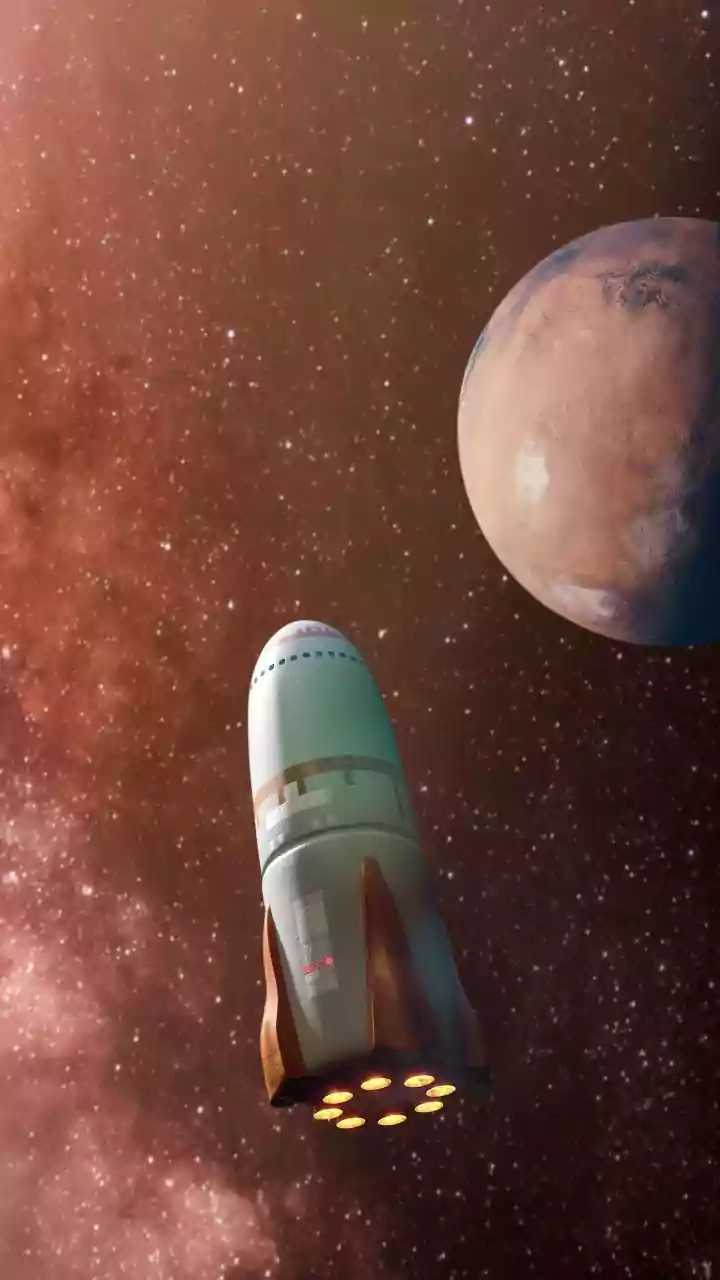
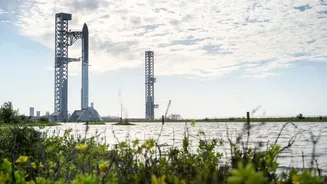
Every kilogram of payload sent to Mars requires a massive amount of propellant to escape Earth's gravity, cruise to the Red Planet, and then land safely. While launch costs to low-Earth orbit have fallen dramatically to under $3,000 per kg thanks to reusable rockets like SpaceX's Falcon 9, sending that same kilogram to the Martian surface is an entirely different order of magnitude, with some estimates in the hundreds of thousands of dollars per kg. That 12,200 kg of life support for our crew of four could translate into astronomical costs and require multiple launches of the most powerful rockets ever built, like SpaceX's Starship. This is the fundamental hurdle: the sheer mass of water, food, and air makes human missions exponentially more difficult and expensive than robotic ones.
Recycling and Living off the Land
The solution isn't just bigger rockets; it's to stop packing our lunch for a two-year trip. This is where Environmental Control and Life Support Systems (ECLSS) and In-Situ Resource Utilization (ISRU) come in. Advanced ECLSS, like those on the International Space Station, can recycle about 85% of water from sources like urine and cabin humidity, drastically cutting down the mass that needs to be launched. The real game-changer, however, is ISRU. Mars' atmosphere is 95% carbon dioxide. An instrument on the Perseverance rover called MOXIE (Mars Oxygen In-Situ Resource Utilization Experiment) has already proven it can reliably extract oxygen from the Martian air. A scaled-up version of MOXIE could produce breathable air for the crew and, crucially, the liquid oxygen needed as rocket propellant for the journey home, potentially eliminating the need to ship tens of tons of it from Earth.
Is the Return Worth the Weight?
Despite the immense logistical challenges, the argument for sending humans is compelling. A human geologist can accomplish in minutes what it takes a rover days or weeks to do. Humans are adaptable, can improvise, and can make intuitive leaps that a robot cannot. They can climb treacherous terrain, operate complex machinery like drills, and make real-time scientific judgments far beyond the capabilities of an AI operating on a 20-minute communication delay. The debate between robotic and human exploration isn't just about cost versus capability; it's a question of speed and depth. Robots are the essential precursors, mapping the terrain and testing the technologies. But humans bring an unmatched versatility and efficiency to the actual work of exploration once on the ground.