







A Landmark Launch for India Inc.
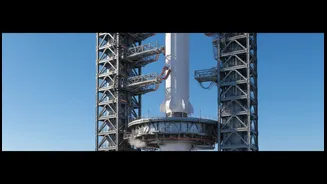
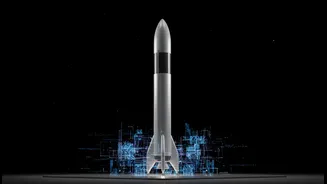
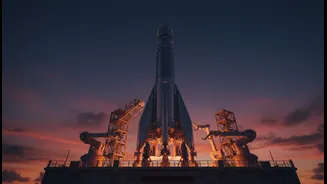
The successful launch of the Vikram-1 rocket is a watershed moment for India. Developed by Hyderabad-based startup Skyroot Aerospace, it represents the nation's first privately developed and operated orbital rocket. For decades, space exploration in India was
the exclusive domain of the Indian Space Research Organisation (ISRO). While ISRO has a stellar track record, the entry of private players like Skyroot heralds a fundamental shift. Vikram-1's mission was to carry small satellites into Low Earth Orbit, a service with booming global demand. By proving their capability, Skyroot has not only made history but has also unlocked the door for a competitive, commercial space ecosystem to flourish within India. This is India’s equivalent of the 'Falcon 9 moment,' a reference to SpaceX's rocket that revolutionised the global launch market.
The New Space Race is for Talent
With the success of Vikram-1, the most significant impact is being felt in the job market. The launch validates the viability of the private space sector, transforming it from a niche, high-risk field into a burgeoning industry hungry for talent. This creates a powerful new employment stream for engineers who once saw ISRO or opportunities abroad as their only options. The excitement is palpable; this isn't just about building rockets, it's about building an entire industry from the ground up. Companies like Skyroot Aerospace, Agnikul Cosmos, and Dhruva Space are now competing not just for launch contracts, but for the brightest minds in engineering. This competition fuels innovation, drives up salaries, and creates dynamic work environments that empower young engineers to take on immense responsibilities early in their careers.
Beyond Aerospace Engineering
The term 'space career' often conjures images of an aerospace engineer, but the reality is far more diverse. The new Indian space-tech boom requires a wide array of specialisations. Propulsion engineers are needed to design and test the next generation of engines, some of which, like those in Vikram-1, are built using advanced 3D-printing technologies. Avionics and software engineers are critical for developing the rocket's 'brain' and nervous system—the flight computers, guidance systems, and communication hardware that ensure a successful mission. Materials scientists are in high demand to work with advanced composites, like the all-carbon-fibre structure of Vikram-1, to make rockets lighter and stronger. Furthermore, there's a growing need for professionals in mission management, satellite deployment, ground station operations, data analysis, and even the emerging field of space law and policy.
How to Prepare for a Career in Space-Tech
For students and young engineers aspiring to join this revolution, the path is becoming clearer. A strong foundation in core engineering disciplines—mechanical, electrical, computer science—remains essential. However, specialisation is key. Aspiring rocketeers should seek out projects and courses in areas like computational fluid dynamics (CFD), guidance, navigation, and control (GNC) systems, robotics, and additive manufacturing. Familiarity with modern software tools for design and simulation is a must. Beyond technical skills, private space companies value a startup mindset: adaptability, problem-solving, and a willingness to work in fast-paced, collaborative teams. Contributing to open-source projects, participating in rocketry clubs, or even following the technical progress of these companies can provide a significant edge. The message is clear: the industry needs hands-on builders and innovators, not just theorists.