






A Symphony of Flavour
At its heart, the appeal of chutney lies in its remarkable complexity. The name itself comes from the Hindi word 'chatni', meaning 'to lick'. Unlike many Western condiments that lean heavily on a single flavour note—like the sweetness of ketchup or the sharpness
of mustard—traditional Indian chutneys are a masterful blend of sweet, sour, spicy, and savory. Think of a classic mango chutney; it's not just sweet. It often contains ginger, chili, and vinegar, creating a layered taste experience that evolves with every bite. This ability to hit multiple flavour notes at once makes it a powerful tool for elevating a simple dish. It provides a contrast and balance that can make food more dynamic and interesting, a quality highly prized in modern cooking.
The Ultimate Kitchen Multi-Tasker
Forget thinking of chutney as just a dip for samosas. Its true strength is its versatility. Chefs and home cooks are discovering that chutney can be used as a sandwich spread, a glaze for grilled meats, a topping for cheese boards, or even a base for salad dressings. A spicy and tangy tamarind chutney, for instance, can cut through the richness of a beef burger, while a bright, herbaceous mint-coriander chutney can bring a fresh lift to tacos or grilled fish. Even a simple grilled cheese sandwich is transformed with a layer of sweet and spicy mango chutney, a pairing that has become a modern classic in many cafes. This adaptability makes it an incredibly efficient way to add a complex, homemade-tasting flavour boost to almost any meal without hours of prep.
An Appetite for Authenticity
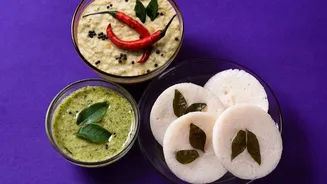
As palates become more global, there's a growing desire for authentic flavours and traditional food stories. Chutneys, with their deep roots in Indian regional cuisines, offer just that. Each chutney can tell a story about its origin, from the coconut-based chutneys of South India to the fiery garlic versions found elsewhere. This connection to heritage is appealing in a world saturated with mass-produced sauces. Furthermore, many traditional chutney recipes are based on fresh, whole ingredients like fruits, vegetables, and herbs, aligning with a modern preference for less processed foods. For many, using a traditional chutney is an accessible first step into the vast and diverse world of Indian flavours, offering a taste of authenticity without the intimidation of cooking a complex dish from scratch.
Beyond the Anglo-Indian Jar
For many in the West, the first encounter with chutney was likely a sweet, jam-like mango chutney, a style popularized by the British during the colonial era. While delicious, these preserved, often very sweet chutneys represent only one small part of the chutney universe. The current trend is seeing a much wider variety come to the forefront. Fresh green chutneys made with coriander and mint, pungent garlic chutneys, and sour tamarind chutneys are becoming increasingly popular. These versions offer a different, often sharper and more herbaceous flavour profile that complements a wide range of savoury foods. This exploration beyond the familiar jar is allowing Western cooks to appreciate the true breadth and depth of what chutney can be, from a fresh, raw sauce to a slow-cooked relish.