





The Challenge of Time
When we think of fossils, we usually picture dinosaur skeletons or ancient shells. There’s a good reason for this. After an organism dies, its soft parts—skin, muscles, nerves, and internal organs—are the first to go. They decay quickly, get eaten by
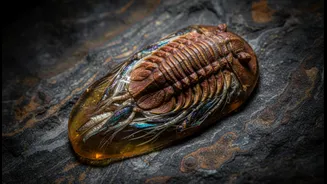
scavengers, or are broken down by bacteria. What’s typically left to be mineralized over millions of years are the hard parts. This leaves palaeontologists with a puzzle where most of the pieces are missing. According to Dr. Lena Cole, a palaeontologist at the University of Oklahoma, soft tissues are only preserved under incredibly rare conditions that act like a “natural refrigerator or vacuum-sealer”. This process requires the remains to be buried almost instantly in an environment free of oxygen, halting decay in its tracks. Finding a fossil with soft tissue intact is, as Cole puts it, “truly one in a million”.
An Ancient Sea Flower
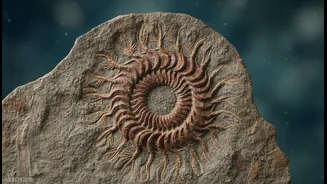
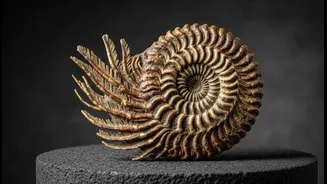
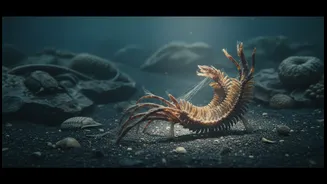
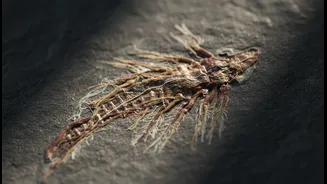
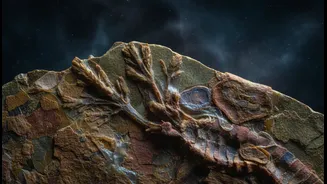
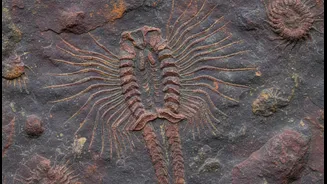
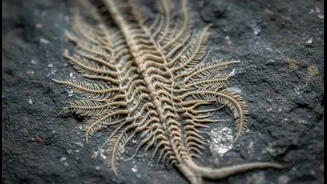
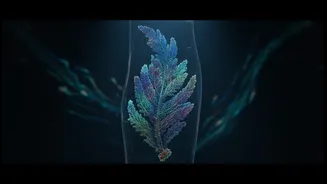
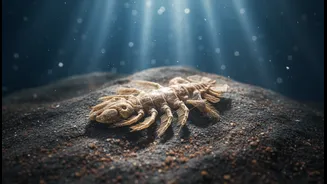
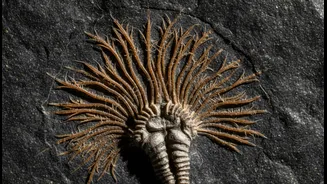
The fossil at the center of this incredible discovery belongs to a creature called Dendrocrinus simcoensis. It lived more than 450 million years ago, a staggering 200 million years before the first dinosaurs. These were not land-dwellers; at this point in Earth’s history, complex life was still confined to the oceans, which were home to some of the planet's earliest reef ecosystems. Dendrocrinus was a type of crinoid, an animal related to modern starfish and sea urchins. With a stalk that rooted it to the seafloor and long, branching arms, it looked more like an underwater flower. These arms were not for show; they were sophisticated feeding apparatuses, designed to capture tiny food particles from the ocean currents. While millions of crinoid fossils have been found, this specimen is only the second ever to show preserved soft tissues, and it is by far the oldest.
Anatomy Revealed
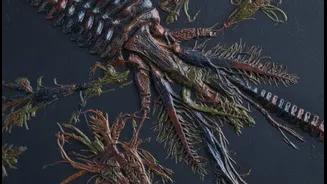
So what exactly did scientists find? Hidden within the fossil were the ghostly outlines of tube feet. In crinoids, these are not for walking, but are small, delicate appendages used for feeding and respiration. For these structures to have survived for 450 million years is nothing short of miraculous. The preservation was made possible because the crinoid was rapidly buried in fine mud that cut off oxygen. Over time, minerals—in this case, pyrite, also known as fool's gold—replaced the delicate organic matter of the tube feet, creating a perfect mineral cast of the tissue. This discovery provides the first direct evidence of how these ancient crinoids fed, confirming long-held theories about their biology. It offers a direct window into the behaviour of an animal that has been extinct for hundreds of millions of years.
A Museum Drawer Discovery
One of the most charming details of this story is where the fossil was found: not on a windswept dig site, but in a drawer at a small museum in Montreal. The specimen had been part of the collection for years, its true importance unrecognized until Drs. Cole and Wright examined it on a research visit. This highlights the vital role that museum collections, both large and small, play in scientific discovery. They are libraries of natural history, holding specimens that can yield new secrets when viewed with fresh eyes or analysed with new technology. Advanced imaging techniques now allow scientists to peer inside fossils without destroying them, revealing details like nerve bundles, digestive tracts, and, as in this case, delicate feeding structures that were previously invisible.