





What is the Core of the Controversy?
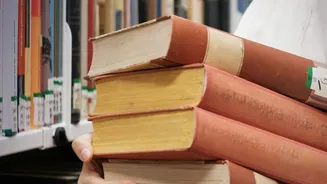
The case revolves around allegations of massive irregularities in the procurement of books for Tamil Nadu's public library system. The controversy gained significant attention after writer Perumal Murugan raised alarms about dubious books at the Periyar
Arivulagam library in Coimbatore. The issue involves the purchase of thousands of books that are allegedly plagiarised, contain false information, are attributed to fictitious authors, or were generated using Artificial Intelligence. One publisher, Agalvilakku Publications, is at the center of the probe, accused of supplying a large volume of these questionable titles. In response to a contempt petition, the Madurai Bench of the Madras High Court stepped in, taking the government to task for inaction and demanding accountability.
The 'AI Library' Connection
The term 'AI library' in this context refers not to a library run by AI, but to the procurement of books that are allegedly generated by AI. The court has held that AI-generated and plagiarised works can be classified as being of 'doubtful taste' under the Tamil Nadu Public Libraries Rules, 1950, and therefore should not be purchased with public funds. The scandal has exposed how easily modern technology can be used to create superficially credible content that bypasses traditional quality checks. Investigators believe suppliers may have used AI tools to mass-produce content, pairing it with fake author names and questionable ISBNs to sell to the state library system, potentially costing taxpayers crores of rupees.
The Court's Strict Directives
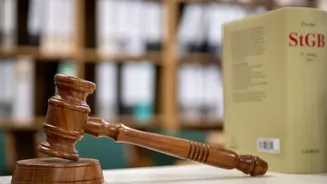
The division bench of Justices GR Swaminathan and MD Sumathi has issued a series of firm orders. Unsatisfied with the government's initial response, the court directed the Directorate of Vigilance and Anti-Corruption (DVAC) to register a First Information Report (FIR) against those involved, including unknown public servants. The court stated that a crime of such a 'humongous proportion' could not happen without the active involvement of government officials. It also ordered the freezing of bank accounts linked to the publishing companies in question and demanded that the Director of Public Libraries submit all purchase records and name the officials responsible for procurement over the last two years.
Action, Suspensions, and the November 16 Deadline
The court set November 16 as the deadline for the Director of Public Libraries to submit the requested purchase records and for the DVAC to file a copy of the FIR. Following the court's sharp intervention, the Tamil Nadu government took action, suspending five senior officials from the Directorate of Public Libraries on November 15. The suspended officials include chief librarians and a chief accounts officer, some of whom were part of the committee responsible for negotiating book prices. Meanwhile, librarians across the state have been instructed to identify and remove the suspect books from circulation; so far, over 70,000 books have been withdrawn.
Broader Implications for Transparency
This case extends beyond just one state or one set of purchases. It raises critical questions about transparency in public spending, the integrity of educational resources, and the challenges of regulating AI-generated content. The court itself opined that the best way for the government to establish transparency would be to publish a comprehensive list of all books procured over the last two decades, including payments made to publishers. While not a formal direction, this suggestion underscores the judiciary's push for greater public accountability. The scandal highlights a critical vulnerability in public institutions: the ability to purchase polished, AI-assisted content faster than it can be verified for accuracy, authenticity, or public value.