




What Exactly Is Damask?
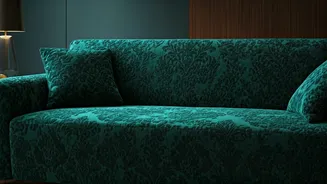
Before you picture stuffy, formal drawing rooms, let's clarify what damask actually is. It’s not a print, but a weaving technique. The pattern is created directly on the loom, traditionally using a single color of thread. The magic lies in the contrast
between a lustrous, satin-woven design and a more matte background. This gives damask its signature depth and reversible quality, where the pattern appears as a negative image on the back. Though historically made from silk, today you can find damask woven from cotton, linen, wool, and even synthetic fibers, making it more accessible than ever. The designs themselves are often symmetrical, featuring intricate floral, fruit, or scrolling motifs.
A Journey Through Time
Damask has one of the richest histories in the textile world. Its story begins not in its namesake city, but in China, as early as 300 B.C. Highly prized by merchants traveling the Silk Road, the technique eventually made its way to the Middle East. It was in the Syrian city of Damascus, a bustling trading hub, that the fabric became widely known to Europeans, earning it the name we use today. For centuries, producing damask was an incredibly painstaking and expensive process, reserved for royalty and the highest echelons of society. Its fortunes changed with the invention of the Jacquard loom in the early 1800s, which automated the complex weaving process and made damask available to a wider market.
The Modern Revival
So why is a pattern with ancient roots suddenly feeling so fresh? Recent design trends show a renewed appreciation for craftsmanship, texture, and items with a story. In a move away from stark minimalism, more people are embracing “grandmillennial” or maximalist styles that layer pattern and personality. Damask fits perfectly into this, offering depth and a sense of history that feels comforting and authentic. Designers are reimagining damask in softer color palettes and more fluid designs, making it surprisingly versatile. A recent showcase in London, for instance, featured a dining room with walls fully upholstered in damask, creating a space that felt cocooning and inviting, not old-fashioned. This modern approach proves that tradition only feels tired when it stops evolving.
Damask in Your Domain: Start Small
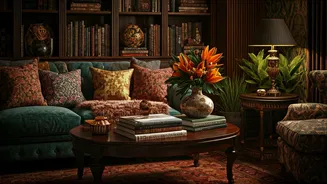
Bringing this trend home doesn't require a full-scale palace renovation. The key to making damask work in a modern space is balance. If you're hesitant to go bold, start with small accents. Throw pillows are an easy and low-commitment way to introduce the pattern and add texture to a sofa or bed. A damask table runner can elevate your dining space, while a single upholstered piece—like an ottoman, headboard, or accent chair—can serve as a stunning focal point without overwhelming the room. The beauty of using damask in small doses is that it adds a layer of sophistication and visual interest that makes a space feel curated and thoughtful.
Go Bold with Walls and Windows
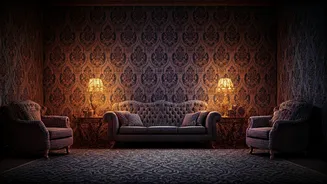
If you're ready to make a bigger statement, damask wallpaper is experiencing a major comeback. Modern interpretations come in a vast array of colors, from soft, barely-there neutrals to bold, high-contrast pairings like fuchsia and olive green. Using a damask pattern on a single accent wall can create drama and depth, especially in a bedroom or dining room. For a more subtle approach, consider papering the upper half of a wall above a chair rail. Curtains are another fantastic way to showcase the pattern. The heavy, durable weave of damask makes it ideal for drapes, providing both privacy and a touch of grandeur. In a room with neutral walls, damask curtains can act as a piece of art.