



Light Isn't Instant
The first thing to understand is a fundamental rule of the universe: nothing travels faster than the speed of light. But even at its incredible speed—about 300,000 kilometres per second—light still takes time to get from one place to another. It’s similar
to how you see a lightning flash instantly but hear the thunder seconds later. The sound took time to travel to your ears. Light does the same, just on a much, much grander scale. When we're talking about distances on Earth, this delay is unnoticeable. The light from your lamp hits your eyes in a tiny fraction of a second. But space is, for lack of a better word, spacious. The distances are so vast that even light needs years, centuries, or even millennia to cross them.
What Is a Light-Year?
To measure these immense cosmic distances, astronomers use a unit called a 'light-year'. It’s a common point of confusion, but a light-year is a measure of distance, not time. It's the distance that light travels in one year. To put that in perspective, one light-year is approximately 9.46 trillion kilometres. So, if we say a star is 10 light-years away, it means two things. First, it’s about 94.6 trillion kilometres from Earth. Second, and more importantly for our stargazing, the light we see from that star tonight began its journey 10 years ago. You are, quite literally, seeing the star as it was a decade in the past.
A Tour of Your Night Sky’s Past
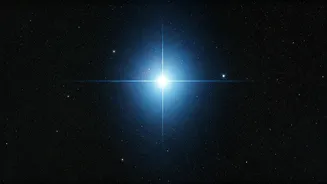
So, how old is the starlight we see? It varies dramatically depending on which star you're looking at. The closest star system to us, Alpha Centauri, is about 4.3 light-years away. Its light is a little over four years old. Sirius, the brightest star in our night sky, is about 8.6 light-years away. We see the Sirius of late 2015. But the headline promises centuries, and the sky delivers. Polaris, the North Star, is a great example. It sits approximately 433 light-years away. The light you see from Polaris tonight started its journey around the year 1591, when the Mughal Empire was flourishing under Akbar. The star Betelgeuse, the reddish giant in the Orion constellation, is even further—about 640 light-years away. Its light is a message from the 1380s.
Galaxies: Messages from Deep Time
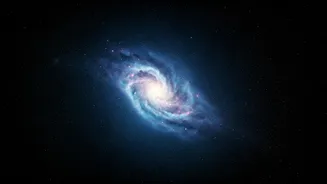
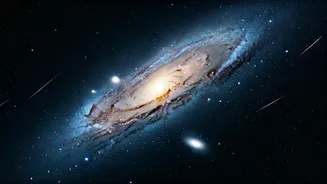
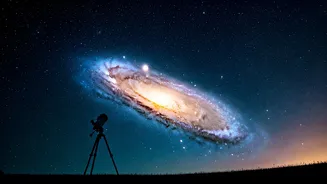
And it doesn't stop at centuries. If you are in a dark enough location, away from city lights, you might be able to spot a faint, fuzzy patch in the sky. That is the Andromeda Galaxy, the closest major galaxy to our own Milky Way. It is the most distant object visible to the naked eye. How far away is it? About 2.5 million light-years. The light from Andromeda that reaches your eyes tonight started its journey when early human ancestors, like Homo habilis, were roaming the Earth. You are seeing a galaxy as it existed 2.5 million years ago. Every photon of light from it is an ancient traveller that has finally completed its epic journey to your retina.
Your Eyes Are a Time Machine
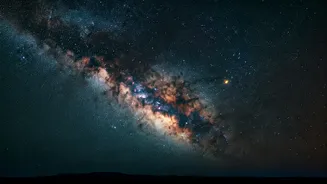
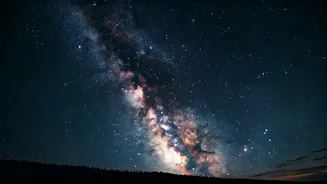
This cosmic time lag has a fascinating consequence: the night sky is not a snapshot of the present. It’s a mosaic of different times, all layered on top of each other. Each star is a window into a different year in the past. This also means that some of the stars we see may not even exist anymore. A massive star 2,000 light-years away could have exploded in a supernova 1,000 years ago, but we won't get the 'news' of its death for another 1,000 years. Until then, it will continue to shine brightly in our sky, a ghost of its former self. So, every time you look up at the stars, you are not just an observer; you are a time traveller. You are peering across vast distances and deep into the history of the universe.