



The Story of the Hunter's Moon
October’s full moon is famously known as the Hunter's Moon. The name is rooted in tradition, marking the time of year when, historically, hunters would use the bright moonlight to find game in the recently harvested fields to prepare for the coming winter.
After the Harvest Moon of September cleared the crops, the fields were left bare, making animals easier to spot. This full moon provided extended light for several nights in a row, aiding these crucial preparations for the colder months. It's also been called the Falling Leaves Moon. This year, the Hunter's Moon reaches its peak illumination on Monday, October 26, 2026.
When and Where to Look for the Moon
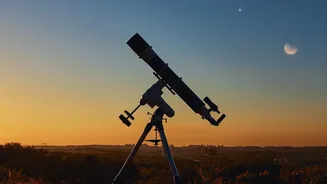
The full Hunter's Moon will officially peak in the morning for observers in India on October 26, at 9:41 AM IST. However, the best time for viewing will be on the nights of October 25 and 26. Look for the moon to rise in the eastern sky shortly after sunset. When it's low on the horizon, it may appear larger and take on a beautiful golden or orange hue due to an optical illusion and the scattering of light by Earth's atmosphere. For the best experience, find a location away from bright city lights. Even a local park or a quiet suburban street with a clear view of the eastern horizon will dramatically improve what you can see.
Evening Star: Spotting Saturn
As darkness falls, you'll have a perfect opportunity to spot the ringed giant, Saturn. Throughout October 2026, Saturn is visible for most of the night, having reached its opposition—its brightest point for the year—on October 4. It will appear as a bright, steady, yellowish-white point of light. On the evenings of October 25 and 26, look for the bright Hunter's Moon. Saturn will be visible in the same region of the sky, making it an easy target for naked-eye observers. You won't see its rings without a telescope, but its constant, bright glow makes it easy to distinguish from twinkling stars.
The Morning Planets: Jupiter and Mars
If you are an early riser, the celestial show continues before dawn. In the pre-dawn hours of October, look to the eastern sky to find two more planetary guests: Jupiter and Mars. Jupiter will be the most brilliant of the two, appearing as a very bright, white light. Reddish-hued Mars will be visible nearby, located above Jupiter. Throughout the month, the two planets will appear to move closer to each other in the sky. Jupiter rises around 2:30 AM to 3:00 AM, while Mars rises a bit earlier, around 1:20 AM to 2:00 AM. By 4:00 AM, both should be high enough above the horizon for clear viewing.
Simple Tips for a Great Stargazing Night
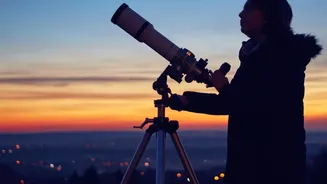
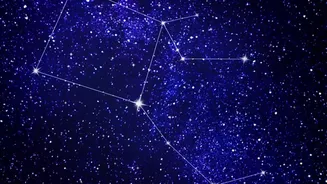
You don't need any special equipment to enjoy this cosmic event. First, check the weather forecast for a clear night. Find a comfortable spot, perhaps with a chair or blanket, and give your eyes about 15-20 minutes to fully adjust to the darkness; this will help you see fainter objects. Avoid looking at your bright phone screen, but if you need a light, a red torch is best as it doesn't spoil your night vision. While not essential, stargazing apps on your phone can help you confirm which planet is which by simply pointing your device at the sky. Finally, be patient. The longer you look, the more your eyes will pick up, turning a simple glance upwards into a memorable experience.