
Why the Hunt for Lunar Water Matters
Finding water on the Moon is about much more than quenching an astronaut's thirst. Water (H2O) is a treasure trove of resources critical for establishing a long-term human presence in space. By splitting water into its constituent elements, astronauts
can produce breathable oxygen and hydrogen for rocket fuel. This capability, known as in-situ resource utilization (ISRU), would drastically reduce the cost and complexity of future missions. Every litre of water produced on the Moon saves the enormous expense of launching it from Earth. This makes lunar water a cornerstone for building sustainable lunar bases, which could one day serve as a stepping stone for missions to Mars and beyond. The presence of ice also offers a scientific windfall, as these frozen deposits could contain clues about the early solar system's history.
A Clue Hidden in the Dust
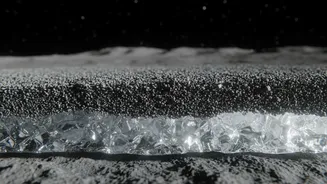
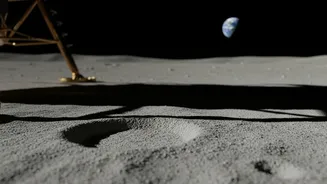
The Moon's surface is covered by a layer of loose soil, rock, and dust called regolith. In the sunlit portions of the Moon, surface temperatures can soar, while just a few centimetres below, it gets incredibly cold. Scientists realized this temperature difference holds a crucial clue. The thermal properties of the regolith—how it conducts and retains heat—change depending on what it's made of. Dry, dusty regolith behaves differently from regolith mixed with water ice. This is the central principle behind ISRO's innovative search method. By studying the thermal behaviour of the subsurface, scientists can infer the composition without having to dig up and analyze every patch of lunar soil.
ISRO’s Thermometer on the Moon
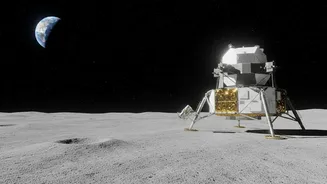
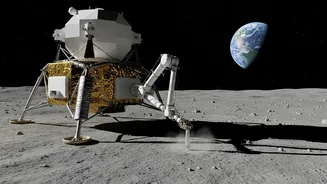
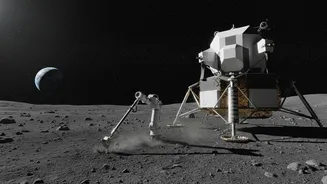
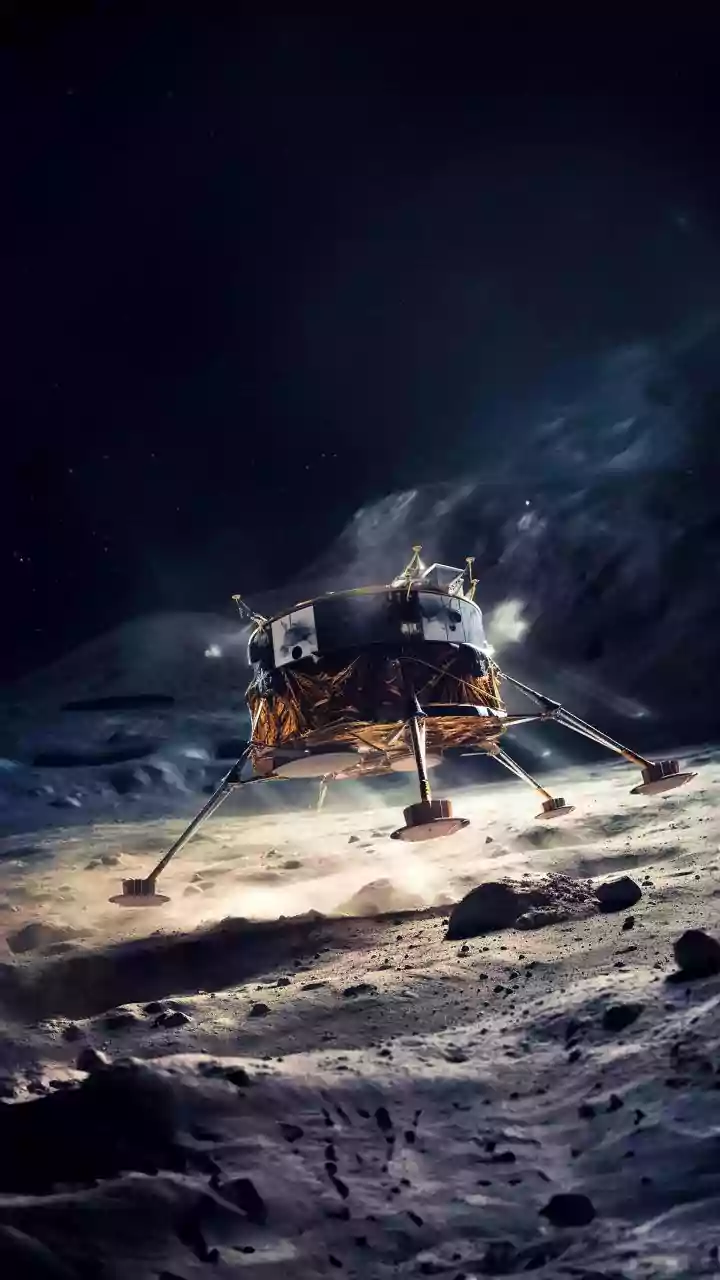
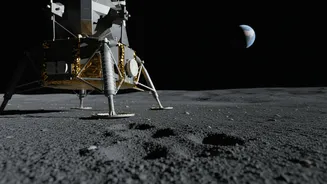
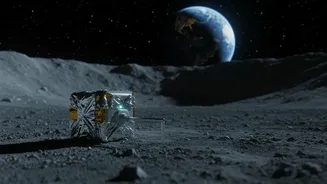
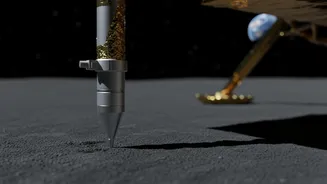
To take these vital measurements, ISRO equipped the Vikram lander from the Chandrayaan-3 mission with a special instrument: Chandra’s Surface Thermophysical Experiment (ChaSTE). ChaSTE is essentially a high-tech thermal probe designed to penetrate the lunar surface. It has a mechanism that can push a probe up to 10 centimetres into the regolith. This probe is fitted with ten highly sensitive temperature sensors spaced along its length. After the historic landing near the lunar south pole, ChaSTE was deployed, successfully burrowing into the soil and becoming the first instrument to ever conduct an in-situ temperature profile of this region. This allowed it to measure the temperature gradient, or how the temperature changes with depth, providing a detailed thermal snapshot of the top layer of the Moon's soil.
The Science of Cold Traps
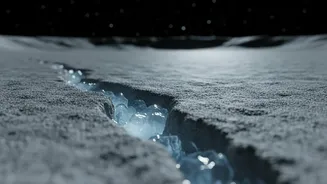
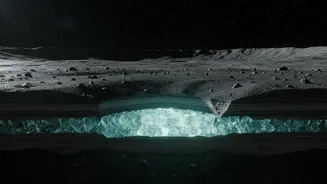
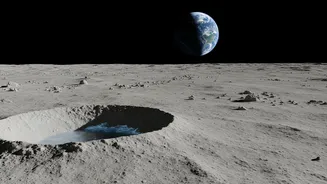
So, how does temperature indicate ice? The science lies in thermal conductivity—a material's ability to conduct heat. Lunar regolith is generally a very poor conductor of heat, which is why there's a huge temperature drop just below the surface. However, studies show that regolith mixed with water ice has different thermal properties. Icy regolith is expected to have a different thermal conductivity compared to dry regolith. Scientists can use the ChaSTE probe to not only measure the passive temperature profile but also to actively heat a small section of the soil and observe how that heat dissipates. By analyzing this data and comparing it with models of how icy and non-icy soils should behave, ISRO scientists can identify areas where the thermal signature strongly suggests the presence of subsurface water ice, likely trapped for billions of years in permanently shadowed regions (PSRs) where temperatures are low enough for it to remain frozen.
Mapping the Frozen Frontier
The data gathered by ChaSTE and other orbital instruments helps ISRO create detailed maps of the lunar south pole, highlighting areas with a high probability of containing water ice. These are not just abstract scientific exercises; they are treasure maps for future exploration. The temperature and thermal conductivity data help scientists estimate the physical properties of the regolith, which is crucial for designing future rovers and landing infrastructure. By pinpointing the most promising locations, ISRO can better plan future missions, such as the proposed Lunar Polar Exploration Mission (LUPEX) in collaboration with Japan, which aims to further investigate these icy regions. These maps are essential for guiding robotic and eventually human missions to the right spots, ensuring they can efficiently access and extract this vital resource.