


The 'Zero Gravity' Myth
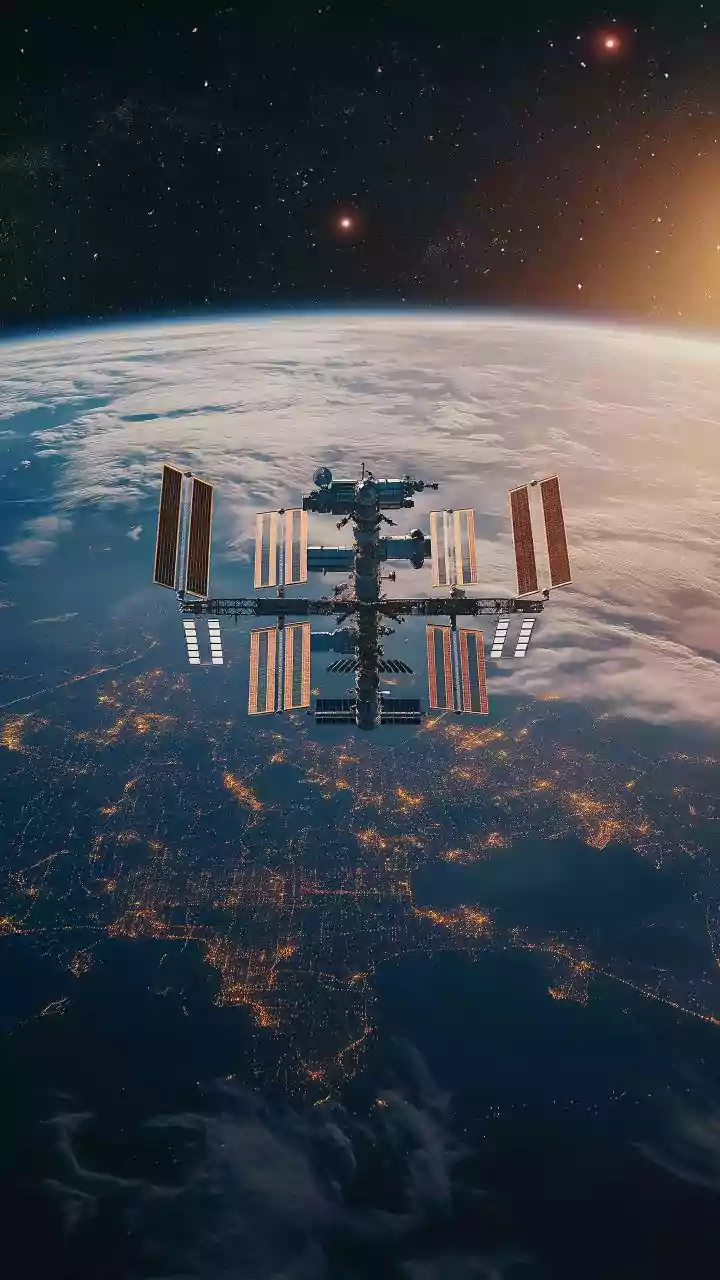
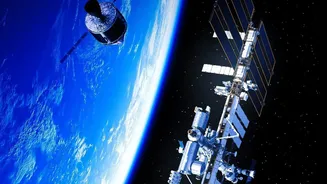
First, let's get the big misconception out of the way. There is no such thing as 'zero gravity' in Earth's orbit. The International Space Station (ISS), flying at an altitude of about 250 miles, still experiences roughly 90% of the Earth's gravitational
pull. If you could stand on a scale that high up, you would still weigh almost as much as you do on the ground. Gravity is the very force that keeps the station from flying off into deep space. So, if gravity is still firmly in charge, why do astronauts float? The answer has less to do with the absence of gravity and everything to do with the fact that they are perpetually falling.
It’s a Perpetual Free Fall
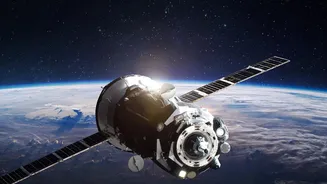
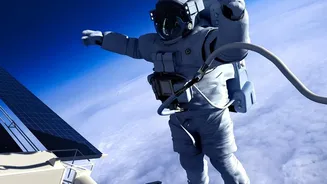
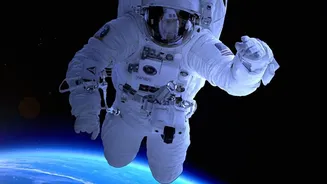
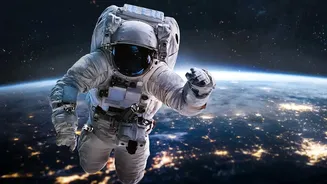
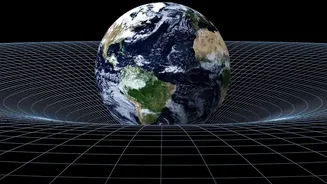
The secret to floating is that the space station, the astronauts, and everything inside are in a constant state of free fall. To understand this, imagine throwing a baseball. It travels forward, but gravity pulls it down, creating an arc. Now, imagine throwing that ball so fast—about 17,500 miles per hour, the speed of the ISS—that as it falls downward, the Earth's surface curves away from it at the exact same rate. The ball is always falling, but it never gets any closer to the ground. It's now in orbit. This is precisely what's happening to astronauts. They aren't floating; they are falling around the Earth in a path so fast and so perfectly matched to the planet's curve that they never land.
The Elevator Thought Experiment
A great way to visualize this is with a classic thought experiment. Imagine you're in an elevator and the cable snaps. For the few terrifying seconds you are in free fall, you and everything in the elevator with you would fall at the same rate. If you took a pen out of your pocket and let it go, it would 'float' in front of you. It's not actually floating, of course; you, the pen, and the elevator car are all plummeting together. Because everything is accelerating downward at the same speed, there's no relative force between you and the elevator floor. This is the sensation of weightlessness. An orbiting spacecraft is just a more permanent version of that falling elevator.
What Is Mechanical Stress?
This brings us to 'mechanical stress'. On Earth, gravity is constantly pulling you down. When you stand on the ground, the floor pushes back up with an equal and opposite force. This interaction creates internal forces inside your body—your bones and tissues are compressed under their own weight. That internal resistance to an external force is mechanical stress. It’s the reason your feet feel pressure on the floor and why standing for hours is tiring. Your body is constantly working against gravity, creating stress throughout your entire structure.
Life Without Mechanical Stress
In the constant free fall of orbit, this mechanical stress disappears. Since the astronaut and every molecule in their body are falling together at the same rate, there are no internal forces of compression or tension caused by weight. Nothing is pushing against anything else. Your feet don't press on the floor because the floor is falling away at the same speed you are. This is why astronauts can move massive objects with a fingertip and why liquids form perfect spheres—there's no 'down' for gravity to pull them into a puddle. This environment, more accurately called microgravity, isn't just a cool trick; it allows for unique scientific experiments where the results aren't influenced by the mechanical stresses we take for granted on Earth.