


The Science of the Lean: What Is Phototropism?
The tendency for plants to grow towards a light source is a natural phenomenon called phototropism. This response is driven by a powerful plant hormone called auxin. Produced primarily in the tips of stems, auxin promotes cell elongation. When light shines
on a plant from one side, the auxin migrates to the shaded side of the stem. This concentration of auxin causes the cells on the darker side to grow longer and faster than the cells on the light-facing side. The result is the characteristic bend or lean as the plant actively positions its leaves to capture as much light as possible for photosynthesis, the process it uses to create energy.
Why Window-Facing Leaves Are Different
The difference isn't just in the lean; the leaves themselves often tell a story. The side of the plant consistently facing the window receives more intense light, which fuels more vigorous photosynthesis. This can lead to larger, darker green leaves because the plant is producing more chlorophyll to capture that abundant energy. Conversely, the leaves on the shaded side might be smaller, paler, or more sparse because they are receiving less energy for growth. In low-light situations, a plant might stretch out, developing longer, weaker stems as it desperately reaches for a better light source. This means the 'good' side of your plant is simply the side that's getting the resources it needs to thrive.
The Case for Rotating Your Plants
For plant owners who desire a full, symmetrical, and balanced plant, rotation is the solution. By regularly turning your plant, you ensure that all sides receive a more equal share of light over time. This encourages the plant to grow more evenly, preventing the lopsided look and promoting stronger, more upright stems. A common and easy-to-remember method is to give the pot a quarter-turn every time you water it. This simple habit helps stimulate new growth on previously shaded areas and improves air circulation around the entire plant, which can help reduce the risk of pests and mold.
When Rotation Might Not Be the Best Idea
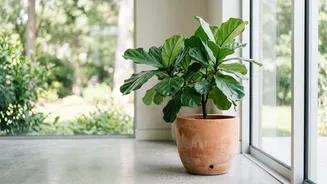
While rotation is beneficial for most common houseplants, it's not a universal rule. Some plants can experience stress from being moved. For example, flowering plants like orchids or Christmas cacti that have already formed buds may drop them if their orientation to the light is suddenly changed. Similarly, plants that have been trained to climb a specific structure or have developed a clear 'front' and 'back', such as a large Monstera or Fiddle Leaf Fig, might be better left alone. For these plants, a consistent orientation allows them to establish a stable structure. Constant rotation can interrupt this, forcing the plant to continually readjust its leaves and expend unnecessary energy.
A Practical Approach to Plant Rotation
So, should you rotate your plants? For most foliage plants like pothos, philodendrons, and ferns, the answer is yes if you want a symmetrical shape. Aim for a quarter turn every one to two weeks, or each time you water. If your plant has already developed a significant lean, you can correct it by turning the sparse side to face the light, but do so gradually with quarter turns rather than a sudden 180-degree flip to avoid shock. However, always observe your plant. If it seems happy and is growing well, even if a bit one-sided, there's no urgent need to interfere. Some plant owners embrace the natural, asymmetrical look as a reflection of the plant's adaptation to its environment.