




A wave of technical failures recently rippled across the country, disrupting everything from flights to banking. The rapid succession of outages sparked public concern about a potential coordinated attack on U.S. infrastructure.
A Week of Widespread Disruptions
Beginning around November
12, a cascade of outages impacted a startling range of critical services. The string of failures began with a major Microsoft 365 disruption that affected Outlook and Exchange Online services for businesses globally. This was followed by a rare nationwide ground stop issued by the Federal Aviation Administration (FAA) on November 13, which was caused by a telecommunications failure that crippled its air traffic control network for hours. In the days that followed, the disruptions continued. Major financial institutions including JPMorgan Chase, Bank of America, and Wells Fargo experienced issues with transactions and online access. United Airlines reported a separate system outage that delayed flights, and even the National Security Agency (NSA) faced a temporary internal network failure during scheduled maintenance. Companies like Apple, Marriott, and Workday also reported technical problems, rounding out a week of technological turmoil that left many Americans feeling uneasy.
The Official Explanation: Coincidence, Not Conspiracy
In response to growing public anxiety, the White House and top national security officials have been clear and consistent: the incidents were unrelated. A formal statement from the White House asserted there was 'no indication of a coordinated cyberattack, state-sponsored activity, or malign actor' behind the outages. Director of National Intelligence Jay Clayton and National Security Adviser Marco Rubio both publicly stated that each failure had a distinct and separate cause. Officials attributed the problems to a variety of routine, if unfortunate, technical issues such as software bugs, botched upgrades, and systems buckling under unexpected strain. Microsoft, for example, traced its global outage to a latent software defect from months prior that interacted unexpectedly with a newer update. The FAA pointed to a router upgrade that overloaded its network, while JPMorgan Chase cited a software bug in its on-premise hardware systems.
Why Do Separate Failures Feel Connected?
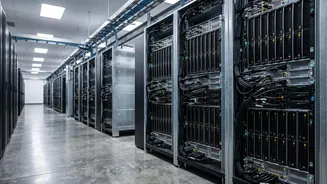
While officials have ruled out a coordinated attack, the series of events highlights the inherent fragility of our highly interconnected digital world. Experts note that modern society depends on a complex web of systems where a single failure can have cascading effects, even if the root causes are different. Many organizations rely on the same underlying cloud platforms, software providers, and network infrastructure. This shared dependency means that while the outages at an airline and a bank may have had unique internal triggers, they contribute to a broader sense of systemic vulnerability. Furthermore, experts suggest that the increasing use of AI to find and patch security flaws is creating new pressures. This can lead to a rush to deploy updates, sometimes without sufficient testing, which in turn can cause unforeseen system failures. An official from the Cybersecurity and Infrastructure Security Agency (CISA) noted that while the high-profile outages were significant, the overall number of internet disruptions was not dramatically higher than average, suggesting the public perception was amplified by the nature of the services affected.
Strengthening America's Digital Backbone
The week's events have served as a powerful 'wake-up call' about the need for greater digital resilience. Officials are using the incidents to underscore the importance of modernizing aging infrastructure and implementing stronger cybersecurity protections. The acting director of CISA, Nick Andersen, stated that the disruptions illustrate the need to engineer resilience into systems from the start, so they can withstand issues 'whether they occur because of things like an IT outage or a bad patch, or a modernization update gone awry'. The goal, according to Andersen, is to ensure essential services continue to function regardless of the cause of a disruption. CISA's 'Resolve to be Resilient' campaign, launched in November, encourages infrastructure owners to better understand their systems, identify critical dependencies, and develop robust plans for recovery. The White House has emphasized that the recent patching and upgrading activities, while disruptive, are part of a necessary effort to harden America's digital infrastructure against future threats.