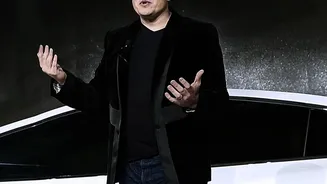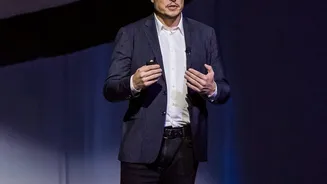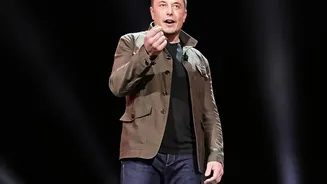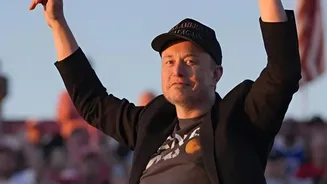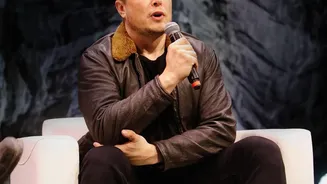

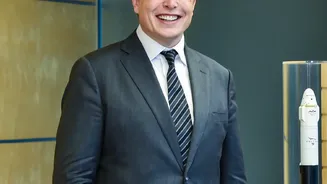
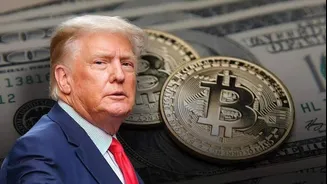
Elon Musk, the world's richest person, has become the single largest political donor in the 2026 midterm election cycle. His spending offers a powerful case study in how money flows through modern American politics and why.
The Scale of the Spending
According to recent Federal
Election Commission (FEC) filings, Elon Musk has contributed more than $445 million to political groups aligned with the Republican party during the current midterm election cycle. This sum makes him the largest individual donor, with recent reports indicating he poured an additional $77 million into his 'America PAC' in the first half of October alone. This spending has been directed towards numerous competitive races, with a significant focus on the Texas Senate race, as well as contests in Ohio, Michigan, and other battleground states. The funds are primarily used for advertising, voter outreach, and canvassing efforts.
The Two Paths of Political Donations
To understand how an individual can contribute such a large sum, it is crucial to know the two main channels for political donations. The first is direct contributions to a candidate's campaign. These are what most people think of as campaign donations, and they are strictly limited by federal law. For the 2025-2026 election cycle, an individual can give a maximum of a few thousand dollars directly to a single candidate's campaign per election. There are also annual limits on how much one can give to national party committees. These rules are in place to prevent corruption or the appearance of it.
Enter the Super PAC
The second path, and the one that allows for massive spending, is through independent-expenditure-only committees, better known as Super PACs. Following the landmark 2010 Supreme Court decision in Citizens United v. FEC, the rules changed dramatically. The court ruled that limiting 'independent' political spending from corporations and unions violated free speech rights. This paved the way for Super PACs, which can raise unlimited amounts of money from individuals, corporations, and unions. The key restriction is that a Super PAC's spending cannot be coordinated directly with a candidate's campaign. Musk's largest donations, including a $158 million contribution to the Senate Leadership Fund and hundreds of millions to his own America PAC, have been channelled through these entities.
A System Under Scrutiny
The rise of the Super PAC and the surge in spending by billionaires have fueled an intense national debate. Proponents argue that contributing money to political causes is a protected form of free speech and that donors have a right to support the candidates and ideas they believe in. They contend that as long as the spending is independent, it does not lead to corruption. Critics, however, argue that such enormous sums give a tiny number of ultra-wealthy individuals an outsized and undemocratic influence on elections, drowning out the voices of ordinary citizens. They point to the fact that a hundred billionaire families contributed a record $2.6 billion in the 2024 elections, making up a significant portion of all political spending. This concentration of financial power, they say, warps the political landscape and erodes public trust in democratic institutions.
Musk's Political Shift
Historically, Musk has donated to both Democratic and Republican politicians. However, in recent years, his public statements and financial contributions show a decisive shift. In 2022, he announced he would no longer support Democrats and would vote Republican. His spending in the 2024 and 2026 election cycles confirms this, with nearly all his contributions going to support Republican candidates and conservative causes. His stated goals, often tied to his business interests and views on regulation, have aligned with the GOP platform, leading him to leverage his immense wealth to influence political outcomes in a way few others can.