






The Silent Threat in a Sealed Can
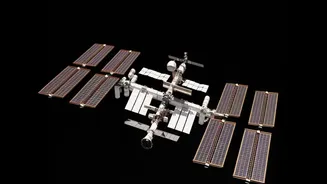
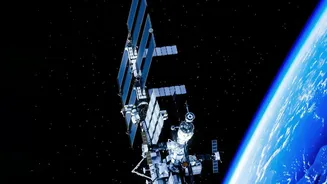
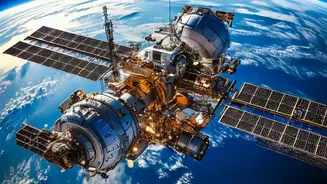
On Earth, the planet's vast atmosphere and plant life naturally manage the carbon dioxide we exhale. In the confined space of the International Space Station (ISS), however, CO2 can quickly accumulate to toxic levels. Even a small increase can cause headaches,
dizziness, and impaired judgment—symptoms that are dangerous in an environment where peak mental performance is critical. To survive, astronauts rely on a sophisticated suite of hardware known as the Environmental Control and Life Support System (ECLSS). This system is the station's mechanical heart, lung, and kidneys, responsible for everything from maintaining air pressure to purifying water and, most importantly, scrubbing the air clean.
The Workhorse: Zeolite Scrubbers
The primary tool for CO2 removal on the U.S. segment of the ISS is the Carbon Dioxide Removal Assembly, or CDRA. This system doesn't use simple filters like you might find at home. Instead, it employs a clever regenerative process using beds of tiny, porous clay-like pellets called zeolites. The system works in a continuous cycle with multiple beds. First, cabin air is passed through a desiccant bed to remove moisture, as the CO2-capturing zeolite works best with dry air. The dry, CO2-laden air then flows into a second bed containing a different type of zeolite that specifically traps carbon dioxide molecules in its microscopic pores, allowing the clean, breathable air to return to the cabin. The magic of the CDRA is its regenerative capability. While one set of beds is actively scrubbing the air, the other set is in a regeneration cycle. The beds are heated and exposed to the vacuum of space, which forces the trapped water and CO2 molecules out. The CO2 is vented away, and the water vapor can be collected and recycled. This cycle-and-swap process allows the system to run continuously without needing constant replacement parts from Earth, a crucial feature for long-duration missions.
Turning Waste into a Resource
Just venting captured CO2 into space is wasteful, as it means losing precious oxygen atoms. To create a more closed-loop system, NASA implemented the Sabatier system. This remarkable device takes the concentrated carbon dioxide from the CDRA and reacts it with waste hydrogen—a byproduct of the station's oxygen generation system, which splits water into oxygen and hydrogen. Using a catalyst at high temperature, the Sabatier reaction converts these two waste products into two very valuable ones: water and methane. The water is then fed back into the life support system, where it can be purified for drinking or split again to create more breathable oxygen, reducing the amount of water that needs to be launched from Earth. The methane is currently vented into space, but future versions of this technology for missions to Mars could use it as a component for rocket propellant.
The Next Generation of Air Purifiers
While the CDRA has been a reliable workhorse, engineers are constantly developing more efficient and robust technologies for future deep-space missions to the Moon and Mars. One promising technology being tested on the ISS is the Thermal Amine Scrubber. This system uses a liquid amine solution to absorb CO2, a method that is more efficient and can operate at lower temperatures, saving power. Another recent upgrade is the Four Bed Carbon Dioxide Scrubber (FBCO2), which features improvements like a magnetic-bearing blower, designed for greater reliability and a longer lifespan. These innovations are crucial for enabling human exploration far beyond Earth, where resupply is impossible and system reliability is paramount.