








The Plan, The Moon, and The Rocket
Before humanity can take its giant leap to Mars, it must first make a return trip to the Moon. This is the core of NASA's Artemis program, a multi-stage plan to establish a sustainable human presence on and around the Moon, effectively using it as a training
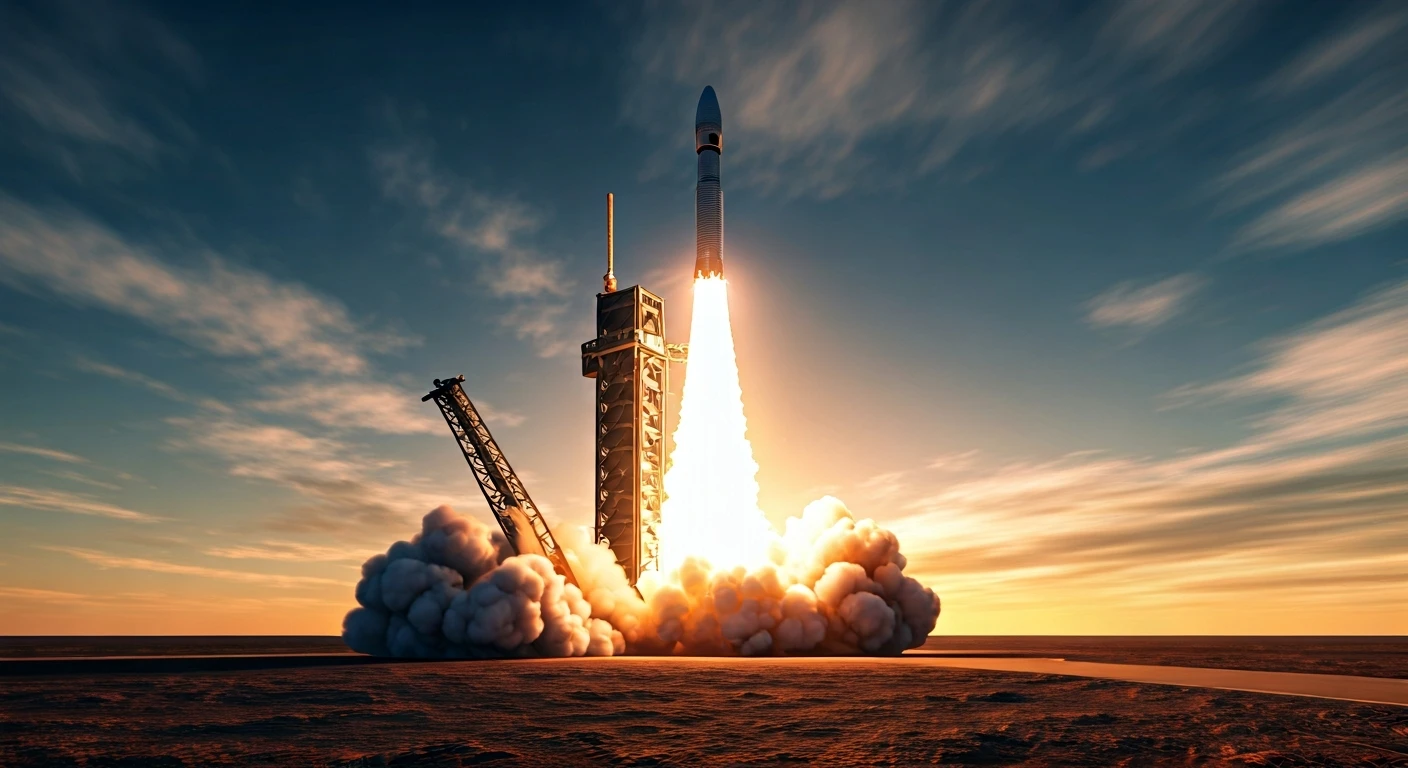
ground and stepping stone for the far more complex journey to Mars. Central to this plan is a vehicle called the Human Landing System (HLS), the spacecraft that will ferry astronauts from lunar orbit down to the Moon's surface and back again. In a move that surprised many, NASA awarded the multi-billion dollar contract for the HLS not to a legacy aerospace giant, but to Elon Musk’s SpaceX. The proposed vehicle? Starship. It is a fully reusable, two-stage super heavy-lift launch vehicle designed to be the most powerful rocket ever built. It's intended to carry over 100 metric tons to orbit, and eventually, people to the Moon and Mars. This makes the success of Starship not just a goal for SpaceX, but a critical milestone for NASA's entire deep-space exploration agenda.
Why Bet on an Unproven System?
Placing such a crucial part of the Artemis program—and by extension, the Mars mission—in the hands of a vehicle that is still undergoing fundamental testing seems like a massive gamble. So why did NASA do it? The answer lies in a blend of ambition, cost, and a strategic shift in how the agency approaches spaceflight. Firstly, Starship promises capabilities that no other existing or proposed rocket can match. Its sheer size and full reusability are designed to dramatically lower the cost of access to space. For missions to Mars, which will require transporting enormous amounts of supplies, habitats, and fuel, a vehicle like Starship isn't just an option; it's potentially the only financially and logistically viable one. Secondly, NASA's strategy has increasingly relied on partnering with private industry through fixed-price contracts. This approach fosters competition, spurs innovation, and offloads some of the developmental risk and cost from the US taxpayer to private companies like SpaceX. In essence, NASA is betting that SpaceX's agile, iterative, and hardware-rich approach to development will deliver a revolutionary capability faster and cheaper than a traditional, government-led program could.
A Trail of 'Rapid Unscheduled Disassemblies'
SpaceX’s development philosophy is famously “test, fly, fail, fix, repeat.” While this has proven incredibly successful for its Falcon 9 rockets, it makes for a dramatic and sometimes explosive public testing campaign for Starship. Early high-altitude tests of Starship prototypes in Texas often ended in what the company wryly calls a “rapid unscheduled disassembly”—an explosion. More recent integrated flight tests of the full stack, including the Super Heavy booster, have achieved more milestones, such as stage separation, but have also ended with the loss of the vehicles before mission completion. While each test provides invaluable data, the lack of a fully successful orbital flight test puts pressure on the timeline. NASA officials have publicly acknowledged that the original 2025 target for the Artemis III lunar landing is highly unlikely, with Starship's readiness being a major pacing item. Every delay in Starship's development has a direct knock-on effect on the entire Artemis timeline, pushing the dream of Mars further into the future.
The High-Risk, High-Reward Gamble
Ultimately, the situation is a classic high-risk, high-reward scenario. If SpaceX fails to make Starship reliable and operational in a timely manner, NASA's Moon and Mars ambitions will face a significant setback, forcing a costly and time-consuming pivot to other, likely less capable, alternatives. It would be a major blow to the new public-private model of space exploration. However, if Starship succeeds, it will be a paradigm shift. It could open up the solar system in a way that was previously confined to science fiction, making lunar bases and Martian colonies economically feasible. The rocket that has yet to fly a complete mission could single-handedly define the next century of human spaceflight. For NASA, it's a bet on a future where access to space is not only possible but routine and affordable. The agency is wagering that the potential reward is worth the monumental risk.