



A New Martian Endurance Record
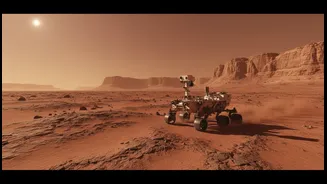
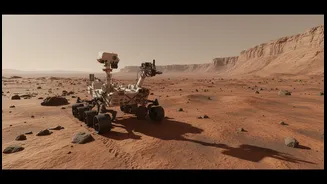
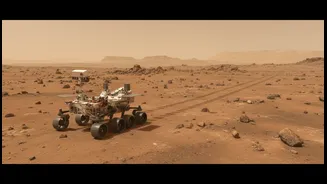
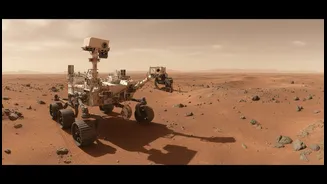
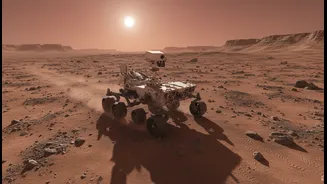
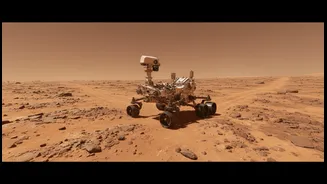
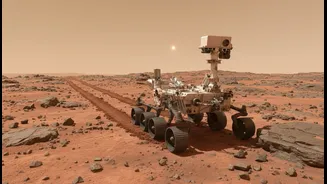
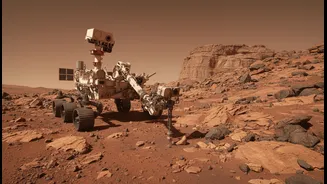
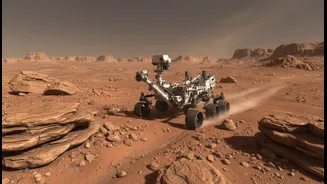
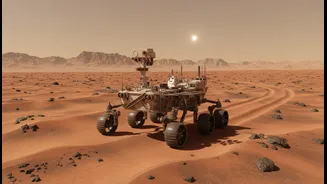
On June 14, 2026, the Perseverance rover officially clocked in at 42.195 kilometres (26.2 miles) of travel across the rough, alien terrain of Mars. It’s only the second robot to achieve this marathon distance on another world. The first was the legendary
Opportunity rover, which took a staggering 11 years and two months to reach the milestone. Perseverance, by contrast, did it in just over five years. This isn't because Percy, as it’s affectionately known, is a speed demon—its top speed is a modest 0.16 kilometres per hour. The secret to its record-breaking pace lies not in raw speed, but in revolutionary smarts. This marathon isn't just a number on an odometer; it represents a fundamental shift in how we explore distant worlds.
The Power of 'Thinking While Driving'
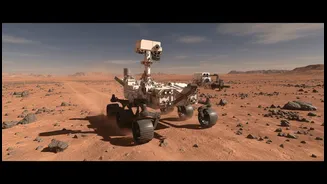
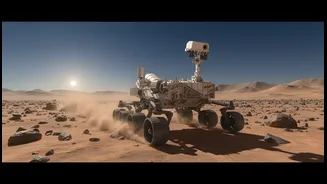
Previous Mars rovers, like the still-active Curiosity, operated on a cautious stop-and-go basis. Human drivers on Earth would meticulously plan a route, send the instructions, and the rover would execute. After moving a short distance, it would have to stop, take new pictures, and wait for the next set of commands from a mission control team millions of miles away. Perseverance changes the game with its advanced autonomous navigation system, called AutoNav. This system allows the rover to make its own decisions on the fly. Using a dedicated pair of navigation cameras, it creates a 3D map of the terrain in front of it, identifies potential hazards like sharp rocks or sand traps, and plots the safest and most efficient path forward—all while its wheels are still turning. This “thinking while driving” capability, as NASA engineers call it, means Perseverance can cover several hundred metres in a single Martian day, far surpassing the records of its predecessors and maximising its time for science.
Smarter, Not Just Faster
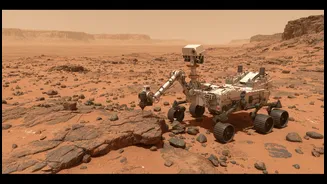
The ability to drive independently does more than just rack up kilometres. It fundamentally changes the nature of the mission. With less time spent waiting for instructions from Earth, Perseverance has more time to be a geologist. Its primary mission in Jezero Crater is to hunt for signs of ancient microbial life and collect rock and soil samples for a potential future return to Earth. The crater, which scientists believe was once a lake fed by a river delta, is a prime location for this search. Thanks to AutoNav, the rover can navigate more complex and scientifically interesting landscapes that older rovers would have been programmed to avoid. It has explored the crater floor, climbed onto the ancient delta, and is now investigating the terrain beyond the crater's rim. This increased mobility and access to diverse geological sites dramatically boosts the chances of making a historic discovery.
Paving the Way for Future Exploration
Perseverance's autonomous driving technology is more than just an upgrade; it's a critical testbed for the future of space exploration. As NASA and other agencies plan more ambitious missions, including those to bring Martian samples back to Earth and eventually send astronauts, the need for intelligent, independent robots becomes paramount. Future rovers on Mars, or even on the moons of Jupiter and Saturn, will face even greater communication delays, making Earth-based remote control impractical. These future explorers will need to be able to make complex decisions on their own to navigate, conduct science, and potentially support human crews. Perseverance's marathon-level drive proves that this technology is not just theoretical but robust and reliable in the harsh Martian environment. It’s a crucial step that reduces risk and builds the foundation for a new era where robotic explorers can venture further and discover more, with less moment-to-moment human guidance.