

The Invisible Threats in a Sealed Environment
Imagine living and working in the same airtight space for six months or more. Every breath you exhale releases carbon dioxide (CO2). The equipment hums, silently off-gassing trace chemicals like volatile organic compounds (VOCs). Even the astronauts themselves,
through metabolic processes, contribute to a cocktail of over 200 potential contaminants. Floating dust, microbes, and particulates, no longer pulled down by gravity, remain suspended in the air, posing a direct threat to respiratory health. These aren't just comfort issues; high CO2 levels can cause headaches and cognitive impairment, while other compounds can irritate the lungs and, over time, lead to more serious health problems. This complex mixture requires a sophisticated, multi-layered defense system.
The Foundation: The ECLSS Air Revitalization System
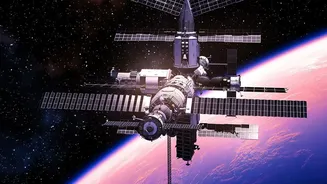
The backbone of breathable air on the ISS is the Environmental Control and Life Support System, or ECLSS. Specifically, its Air Revitalization System works around the clock to manage the atmosphere. A key function is removing the CO2 exhaled by the crew. This is primarily done using a system of molecular sieves—materials that act like a chemical sponge, trapping CO2 molecules while allowing oxygen and nitrogen to pass through. These sieves can then be 'regenerated' by exposing them to the vacuum of space, which vents the captured CO2. For other gaseous impurities, the air is passed through activated charcoal beds and a catalytic oxidizer, which burns off harmful compounds at high temperatures, effectively neutralizing them. This foundational technology has made long-duration missions possible for decades.
Innovating for Deeper Space: Quieter, More Efficient Scrubbers
While effective, legacy systems like the Carbon Dioxide Removal Assembly (CDRA) are complex, noisy, and require significant maintenance. As NASA plans for longer missions to the Moon and Mars, where resupply is difficult and reliability is paramount, it is developing next-generation solutions. One promising innovation is the Air-Cooled Temperature Swing Adsorption Compressor (AC-TSAC). This system uses beds filled with mineral pellets called zeolites that capture CO2 more efficiently at room temperature. It has fewer moving parts, making it quieter and reducing the need for frequent repairs. Another leap forward involves using liquid sorbents, which have a much higher capacity for absorbing CO2 than solid materials. These systems are lighter, require less power, and could eliminate entire stages of the current filtration process, saving precious mass and volume on future spacecraft.
From Filtration to Real-Time Monitoring
Protecting astronauts isn't just about filtering the air; it's also about knowing exactly what's in it at all times. Advanced monitoring systems play a crucial role. The European Space Agency's ANITA (Analysing Interferometer for Ambient Air) experiment, for example, can monitor the cabin air for dozens of contaminants in near real-time, completing a full analysis cycle every few minutes. This allows the crew to respond instantly to any accidental chemical release or system malfunction. This constant vigilance ensures that the invisible threats remain just that—invisible and harmless. These monitoring innovations provide a detailed understanding of the air quality, ensuring that the filtration systems are performing as expected and keeping the crew safe from potential exposure to harmful substances.
The Health Payoff: Breathing Easy in Microgravity
The direct benefit of these innovations is the protection of astronaut respiratory health. In microgravity, the body's fluids shift upwards, which can affect lung function. Furthermore, dust and particles that would settle on Earth remain airborne, creating a risk similar to 'lunar hay fever,' which can cause irritation and inflammation of the airways. The sophisticated, multi-stage HEPA-grade filters and contaminant control systems on the ISS are designed to capture these particulates down to a microscopic level. By maintaining a clean, Earth-like atmosphere, the ECLSS mitigates these risks, allowing the lungs to function more efficiently and preventing the long-term damage that could result from inhaling contaminated air in a closed environment. This protection is vital for ensuring crew members remain healthy and perform at their peak during grueling missions.