


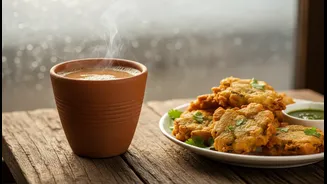



The Comfort of the Crunch
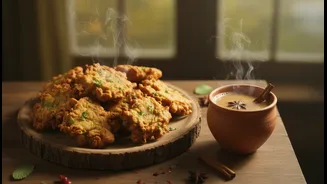
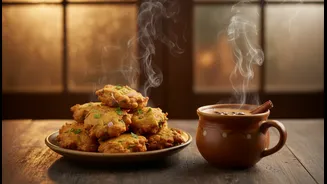
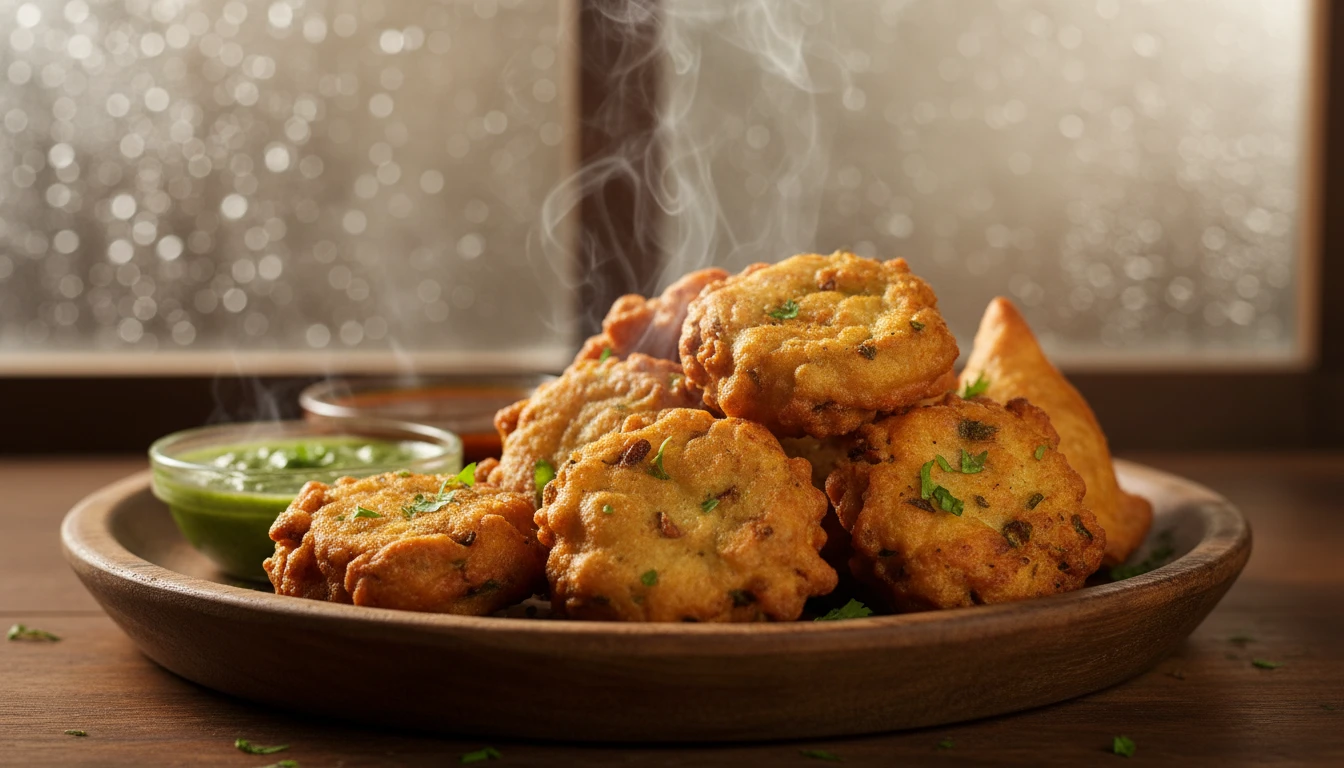
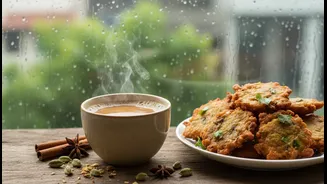
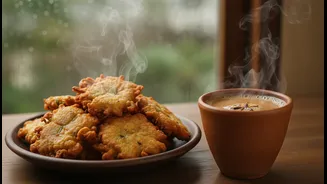
There's a simple, sensory magic to eating a piping hot pakora or a flaky samosa while the world outside is drenched and grey. The crisp, crunchy texture provides a satisfying contrast to the damp, sluggish feeling of a rainy day. This desire for warmth
and textural opposition is a powerful driver. When the weather is cooler and more humid, our bodies instinctively seek warmth and energy. Foods that are fried are not just warm but also calorie-dense, providing a quick source of energy that feels deeply satisfying. This combination of heat, crunch, and energy wrapped in savoury spices becomes an experience—a small, delicious rebellion against the gloom outside. It’s no wonder that the pairing of chai and bhajiyas is more than just a snack; it's a cherished monsoon ritual.
A Scientific Craving
This powerful craving isn't just in our heads; there's a biological basis for it. The reduced sunlight during overcast monsoon days can lead to a dip in serotonin, the brain's 'feel-good' neurotransmitter. To counteract this, our body often craves carbohydrates, which can help trigger a temporary boost in serotonin levels, making us feel happier and more relaxed. Fried snacks, typically made with carb-rich batter and fillings, serve this purpose perfectly. Furthermore, some research suggests that high humidity can subtly affect our sense of smell, making us desire more intensely flavoured and aromatic foods to get the same satisfying sensory hit. The combination of fat, salt, and crunch in fried foods delivers a potent dopamine hit to the brain's reward centres, making them almost irresistible.
The Wisdom of Ayurveda
For centuries, traditional Indian wisdom has guided seasonal eating habits, and the monsoon is no exception. In Ayurveda, the rainy season, or 'Varsha Ritu', is a time when the body's digestive fire, known as 'Agni', is considered to be weaker. This is also a period when the 'Vata' dosha, associated with air and space, becomes aggravated, which can lead to digestive issues. To balance this, Ayurveda recommends eating warm, light, and freshly cooked meals. While excessive fried food is discouraged, the preference for warm, well-spiced, and easily digestible foods aligns with the craving for things like moong dal pakoras or soups. Spices commonly used in these snacks, such as ginger, black pepper, and asafoetida (hing), are known to aid digestion and support immunity, which is crucial during a season prone to infections.
A Culinary Tour of India's Monsoon
This love for rainy-day snacks is a truly pan-Indian phenomenon, with each region offering its own unique and delicious specialities. In the North, streets are filled with the aroma of aloo samosas and bread pakoras. In Mumbai and across Maharashtra, the go-to snacks are crispy kanda bhaji (onion pakoras) and the iconic vada pav. Head south, and you might find yourself enjoying a plate of pazham pori (banana fritters) in Kerala or spicy medu vada. In the east, the craving might be met with momos or aloo chop, while central India celebrates with roasted bhutta (corn on the cob), seasoned with salt, chilli, and lime. This rich diversity showcases how a universal craving is expressed through beloved local flavours, all celebrating the same feeling of comfort and joy.