





The Unmistakable King of Rain
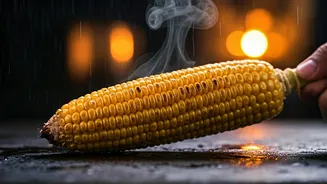
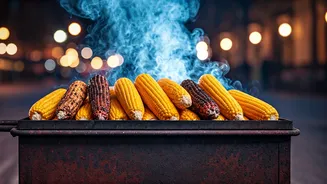
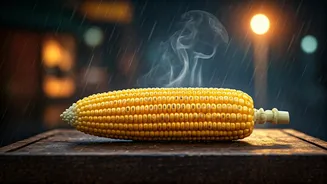
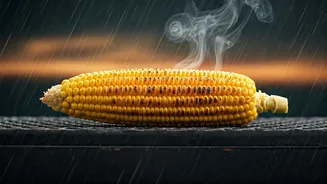
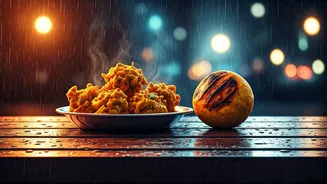
If the Indian monsoon had an official flavour, it would be 'bhutta'. We’re talking about corn on the cob, but not just any corn. This is the desi version, slow-roasted over a portable grill of smouldering red coals by a street-side vendor. It’s a snack
that’s less about hunger and more about ritual. As the temperature drops and the air fills with the petrichor—the earthy scent of rain on dry soil—the smoky aroma of roasting corn becomes its perfect companion. Found on almost every other street corner from June to September, the bhutta-wala becomes a seasonal landmark, a purveyor of warmth and nostalgia.
A Symphony for the Senses
The experience begins long before the first bite. You’re drawn in by the sound—the rhythmic whoosh of a hand-held fan coaxing the embers to life. Then comes the sight: rows of pale-yellow corn cobs, husks peeled back, slowly charring and blistering over the heat. The vendor, often shielded by a large, weathered umbrella, turns them with practiced ease, ensuring each kernel is kissed by the flame. This isn't a quick, sanitised process. It's a performance. The sizzle of the corn, the hiss of a stray raindrop hitting the hot coals, and the ambient sounds of the city slowing down create a unique soundscape. It’s a multisensory experience that grounds you in the moment.
The Final, Flavourful Ritual
Once the corn is roasted to perfection—tender on the inside with a delightful char on the outside—the final act begins. The vendor takes it off the grill, holding it with a piece of its own husk to protect their fingers. Then comes the magic. They take half a lemon, dip it into a signature blend of spices—typically kala namak (black salt), red chilli powder, and chaat masala—and rub it vigorously all over the hot cob. The citrus juice sizzles as it hits the warm kernels, activating the spices and releasing a mouth-watering aroma. You’re handed the steaming hot bhutta, wrapped in a simple corn husk or a piece of old newspaper. That first bite is an explosion of flavours: smoky, sweet, tangy, spicy, and salty all at once. The warmth of the corn contrasts beautifully with the cool, damp air.
More Than Just Comfort Food
But why has this simple snack become so intertwined with the monsoon? Part of it is agricultural. The rainy season coincides with the corn harvest, making it freshly and widely available. It’s also incredibly accessible—an affordable treat that cuts across all social strata. A student sheltering from a downpour, a family on an evening drive, or an office worker on their way home can all share in the same simple pleasure. Furthermore, in a season often associated with water-borne illnesses, a fire-roasted snack is seen as a safer bet than other street foods. The heat from the coals not only cooks the corn but also provides a comforting warmth against the monsoon chill, making it both a physical and emotional comfort.
A Bite of Pure Nostalgia
Ultimately, the power of bhutta lies in the memories it holds. For many, it’s the taste of childhood—of huddling under an awning with parents, hands sticky with lemon and masala. It’s the flavour of college friendships, forged over shared cobs during a break in the rain. It’s the romance of a long drive on a wet highway, pulling over to enjoy a moment of shared warmth. Each kernel seems to hold a story, a fragment of a past monsoon. It’s a collective cultural touchstone, a simple, unpretentious snack that connects us to a season, a place, and each other. It doesn’t just taste good; it feels like home.