





A New Space Race Begins at Home
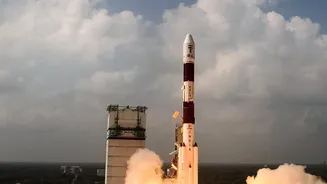
India's space story is no longer just about the triumphs of its celebrated government agency. A fundamental shift, accelerated by landmark policy reforms in 2020 and the Indian Space Policy of 2023, has unlocked the sector for private enterprise. This
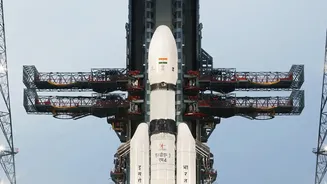
isn't about replacing the Indian Space Research Organisation (ISRO), but augmenting it. The new policy reframes ISRO’s role to focus on advanced research, scientific exploration, and human spaceflight, while encouraging private players to take over routine manufacturing and commercial services. The goal is to transform India from a country with a space program into a true space-faring economy, projected to grow from around $9 billion today to over $40 billion by the next decade. This has ignited a flurry of entrepreneurial activity, with hundreds of startups now aiming to claim a piece of the global space market.
The Rocket Builders: Democratizing the Ride to Orbit
At the forefront of this new wave are the launch vehicle startups, companies building the rockets that serve as the highways to space. Hyderabad-based Skyroot Aerospace made history in July 2026 by becoming the first private Indian company to launch an orbital-class rocket, the Vikram-1. Founded by former ISRO scientists, Skyroot aims to provide cost-effective and reliable launch services for the booming small satellite market. Their successful orbital mission was a monumental step, proving private Indian firms can compete on a global stage. Another key player is Chennai-based Agnikul Cosmos, incubated at IIT Madras. Agnikul is developing its Agnibaan rocket, which features the world's first single-piece 3D-printed engine, a technology that drastically cuts down manufacturing time. After a successful suborbital test launch in May 2024, the company is scaling up production with significant funding.
Eyes in the Sky: The Satellite and Data Revolution
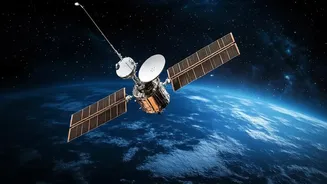
Building rockets is only half the story. An equally vibrant segment is emerging around building and operating satellites. Bengaluru's Pixxel is a global leader in this domain, launching a constellation of hyperspectral imaging satellites. These aren't ordinary cameras; they capture data across hundreds of light spectrums invisible to the naked eye. This powerful data provides actionable insights for industries like agriculture (detecting crop diseases early), environmental monitoring, and mining. Hyderabad's Dhruva Space offers full-stack satellite solutions, helping clients design, build, launch, and operate their own satellites. Having successfully deployed multiple spacecraft, the company serves both domestic and international clients, proving the 'Make in India' model for the final frontier.
The Enabler: Government's Role as a Launchpad
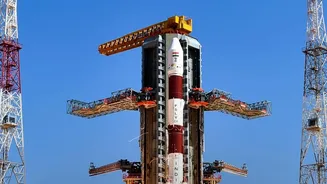
This private-sector boom would be impossible without a crucial facilitator: the government. The creation of the Indian National Space Promotion and Authorisation Centre (IN-SPACe) in 2020 was a game-changer. IN-SPACe acts as a single-window agency, authorizing private space activities and, critically, providing access to ISRO’s invaluable infrastructure, from testing facilities to launchpads. This removes a significant barrier to entry for capital-intensive startups. Furthermore, policy changes like liberalizing Foreign Direct Investment (FDI) have made it easier for these companies to attract global capital. The relationship has evolved from government-as-monopolist to government-as-enabler, creating a fertile ground for innovation to flourish.
Challenges on the Horizon
Despite the incredible momentum, the path is not without its asteroids. The space industry is notoriously capital-intensive with long development cycles. While funding has increased significantly, startups must consistently demonstrate progress to secure the large, patient capital needed to scale. Navigating the regulatory landscape, though much improved, remains complex. Furthermore, the global space market is fiercely competitive, with established international players. To succeed, Indian companies must not only innovate but also deliver on reliability and cost-effectiveness. However, the early successes of pioneers like Skyroot, Agnikul, Pixxel, and Dhruva have demonstrated that the ambition is matched by execution, setting a powerful precedent for the entire ecosystem.