







A New Home Above Earth
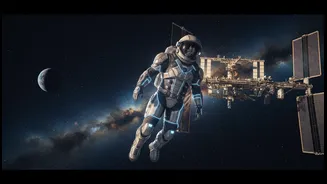
This week, Colonel Anil Menon of the U.S. Space Force began his tenure as a flight engineer on the International Space Station (ISS), arriving alongside two Roscosmos cosmonauts after a successful launch from the Baikonur Cosmodrome in Kazakhstan. The
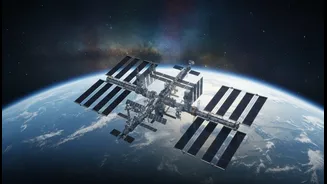
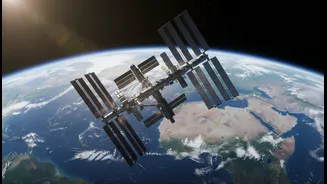
trio's Soyuz MS-29 spacecraft docked with the orbiting laboratory, marking the start of an approximately eight-month residency for Expeditions 74 and 75. This mission places Menon at the forefront of human space exploration, where he will live and work 400 kilometres above the Earth, contributing to a legacy of continuous human presence in space that spans over two decades. As flight engineer, he is responsible for supporting spacecraft systems, maintenance, and the vast array of scientific research conducted on the station.
From Physician to Astronaut
Menon’s path to the stars is a testament to a career dedicated to medicine in extreme environments. Born in Minneapolis, Minnesota, to an Indian father and a Ukrainian mother, his journey is one of distinction. He holds degrees from Harvard and Stanford in neurobiology, mechanical engineering, and medicine. Before being selected as one of ten astronaut candidates from over 12,000 applicants in 2021, Menon's career was already stellar. He served as an active emergency physician and was a first responder during earthquakes in Haiti and Nepal. In the U.S. Air Force, he served as a flight surgeon, deploying to Afghanistan and transporting over 100 wounded warriors. His experience extended to the private sector, where he became the first flight surgeon at SpaceX, helping launch the company's first human missions and building its medical program from the ground up.
Indian Roots, Global Ambitions
Menon's mission carries special significance for the Indian community worldwide. His father hails from Kerala, and his family traces its lineage to Sir Chettur Sankaran Nair, a prominent figure during India's freedom movement. Early in his career, Menon spent a year in India as a Rotary Ambassadorial Scholar to support polio vaccination efforts, building a direct connection to his heritage. His achievement has been celebrated as a historic milestone, reflecting the growing contributions of the Indian diaspora in the fields of science and technology. His wife, Anna Menon, also has a connection to space, having flown on the private Polaris Dawn mission, making them a veritable space-faring family.
A Laboratory in Orbit
The ISS is the most remarkable laboratory ever built, and Menon’s medical expertise will be put to good use. A significant portion of his mission is dedicated to human health research, studying the physiological toll of long-duration spaceflight. He will investigate how microgravity affects blood flow, vein structure, and blood composition—knowledge crucial for protecting astronauts on future missions to the Moon and Mars. He will also work on technology to produce IV fluids from the station’s water supply and use augmented reality with ultrasound, innovations that could make deep-space missions more self-sufficient. Beyond medicine, Menon will contribute to research on manufacturing semiconductor crystals in space, which could revolutionize high-performance computers and AI.
Paving the Way for Future Missions
Every experiment conducted and every day spent on the ISS builds the foundation for humanity's next giant leap. Menon's work directly supports NASA's Artemis program, which aims to establish a sustainable presence on the Moon and prepare for eventual missions to Mars. Understanding how to keep humans healthy, safe, and productive in the harsh environment of space is the primary challenge that missions like Menon's seek to solve. His unique background as a physician who has treated patients in disaster zones, conflict areas, and now, in orbit, provides an invaluable perspective. As he once noted, technology only works if the people do, and his mission is fundamentally about ensuring the human element can thrive in the final frontier.