


An Engine for Infinite Ideas
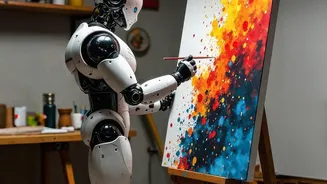
Every designer knows the feeling of staring at a blank canvas. Generative AI acts as a powerful brainstorming partner, helping to overcome this initial hurdle. By inputting simple text prompts, a designer can conjure countless visual starting points,
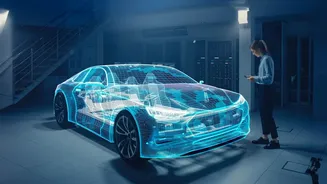
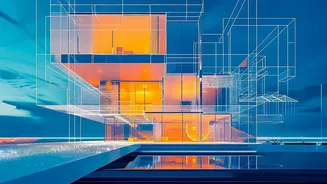
mood boards, and initial concepts in minutes. Tools like Midjourney and DALL-E can generate images based on descriptions, allowing for rapid exploration of different styles, compositions, and themes. This process doesn't replace the designer's creativity; it augments it, providing a wealth of visual data to react to, refine, and build upon. Instead of spending hours searching for inspiration, designers can generate it on demand, quickly iterating on ideas for logos, illustrations, or website layouts.
Crafting Palettes with AI Precision
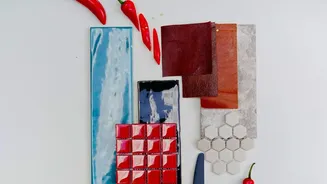
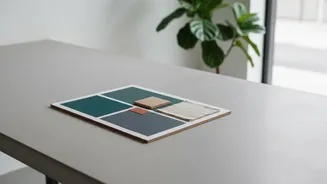
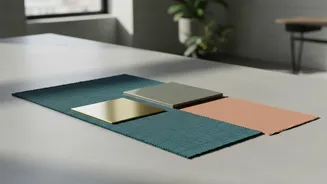
Choosing the right color scheme is fundamental to any design project, a process that can be both time-consuming and subjective. AI-powered tools are changing the game by offering intelligent and personalized color palette generation. Services like Khroma use AI to learn a designer's color preferences and then generate an endless stream of palettes that align with their taste. These tools can also extract color schemes from an uploaded image, ensuring brand consistency across different assets. AI can suggest palettes based on color theory principles like complementary or analogous schemes, or even based on a desired mood, such as 'calm' or 'energetic'. This saves valuable time and provides a data-driven foundation for what was once a purely intuitive task.
Accelerating from Mood Board to Mockup
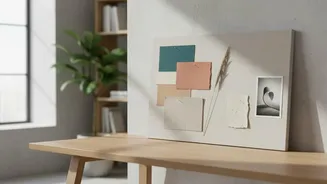
The path from a conceptual mood board to a tangible mockup has been dramatically shortened by generative AI. Freelancers can quickly generate a variety of visual assets for client pitches and internal reviews. Need a specific image for a website header or a series of icons with a consistent style? AI can produce these assets based on text descriptions, eliminating the need to search through stock photo libraries or create every element from scratch. This rapid prototyping allows for more variations to be presented to clients, improving communication and speeding up the approval process. Repetitive but essential tasks, like resizing assets for different platforms or removing backgrounds, can also be automated, freeing up designers to focus on higher-level strategic and creative decisions.
The Art of the Prompt: A New Design Skill
The effectiveness of generative AI lies in the quality of the instructions it receives. This has given rise to a new, crucial skill for designers: prompt engineering. Crafting a detailed and nuanced text prompt is an art form in itself. It requires the designer to be a skilled communicator, able to translate a visual idea into descriptive language that the AI can interpret accurately. The best prompts often include details about style, lighting, color, composition, and mood. As designers become more adept at writing prompts, they gain finer control over the AI's output, transforming it from a generator of random ideas into a precision tool. This human-AI collaboration ensures that the final product is not just AI-generated, but AI-assisted and human-curated.
Integrating AI into the Workflow
For a freelance designer, integrating AI isn't about replacing their entire process but enhancing it at key stages. Many designers use AI for the initial ideation and concepting phase to generate a wide array of options quickly. They then take the most promising AI-generated outputs into traditional design software like Adobe Photoshop or Illustrator for manual refinement, curation, and customization. This hybrid approach combines the speed and scale of AI with the irreplaceable intuition, strategic thinking, and creative eye of a professional designer. It allows freelancers to take on more projects, experiment more boldly, and deliver polished, innovative work more efficiently than ever before.