
An Icon in Flux
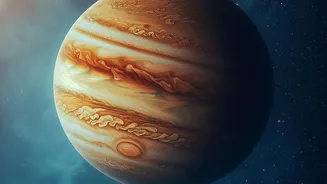
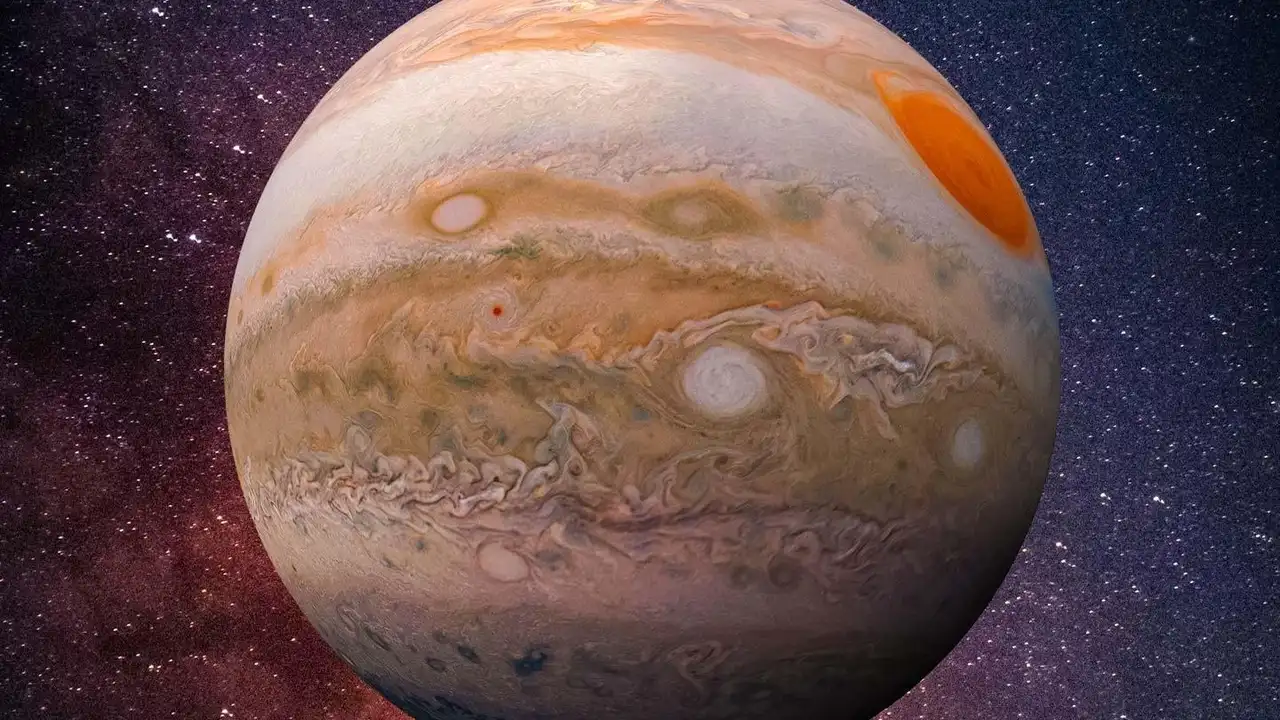
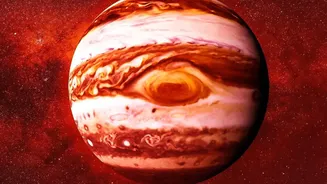
For as long as we have had telescopes powerful enough to see it, the Great Red Spot has been a subject of fascination. Historical observations from the late 1800s measured the storm at a colossal 40,000 kilometres across, wide enough to fit three Earths
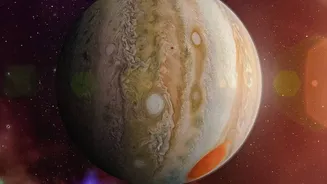
side-by-side. But a century of observation has shown a consistent and recently accelerating trend: the spot is getting smaller and rounder. By the time NASA's Voyager spacecraft flew past in 1979, it had shrunk to about 23,000 kilometres. More recent observations from the Hubble Space Telescope and NASA's Juno spacecraft confirm this trend, with the storm now measuring just over 16,000 kilometres across, barely wider than one Earth. This steady contraction has led some to wonder if we are witnessing the final chapter of our solar system's most legendary storm.
The Storm's Inner Secrets
The headline-grabbing shrinkage is only part of the story. Planetary scientists are more interested in the 'shifting dynamics' inside the storm itself. The Great Red Spot is a powerful anticyclone, a high-pressure system that spins counterclockwise with wind speeds exceeding 480 kilometres per hour. Recent research suggests that as the storm's circumference shrinks, it may be growing taller. Furthermore, data shows the winds at its outer edge are speeding up. One of the most compelling new theories for its shrinking size, published in mid-2024, suggests the storm is essentially starving. For centuries, the Great Red Spot has maintained its energy by 'feeding' on smaller storms that get drawn into its vortex. Scientists now believe that a decline in the number of these smaller storms available as 'food' may be causing the giant storm to lose momentum and shrink.
Tools of a Celestial Investigation
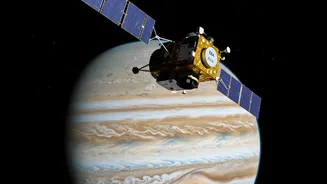
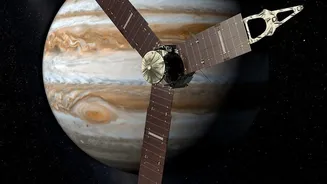
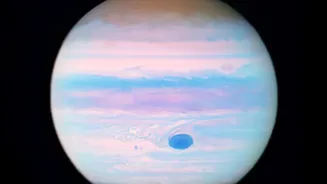
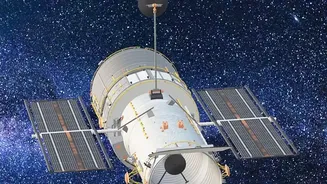
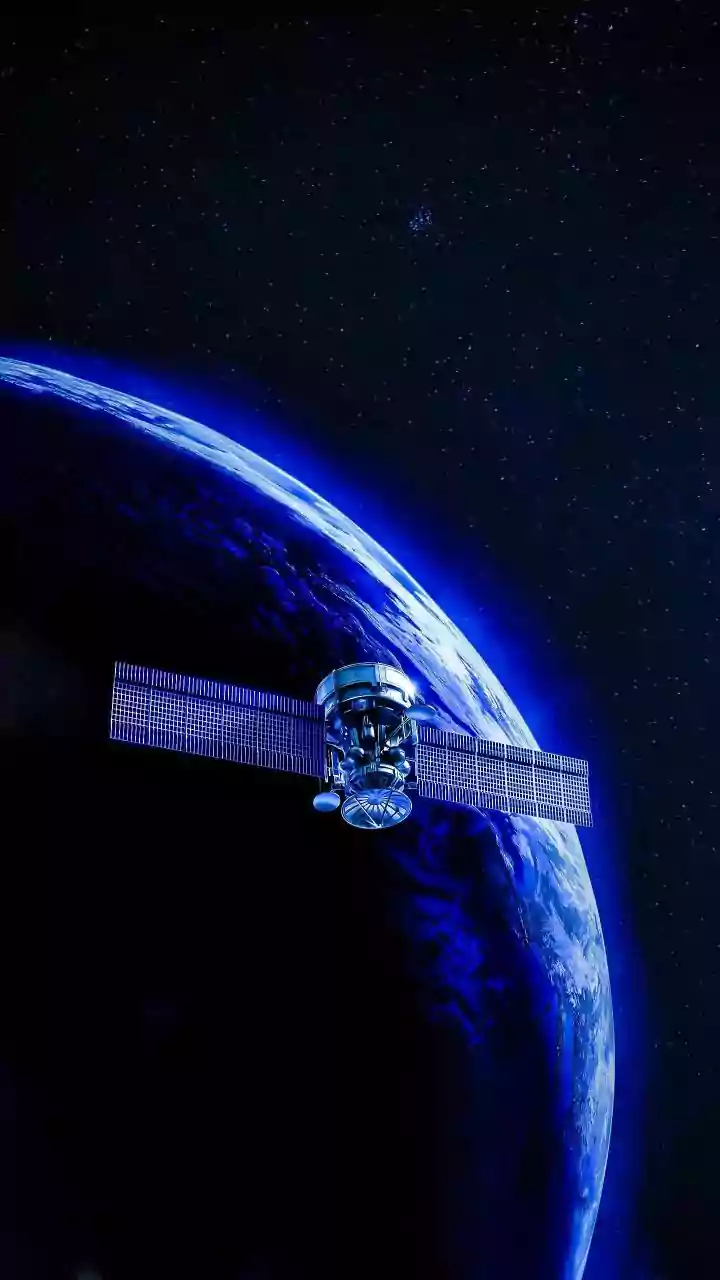
Understanding a storm hundreds of millions of kilometres away requires incredible technology. NASA's Juno spacecraft, which has been orbiting Jupiter since 2016, has been instrumental. Its close flybys have allowed instruments to peer deep beneath the cloud tops, providing the first 3D view of the planet's atmosphere. These passes revealed that the Great Red Spot is not just a surface feature; its roots extend hundreds of kilometres down into the planet's atmosphere. This is complemented by the long-range, consistent monitoring of the Hubble Space Telescope, which has tracked the spot's size, shape, and colour for decades, giving scientists a crucial long-term perspective on its evolution. By combining data from these missions with sophisticated computer models, researchers can simulate the storm's behaviour and test theories about its future.
What Does the Future Hold?
So, will the Great Red Spot disappear? The truth is, nobody knows for sure. Some models predict it could break apart within a few decades, while others suggest it might stabilize at a smaller size and persist for centuries longer. The process is not necessarily a simple, linear decline. Scientists have observed the storm 'flaking' at its edges, with large red chunks breaking off and dissipating. There are also short-term oscillations, with the storm appearing to swell and shrink over a 90-day cycle, on top of the long-term shrinking trend. Interestingly, studying Jupiter's storm dynamics provides insights into weather systems on Earth. The long-lived high-pressure systems on Jupiter are analogous to 'heat domes' or 'blocking' events that can cause extreme heatwaves on our own planet. Understanding the forces that sustain and weaken the Great Red Spot could help improve our models of terrestrial weather.