
A New Treasure Map for the Moon
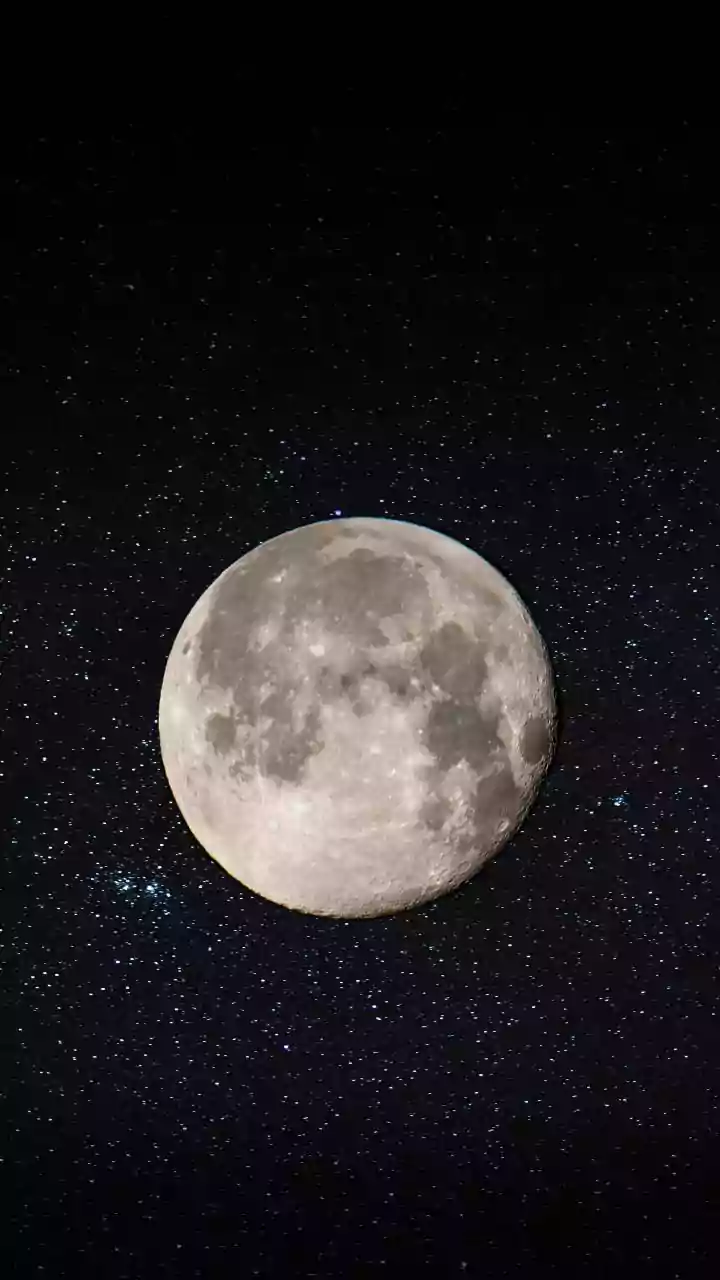
For decades, the presence of water on the Moon was more theory than fact. While early missions like the Apollo program brought back famously dry samples, a new generation of lunar orbiters and telescopes has confirmed what scientists long suspected: the Moon holds
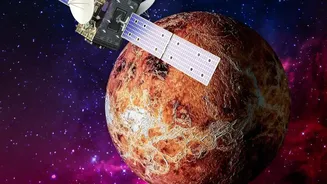
water. The latest breakthroughs come from deep space infrared sensors, which are providing unprecedented detail about where this water is and in what form. Instruments like those on NASA's retired SOFIA observatory and India's Chandrayaan missions have been pivotal. These sensors can detect the unique signature of water molecules, even when they are mixed in tiny amounts with lunar soil (regolith) or hidden in permanent shadow. This data is creating a new, invaluable map for locating what could be the most important resource in the solar system.
Seeing the Unseen with Infrared
Detecting water on a surface hundreds of thousands of kilometres away requires looking at the Moon in a special light. Infrared spectrometers work by analysing the light that reflects off the lunar surface. Different materials absorb and reflect specific wavelengths of light. Water ice, for instance, has a distinct absorption feature in the near-infrared part of the spectrum. By capturing this light, instruments like the Moon Mineralogy Mapper (M3) aboard Chandrayaan-1 could differentiate water ice from dry regolith. More advanced sensors can even distinguish between water molecules (H₂O) and their chemical cousin, hydroxyl (-OH). This technology allows scientists to not only confirm the presence of water but also estimate its concentration, a crucial factor for planning future extraction missions.
Water Beyond the Shadows
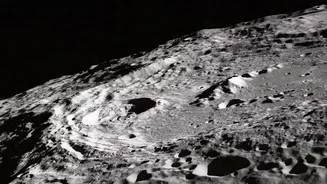
Initially, the search for lunar water focused on Permanently Shadowed Regions (PSRs) near the poles—craters so deep and tilted that they haven't seen sunlight in billions of years. In these super-cold traps, temperatures plunge low enough to preserve vast quantities of water ice. However, one of the most surprising recent discoveries, made possible by infrared observations from the SOFIA telescope, was the detection of water on sunlit surfaces of the Moon. While the concentrations are much lower—equivalent to about a bottle of water in a cubic metre of soil—it proved that water is more widely distributed than previously thought. This water is likely trapped in tiny beads of glass created by micrometeorite impacts or is chemically bound to minerals in the soil.
Fueling the Future of Space Travel
The confirmation and mapping of lunar water are not just academic exercises; they are foundational for the future of space exploration. The ability to use local resources, known as In-Situ Resource Utilisation (ISRU), is a game-changer. Water is incredibly valuable in space. It can be purified for drinking and growing plants. More importantly, using electricity—potentially from solar panels—it can be split into hydrogen and oxygen through electrolysis. This provides breathable air for astronauts and, critically, the two primary components of rocket propellant. Having a refueling station on the Moon would dramatically reduce the cost and complexity of missions to Mars and beyond, as spacecraft would not need to launch from Earth with all their fuel.
Powering India's Lunar Ambitions
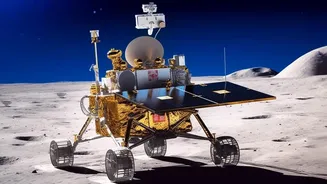
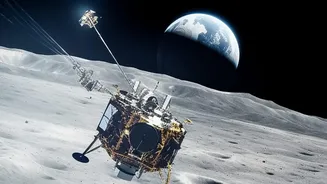
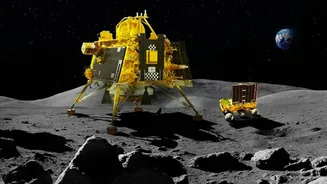
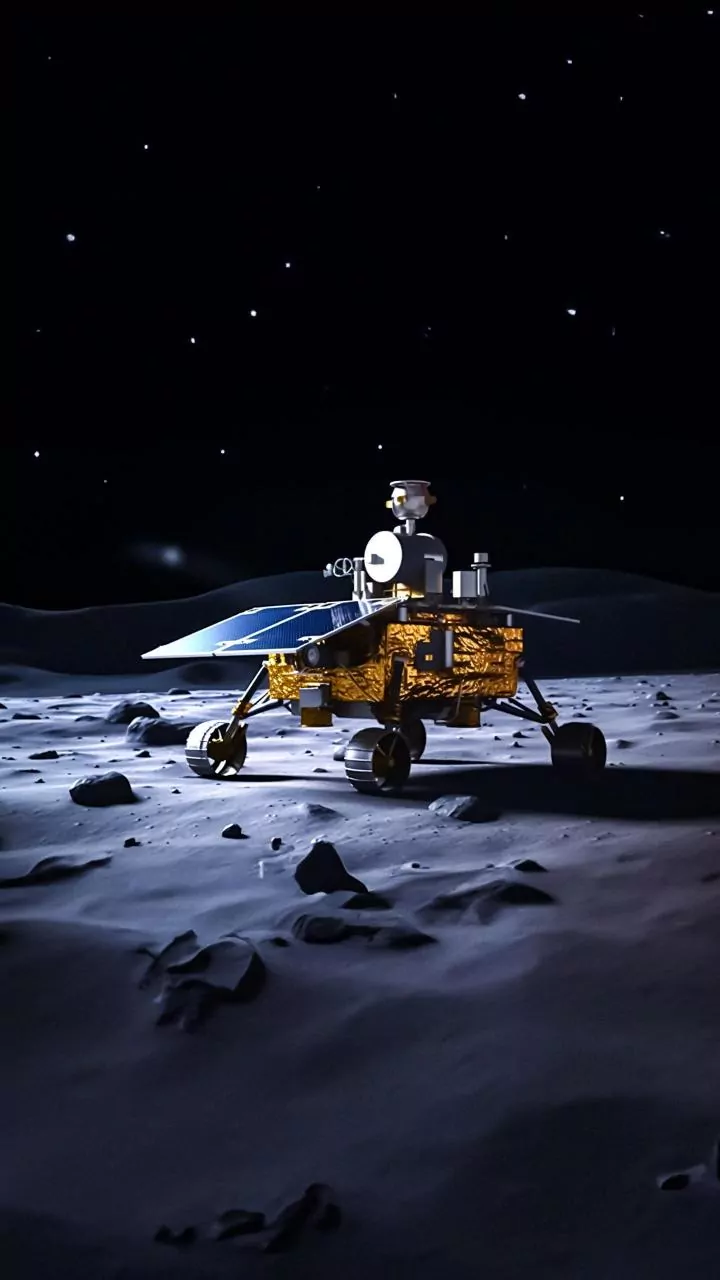
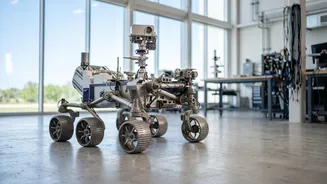
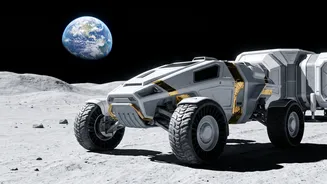
These global discoveries hold particular significance for India. ISRO's Chandrayaan missions have been at the forefront of lunar water discovery, with Chandrayaan-1's M3 instrument providing definitive proof of water ice. This legacy continues with planned missions like the Lunar Polar Exploration Mission (LUPEX), a joint venture between India's ISRO and Japan's JAXA. LUPEX aims to send a rover to the Moon's south pole to get ground-truth data on the quantity and quality of the water ice there. For a nation with ambitions for a sustained space presence, including future human missions, understanding and eventually harnessing lunar water is a key strategic goal that builds on India's pioneering work in the field.