

Meet Pushpak, The Game-Changer
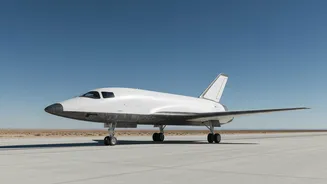
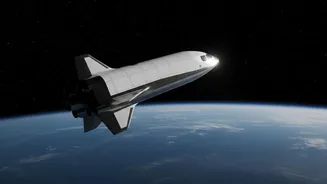
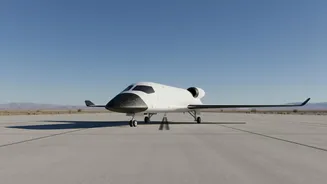
The star of the show is a winged vehicle named 'Pushpak'. It is the core component of ISRO's Reusable Launch Vehicle-Technology Demonstration (RLV-TD) program. Think of it not as a conventional rocket, but as a space plane. The goal is to create a vehicle that
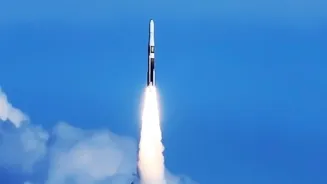
can be launched into space, deploy satellites, and then fly back to land on a runway just like an aircraft. This reusability is the holy grail of modern spaceflight. In a series of crucial tests, most recently the Landing Experiment (LEX-03), ISRO has proven its ability to land this vehicle autonomously with incredible precision.
The Challenge of an Autonomous Landing
Landing a winged vehicle returning from space is an immense technical challenge. In its latest test, Pushpak was carried to an altitude of 4.5 kilometres by an Indian Air Force Chinook helicopter and released. From there, it had to navigate on its own. The vehicle autonomously executed complex manoeuvres, corrected its path for wind and other disturbances, approached a runway at the Aeronautical Test Range in Chitradurga, and performed a perfect horizontal landing. It touched down at a speed exceeding 320 kmph, faster than a typical commercial aircraft, before using a brake parachute and its landing gear brakes to come to a halt. This success, repeated under increasingly difficult conditions across three tests, validates the sophisticated guidance, navigation, and control systems developed indigenously by ISRO.
The Billion-Dollar Question: How Does This Reduce Cost?
The answer is simple: don't throw away the most expensive parts. Traditional rockets are single-use; the entire vehicle is discarded after one launch. This is like building a brand new airplane for every single flight. The most valuable parts of a launch vehicle are its complex engines and sophisticated electronics. By designing a vehicle like Pushpak that can return to Earth intact, these critical systems can be refurbished and reused for multiple missions. ISRO's ultimate goal is to create a Two-Stage-to-Orbit (TSTO) launch vehicle where the first stage flies back to the ground and the second stage, a winged vehicle like Pushpak, goes to orbit and returns later. This approach could slash the cost of putting a payload into low Earth orbit by a factor of 10, potentially reducing it from $20,000 per kilogram to around $4,000 per kilogram.
India's Future in the Global Space Market
This technological breakthrough is not just a scientific achievement; it's a major business move. A drastic reduction in launch costs will make India an even more competitive player in the global satellite launch market, which is projected to grow significantly. India's space program, through its commercial arm NewSpace India Limited (NSIL), is already a reliable and cost-effective option for many countries. At present, India's share of the global commercial space market is under 2%, with ambitions to grow it to 8-10% in the next decade. Mastering reusable launch technology is the key to unlocking this potential. It will allow ISRO to offer more frequent and affordable launches for both domestic needs—like communication, navigation, and earth observation satellites—and international clients.