






Saturn at Its Brightest
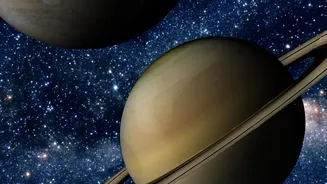
Kicking off the month's celestial highlights, Saturn reaches opposition on October 4. This is the best time of the year to view the gas giant, as Earth passes directly between it and the Sun. For observers in India, this means Saturn will rise in the east
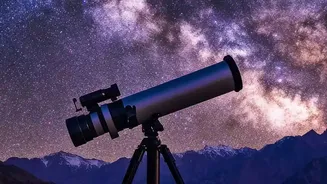
around sunset (approximately 6:11 PM), remain visible throughout the night, and set around sunrise on October 5. At opposition, Saturn is at its closest to Earth, making it appear bigger and brighter than usual. While it will be visible to the naked eye as a bright, steady, yellowish point of light, a small telescope or even a good pair of binoculars will reveal its most famous feature: its magnificent rings. The days around October 4 are particularly special due to a phenomenon called the Seeliger effect, which makes the rings appear even brighter than the planet itself.
Jupiter in the Morning Sky
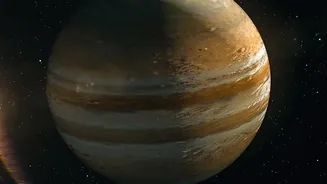
While Saturn dominates the evening, the king of the planets, Jupiter, rules the pre-dawn hours. Look for it as a brilliant, unblinking beacon of light in the eastern sky before sunrise. On the morning of October 6, skywatchers are in for a special treat as a thin waning crescent Moon will appear very close to Jupiter, creating a beautiful pairing in the sky. This event, known as a conjunction, is easily visible without any special equipment. With a pair of binoculars, you might even be able to spot Jupiter's four largest moons, known as the Galilean moons, appearing as tiny dots of light flanking the planet. Jupiter will be the most dominant point of light in that part of the sky, making it an easy and rewarding target for early risers.
The Orionid Meteor Shower
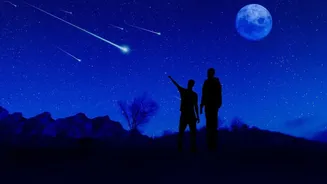
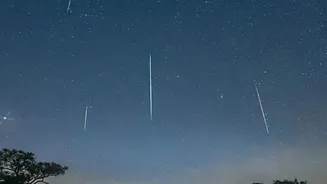
October also brings one of the year's most reliable and beloved meteor showers: the Orionids. This shower is active from early October to early November, but it will reach its peak activity on the night of October 21-22. These meteors are actually tiny fragments of dust and debris left behind by the famous Halley's Comet. At its peak, under dark skies, you can expect to see between 15 and 25 fast-moving meteors per hour. They are known for their speed and brightness, sometimes leaving glowing trails that persist for a few seconds. The shower gets its name because the meteors appear to radiate from a point in the constellation Orion, the Hunter. This year, a bright waxing gibbous moon will be present during the peak, which might wash out some of the fainter meteors. However, the moon is expected to set around 3 a.m. local time, leaving the pre-dawn hours of October 22 as the prime, moon-free window for viewing.
Tips for a Perfect Night Out
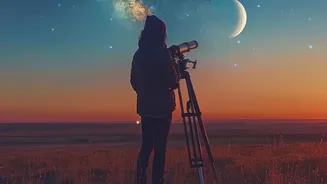
To make the most of these celestial events, a little preparation goes a long way. The most important step is to find a location away from city lights. Light pollution drastically reduces the number of stars and meteors you can see. Once you're at your dark spot, give your eyes about 20 to 30 minutes to fully adjust to the darkness; this will help you spot fainter objects. Dress in warm, comfortable layers, as even Indian nights can get chilly when you’re sitting still for long periods. You don't need a telescope to enjoy these sights, as planets are visible to the naked eye and meteor showers are best viewed with a wide-field perspective. However, a pair of binoculars can dramatically enhance your view of the planets, revealing Saturn's shape and Jupiter's moons. Finally, be patient. Stargazing is a quiet, rewarding activity that connects us with the vastness of the universe above.