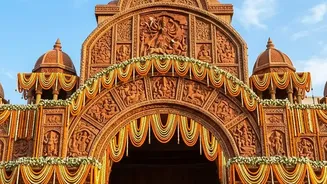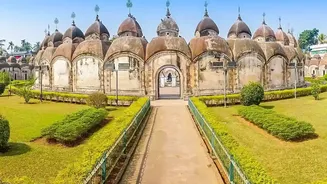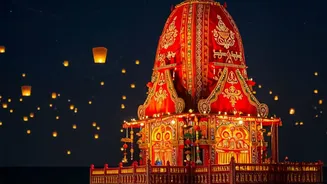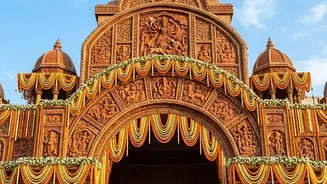


The Golden Triangle: An Unmissable Core
Any cultural deep-dive into Odisha inevitably begins with the 'Golden Triangle'—the three points of Bhubaneswar, Puri, and Konark. This well-trodden circuit forms the heart of the state's historical and spiritual landscape. Bhubaneswar, the capital, is often
called the 'Temple City of India' for its sheer density of ancient shrines. Puri is the hallowed abode of Lord Jagannath, one of Hinduism's most revered deities. And Konark is home to the breathtaking Sun Temple, a masterpiece of sacred architecture. Together, they represent complementary facets of Odishan religious and architectural history. A journey through these cities is more than sightseeing; it is an immersion into a civilization where faith was, and still is, expressed through magnificent stone carvings and enduring rituals.
Bhubaneswar: City of a Thousand Temples
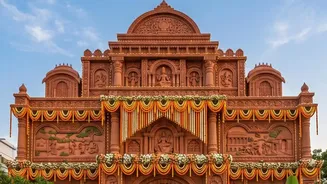
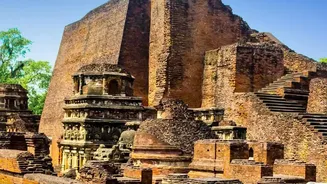
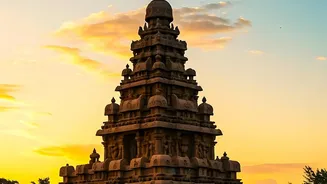
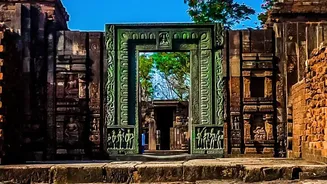
Bhubaneswar is where the journey into the famed Kalinga architectural style begins. The city's old town is a maze of sandstone temples, with the 11th-century Lingaraj Temple standing as its most formidable landmark. Dedicated to Lord Shiva, its 180-foot-tall main tower dominates the skyline, a perfect example of the Deula style with its distinct assembly hall, festival hall, and hall of offerings. While a magnificent religious site, it's also a cultural monument showcasing the harmonious coexistence of Shaivism and Vaishnavism. Nearby, the smaller Mukteshwar Temple is considered a 'gem of Odishan architecture' for its exquisite and detailed carvings. For a deeper historical context, the Udayagiri and Khandagiri caves on the city's outskirts offer a glimpse into the 1st-century BCE, when they served as residential blocks for Jain monks under King Kharavela.
Konark: The Sun Chariot Frozen in Stone
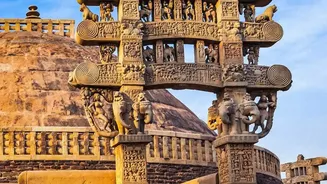
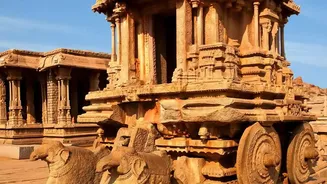
A short drive from Puri leads to the awe-inspiring Konark Sun Temple, a UNESCO World Heritage site since 1984. Built in the 13th century by King Narasimhadeva I, the temple is designed as a colossal stone chariot for the Sun God, Surya. It features 24 intricately carved wheels, nearly 12 feet in diameter, which also function as sundials, and is pulled by seven mighty horses. Though parts of the main structure have crumbled over time, what remains is a staggering display of artistic and engineering genius. The temple's surfaces are covered in sculptures depicting everything from deities and celestial musicians to scenes of daily life and military campaigns. Today, it stands primarily as a cultural and architectural monument rather than an active place of worship, a testament to a glorious past where art was the highest form of devotion.
Puri: Abode of the Lord of the Universe
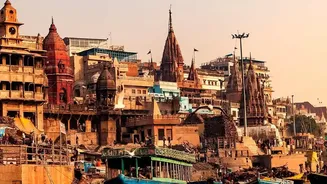
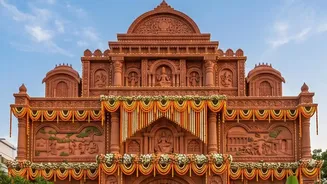
Puri is the epicentre of faith in Odisha, centred around the colossal Jagannath Temple. As one of the four sacred Char Dham pilgrimage sites for Hindus, it holds immense religious importance. The temple is dedicated to Lord Jagannath, a form of Vishnu, worshipped alongside his brother Balabhadra and sister Subhadra. Their unique wooden idols are central to the 'Jagannath Sanskruti', a culture of inclusivity and devotion that culminates in the world-famous Rath Yatra, or Chariot Festival. During this festival, the deities leave the temple to travel on massive, elaborately decorated chariots, an event that draws millions. While entry into the main temple is restricted to Hindus, its cultural influence radiates throughout the city, visible in its bustling markets, daily rituals, and the spiritual energy that permeates the air.
Raghurajpur and Pipili: Where Art is a Way of Life
No tour of Odisha's cultural landscape is complete without visiting its craft villages, which demonstrate the living lineage of the art seen in the temples. Raghurajpur, a designated heritage village, is renowned for its Pattachitra painters. This ancient art form, dating back centuries, involves intricate painting on cloth with natural colours, depicting mythological tales and religious stories. Just a short distance away lies Pipili, a town famous for its vibrant appliqué work, known locally as 'Chandua'. This craft of stitching colourful fabric patches into decorative patterns has deep roots in the rituals of the Jagannath Temple, where it is used for canopies and decorations for the Rath Yatra. Visiting these villages offers a direct connection to the artisans whose skills have been passed down through generations, making their work a living extension of the state’s sacred art.