


Why August is a Great Month for Saturn
While Saturn's big moment, its opposition, isn't until October 4, 2026, August is the month where the planet becomes a fantastic evening object. Each night, it rises a little earlier, moving from a late-night sight to a more accessible evening spectacle
by the end of the month. This period leading up to opposition is when Saturn is growing progressively brighter and larger in our sky, making it an increasingly rewarding target for sky watchers. The planet will be shining brightly in the constellation Pisces, which doesn't have many bright stars, making Saturn relatively easy to single out.
Understanding Opposition
A planet's opposition is the best time of year to see it. This is the moment when Earth passes directly between the outer planet and the sun. Imagine a straight line from the sun to Earth to Saturn. From our perspective on Earth, Saturn is on the opposite side of the sky from the sun. This means it rises in the east around the time the sun sets in the west, remains visible all night long, and sets in the west around sunrise. This alignment also means the planet is at its closest point to Earth for the year, making it appear at its biggest and brightest.
How to Find Saturn This Month
Finding Saturn in August 2026 is straightforward. Look towards the eastern sky late in the evening. At the start of the month, Saturn rises around 11 p.m., but by the end of August, it will be rising as early as 9 p.m. The planet will look like a bright, steady, yellowish-white point of light that doesn't twinkle as much as stars do. The Moon can be a helpful guide on certain nights; for example, on the night of August 30-31, the Moon will appear very close to Saturn, making the planet unmistakable.
What You Can See: From Naked Eye to Telescope
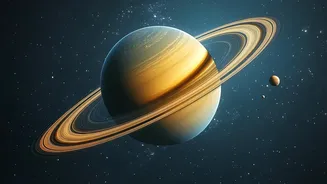
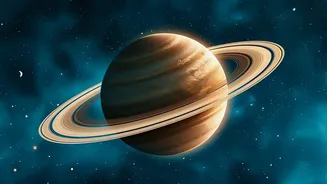
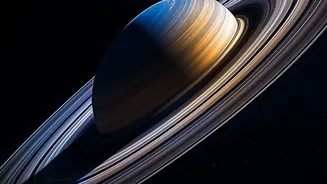
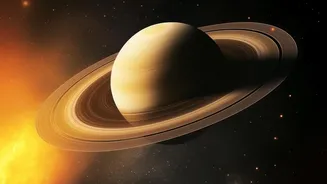
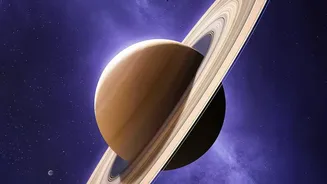
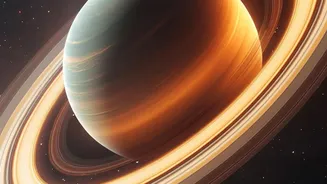
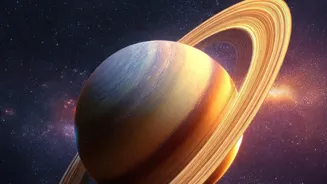
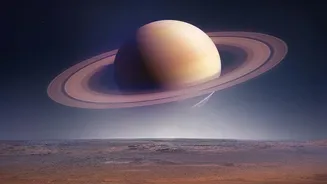
To your naked eye, Saturn will appear as a bright, star-like object. It won't reveal its famous rings without some help. A good pair of binoculars might stabilize the view and enhance its color, but you will still not see the rings clearly. To truly appreciate Saturn, you'll need a telescope. Even a small beginner's telescope with 50x magnification can reveal the iconic rings, a sight that turns many casual observers into lifelong astronomy enthusiasts. In August 2026, the rings are tilted at a favorable angle towards Earth, making them clearly distinct from the planet's globe.
A View of the Rings and Moons
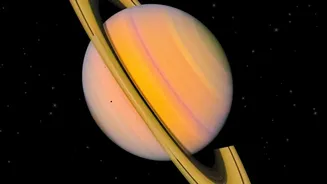
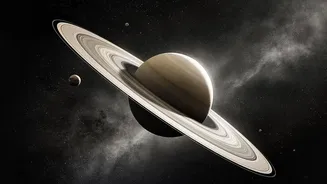
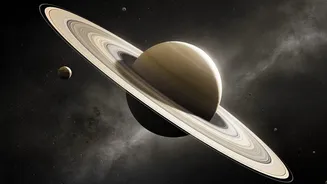
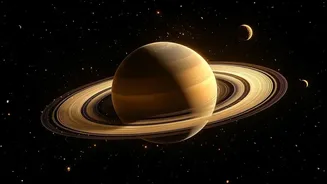
With a medium-sized amateur telescope, the view gets even better. You might be able to spot the Cassini Division, a prominent dark gap that separates the main rings. The planet's cloud bands may also be visible as subtle variations in shading. Furthermore, Saturn isn't alone. It boasts a large family of moons. The brightest, Titan, is often visible in any telescope as a small, star-like point near the planet. With larger instruments and clear skies, you might also spot other moons like Tethys, Dione, and Rhea.